Lot details
Curators

Ács Érmes Károly
curator
ermesprojekt@gmail.com
Detailed description
Ferenc Huszár's Artistic Career
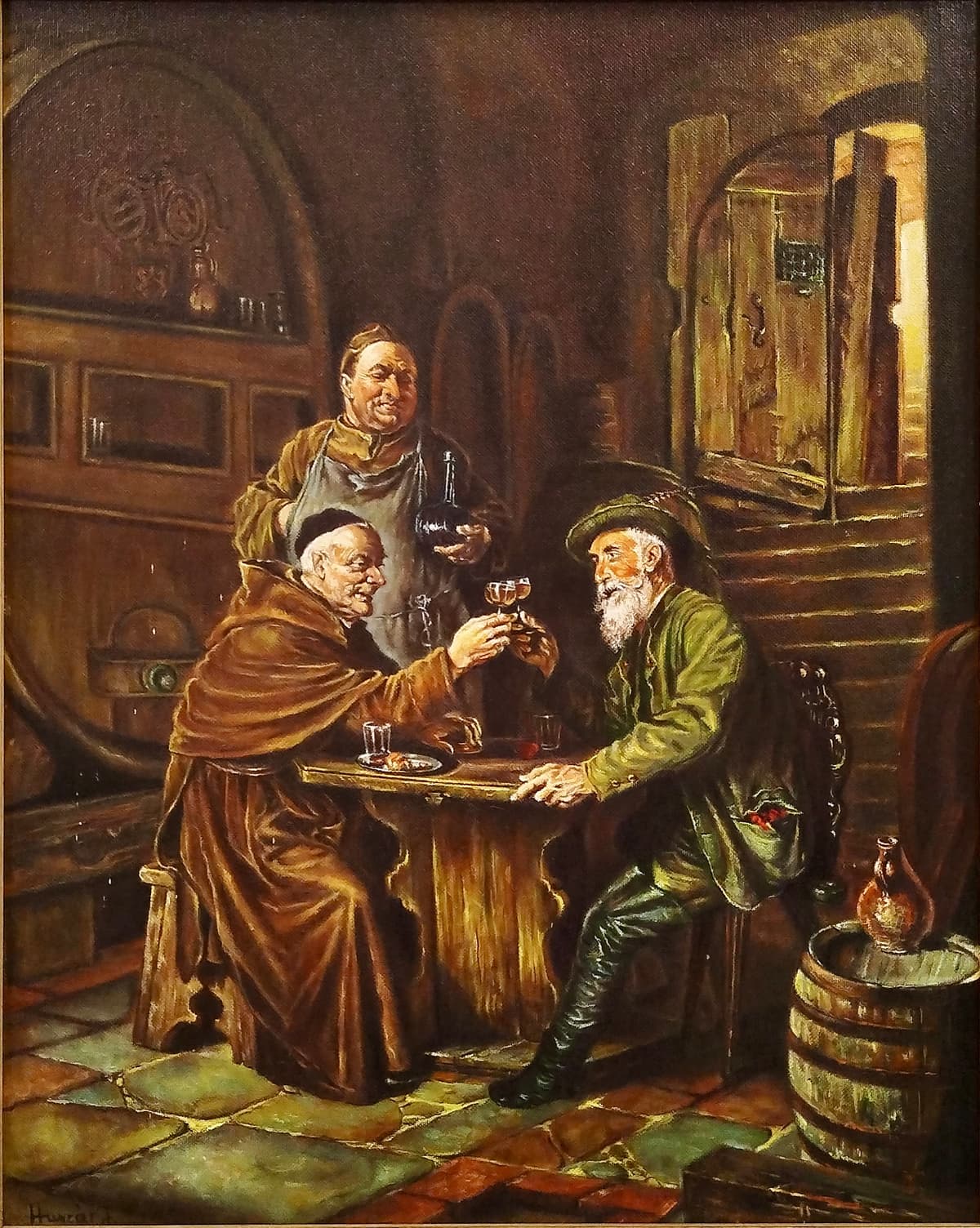
The Hungarian painter Ferenc Huszár (1880–1950) presents a colorful array of meticulous detail representation and human-centered, intimate atmospheres in his oeuvre. His works were strongly influenced by Eduard von Grützner, particularly in the lyricism and simultaneously cheerful, human humor of the scenes depicting monk's meals. The influence of the German painter's subtle tonal shifts can be felt in Huszár’s early watercolors, after which he further refined his own style, capturing the tiny moments of life in his oil paintings.
Work and Style
Ferenc’s art is characterized by the pairing of realism and atmospheric drama. Commonplace figures frequently appear in his paintings: market vendors, village women, and children at play. In depicting the characters, the artist gladly used fragmented brushwork, which resolved the effects of light and shadow in warm, pastel-like colors. While preserving the von Grützner feel, Huszár also infused a subtle sense of humor into the composition, emphasizing the harmony between still lifes and human gestures.
Outstanding Works
Among his most famous works is “Market Morning” (1923), where the bustling market scene is emphasized through small details reminiscent of the early paintings of von Grützner, which showcased fine tonal handling. “Daily Bread” (1930) vividly presents the fusion of sacred and everyday motifs that are less commonly depicted in Hungary. In his late work, the painting titled “Family Celebration” (1945) captures the warm family atmosphere that crystallized in the artist's last years of life.
Evaluation and Legacy
With his rich palette and delicate soul portrayal, Ferenc Huszár became a defining figure in 20th-century Hungarian painting. Through his works, viewers could glimpse the solemnity of everyday life, where even the smallest gestures became a valid artistic language. The transformation of von Grützner's inspiration in Huszár’s oeuvre uniquely combines domestic artistic traditions with German realistic humor and refinement.