Lot details
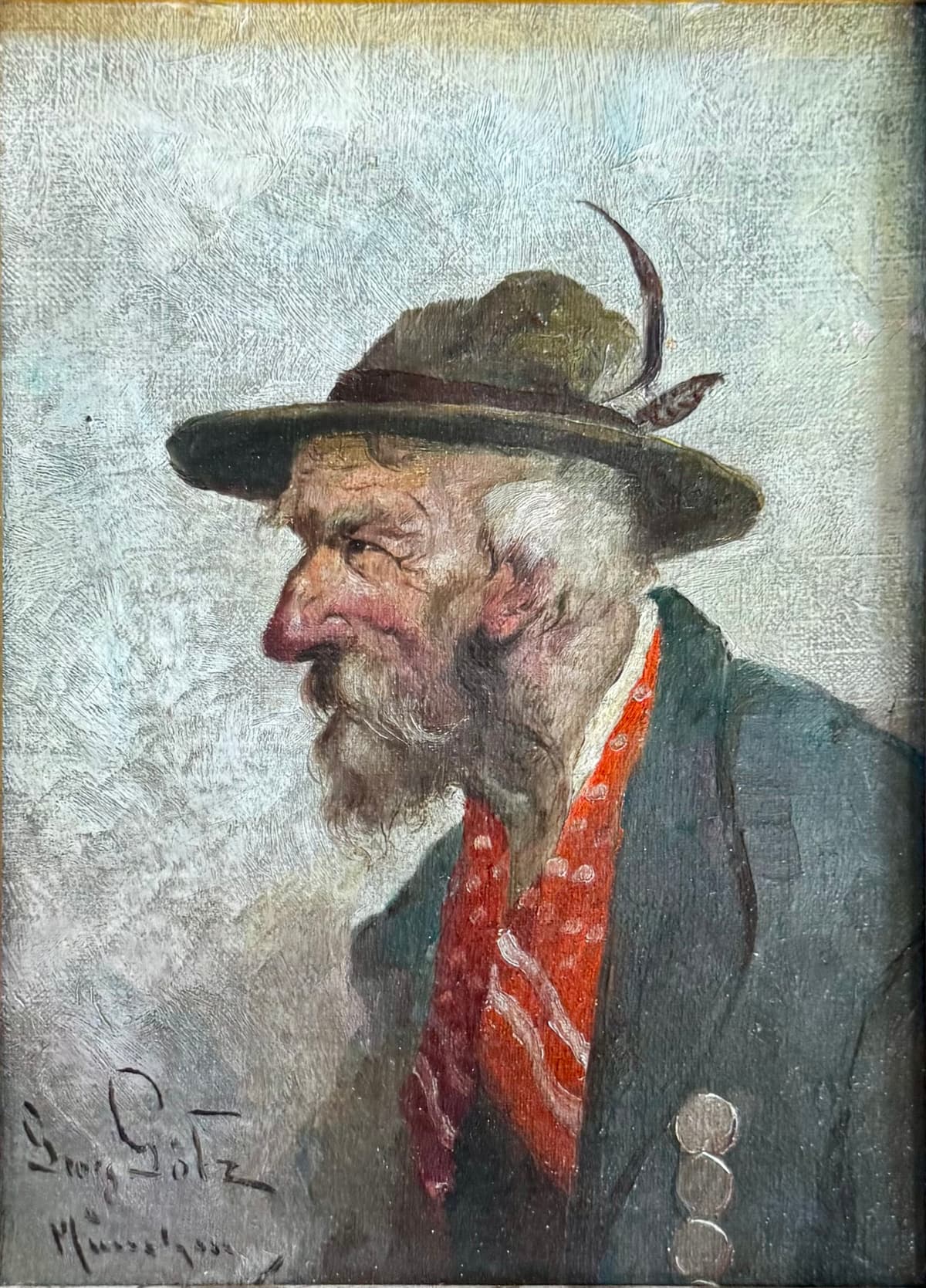
Detailed description
Georg Götz (1891–1955): Life Path and Artistic Development
Georg Götz is a German-born artist whose career unfolded in the first half of the 20th century. He studied in Munich and Berlin, where the avant-garde efforts of the period, Art Nouveau, and Expressionism influenced him. His early work was characterized by fine, decorative detail, gradually shifting towards a more powerful, geometric language of form.
In the 1920s, Götz combined the tools of cubism with the German expressive tradition. It was during this time that he created his most famous paintings, such as “Awakening City” and “Dance of Clouds”, which drew attention with their contrasts of dynamism and light. His works feature strong urban panoramas and abstract human figures, maintaining a detached yet lyrical tone.
In the 1930s, Götz also tried his hand at sculpture: his bronze cast small sculptures exhibited a sensitivity to spatial harmony. A significant piece from this period is “Duo”, in which the two intertwined figures suggest unity and movement.
After World War II, the artist shifted to a more introspective style. His peaceful-themed watercolors and graphic works possess both meditative calmness and subtle architectural influences.
Götz's legacy is an important milestone in the history of 20th-century German art. His works can be found in museums and private collections today, and their style serves as inspiration for contemporary painters and sculptors alike. Through the fusion of modernism and classical harmony, the art of Georg Götz carries a message that remains relevant today.