Lot details
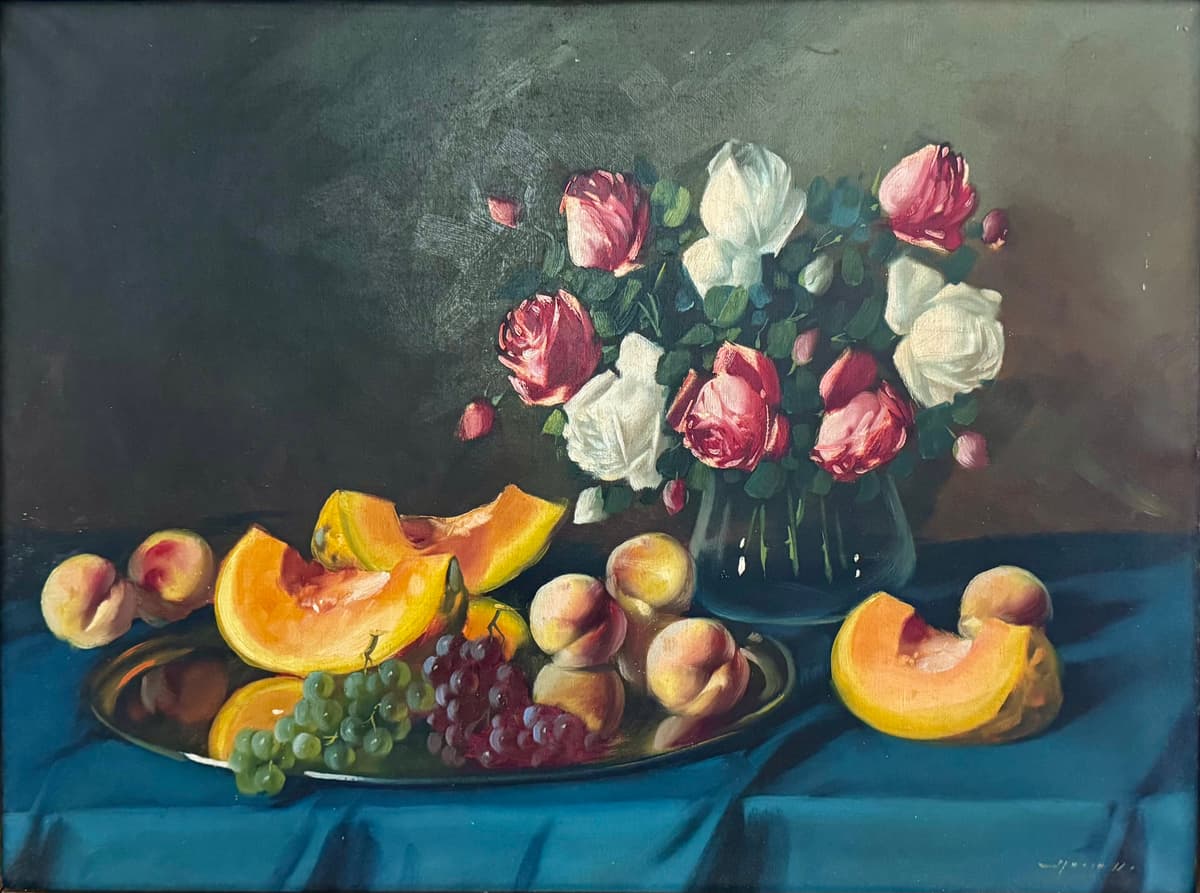
Detailed description
The Artistic Career and Legacy of Vilmos Murin
Vilmos Murin (1912–1983) was one of the defining figures of Hungarian visual art. Born in Budapest, he studied at the Academy of Fine Arts, where he mastered classical painting and sculpture techniques. His career began in the avant-garde movements of the 1930s, later blending elements of realism and expressionism in his works.
The 1940s and 50s marked a turning point for him: he held several solo exhibitions, and his work earned recognition among both the public and critics. His signature themes were the human figure and social solidarity, which he portrayed in both sculptures and paintings.
Among his major works is "Working Woman" (1952), where he focused on everyday heroes, as well as the abstract composition "Light and Shadow" (1961), which symbolizes modern formal experimentation. His sculptures – particularly the bronze "Rebirth" (1970) – reflect a harmony of monumentality and intimate sensitivity.
In his art, material and technique always played a significant role. In his colorful oil paintings, the play of thick brush strokes and contrasting tones is meant to convey inner tension. In his sculptures, he applied experimental textures alongside traditional casting methods.
As an educator, he had a significant impact on the next generations. He taught at the Hungarian University of Fine Arts for decades, and he immortalized his artistic views in books and studies. For his students, both creative freedom and technical rigor were essential principles.
Vilmos Murin's legacy is still alive today: his works are featured in both domestic and international collections, and his creations can be found in museums and public spaces alike. His influence can still be seen in contemporary Hungarian visual art, with his works serving as inspiration for young creators.