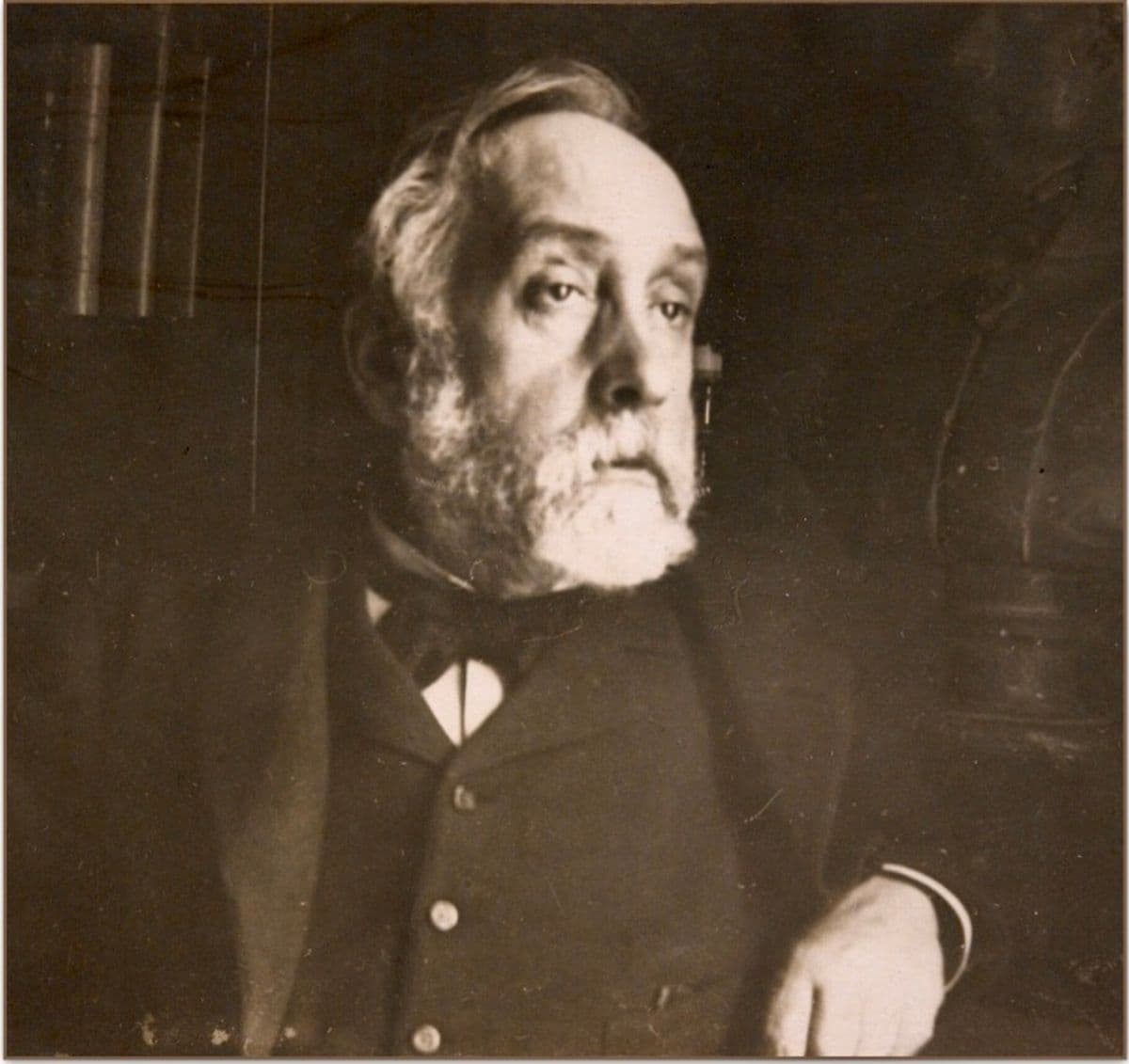
EDGAR DEGAS (1834–1917) A master of movement and the human body
EDGAR DEGAS (1834–1917)
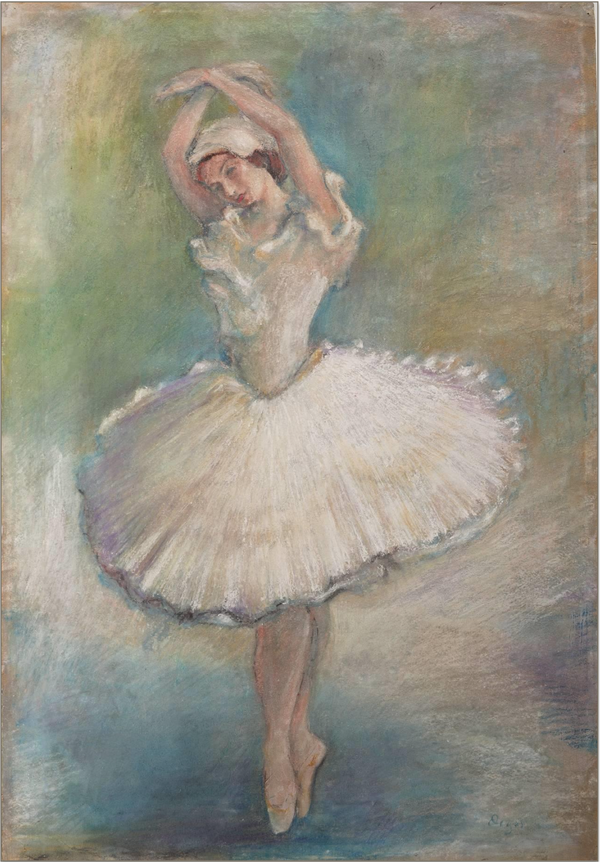
“Ballerina” pastel
Edgar Degas, originally named Hilaire-Germain-Edgar De Gas, was born in 1834 in Paris to a wealthy family.
He originally studied law but soon turned to the visual arts. In the 1860s, he traveled to Italy, where he was inspired by the art of the old masters. Nevertheless, he became one of the most original innovators of his time.
Although he is often classified among the impressionists, Degas distanced himself from this label. He preferred to work in his studio and focused on drawing, composition, and studying the movement of the human body.
Frequent themes in his works include the theater, bathing women, horse races, and café scenes, but his most famous creations depict ballerinas.
His goal was not idealization, but capturing gesture, tension, rhythm, and the moment. In the last two decades of his life, his eyesight gradually deteriorated, and thus pastel became his main medium of expression.
This technique allowed him to layer colors and depict the shimmering effect of light.
The theme of ballet played a central role in Degas's oeuvre. From the 1860s onwards, he regularly visited behind the scenes of the Paris Opera, where he observed the postures, exhaustion, and elegance of the dancers.
He captured them during rehearsals, resting, and performing. The tension between beauty and discipline in ballet attracted him. He created more than 1500 ballet-themed works, which are still iconic pieces of modern visual art.
Degas and Photography
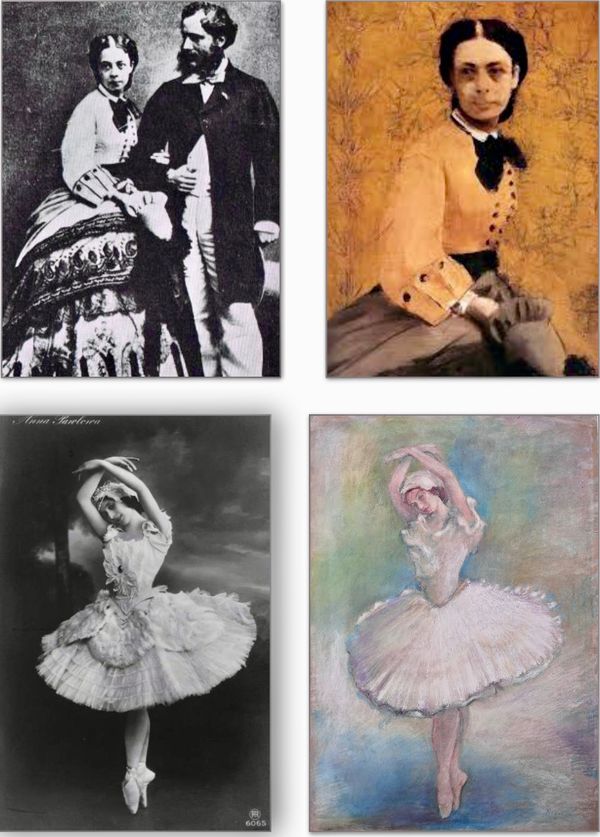
Edgar Degas was one of the least plein air-oriented artists among the impressionists – he worked exclusively in his studio.
This is why photography had a great impact on him, allowing him to capture the instantaneous moment of movement, which he then processed in his paintings and pastels.
He often used photographs as preliminary studies – he composed his works based on taken or collected snapshots.
For example, the portrait of Princess Pauline von Metternich (around 1865), as well as the later Ballerina pastel (around 1905) were created in this way.
Under the influence of photography, Degas boldly experimented with cropping, unusual viewpoints, and asymmetrical compositions.
The spontaneous, dynamic effect of his works often reminds one of the snapshot nature of photographs.
“Ballerina” pastel
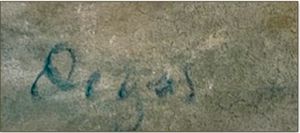
Author: Edgar Degas
Title: Ballerina (Anna Pavlowna)
Technique: Pastel on paper
Time of creation: Before 1907
Image size: 610 × 435 mm
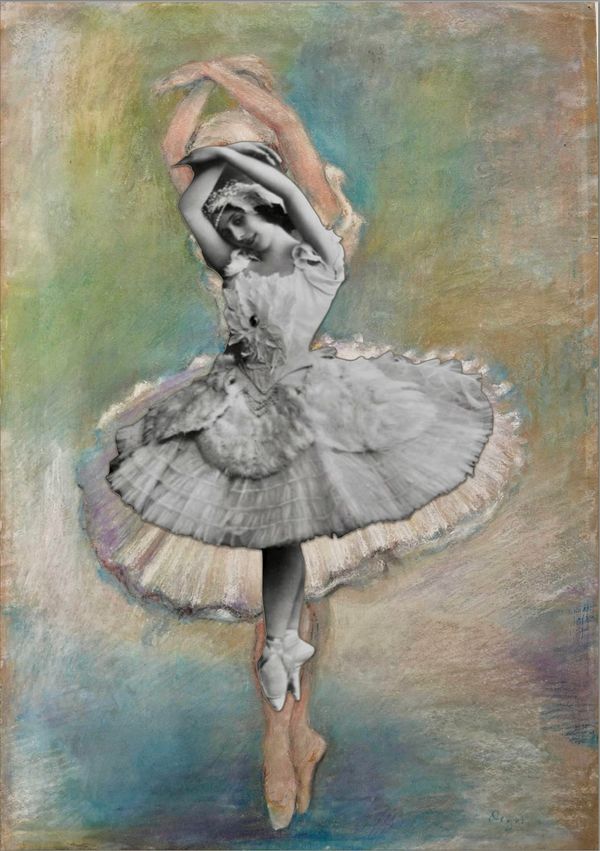
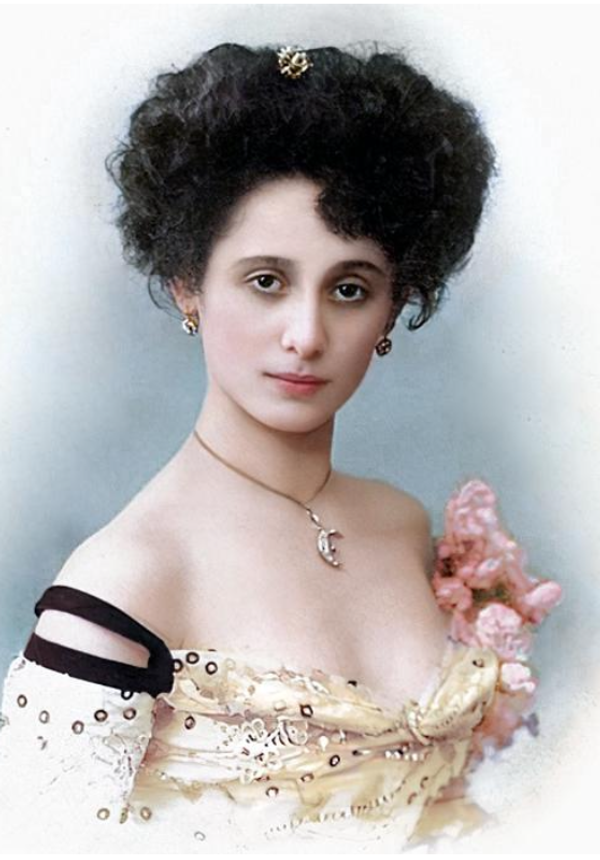
This pastel depicts a standing dancer with outstretched arms. Based on style, posture, and composition, several experts believe that the image shows Anna Pavlova, the world-famous Russian prima ballerina.
The identification is also confirmed by a contemporary photograph found in Hungary.
The work bears all the signs of Degas's late style: dynamic cropping, layered color shading, and focusing on the expressive power of the body.
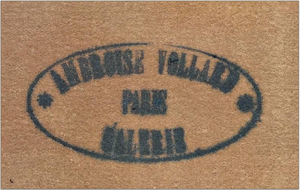
The artwork originates from the collection of Ambroise Vollard; its original collector's label can be found on the back.
Anna Pavlova (1881–1931)
The prima ballerina of the Russian ballet
Anna Pavlova was the most famous Russian ballet dancer of her time.
She studied at the Saint Petersburg Ballet Academy and quickly became a star of the Imperial Ballet.
Her most famous role was in The Dying Swan, choreographed by Mikhail Fokin.
Her dance was characterized by delicacy, softness, and fragile beauty.
After the Russian Revolution of 1917, she left her homeland and settled in London.
With her own company, she performed in many countries around the world and never returned to the Soviet Union.
She died in The Hague in 1931.
Although there is no evidence that she personally met Degas, her style and figure are often associated with some of Degas's ballerina depictions.
Marcell Nemes (1866–1930)
Collector between Budapest and Munich
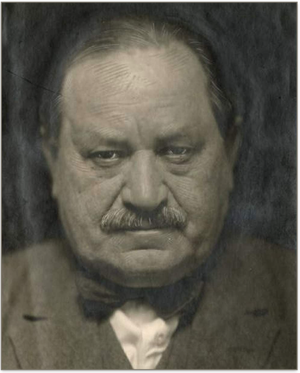
Marcell Nemes was one of the most significant art collectors of the first third of the 20th century.
He played a pioneering role in collecting works of El Greco, but his collection also included works by numerous old masters and modern creators.
He significantly contributed to the enrichment of the collections of the Museum of Fine Arts in Budapest and other cultural institutions.
He purchased the pastel titled Ballerina in 1907 from Ambroise Vollard's Parisian gallery and presented it in Budapest later that year.
The work later came into the possession of the Kéki family, then in 2018 to a private collection in Hungary.
Exhibition history and provenance (selection)
- 1907: “Great French Modern Masters”, National Salon, Budapest (cat. no. 44)
- 1909: Museum of Fine Arts, Budapest (cat. no. 23)
Provenance:
Ambroise Vollard → Marcell Nemes → Kéki family → Hungarian private collection (2018)
Martha Majorová
art historian