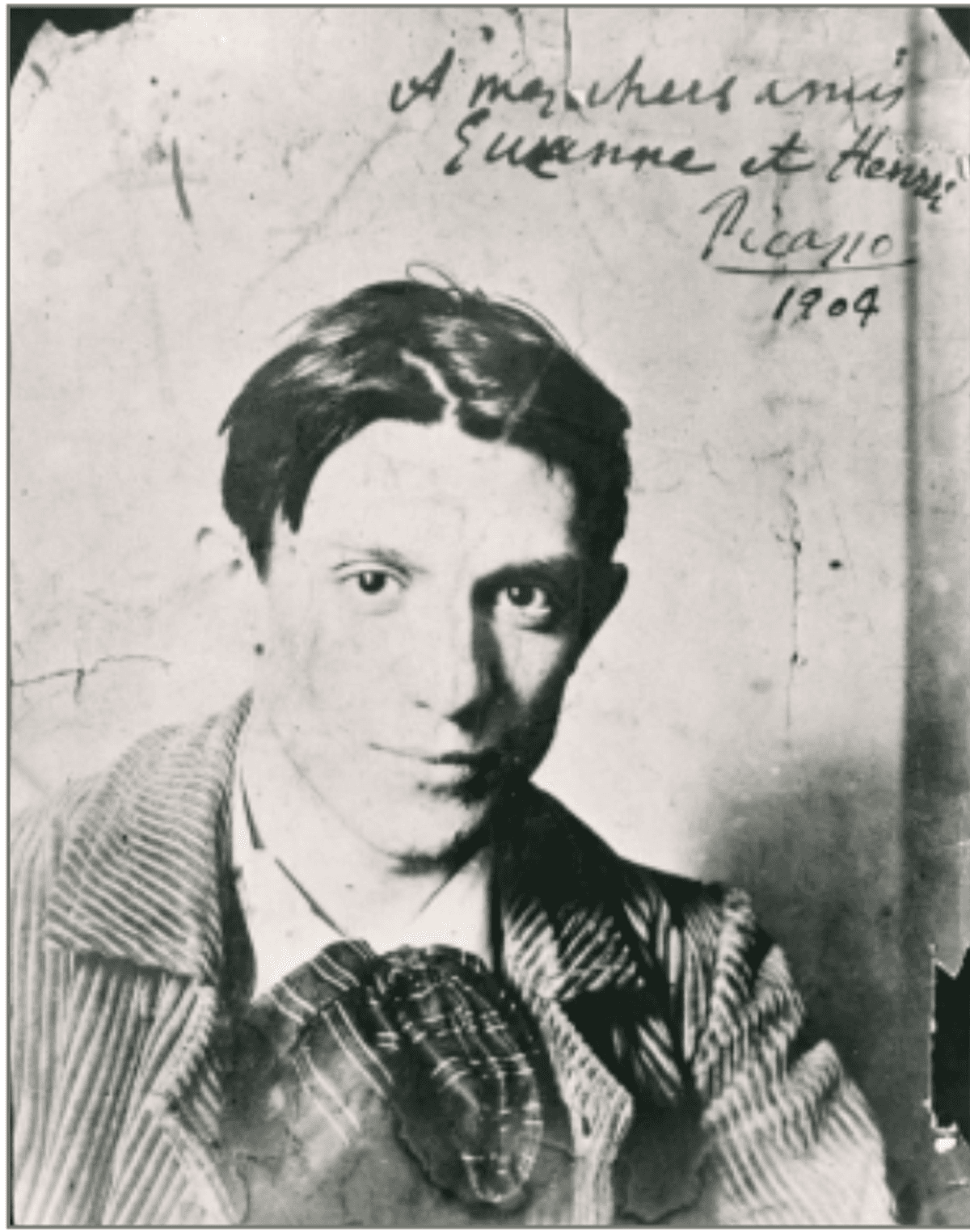
P A B L O . P I C A S S O 1881 - 1973
At the invitation of Földváry Auction House, this year's Autumn Grand Charity Auction will host an exceptional cultural event on October 26, 2025.
In the halls of the FÖLDVÁRY Castle in Öttevény, Pablo Ruiz Picasso (1881–1973) – one of the most significant and influential artists of the 20th century – will be showcased for the first time in Hungary with his early works.
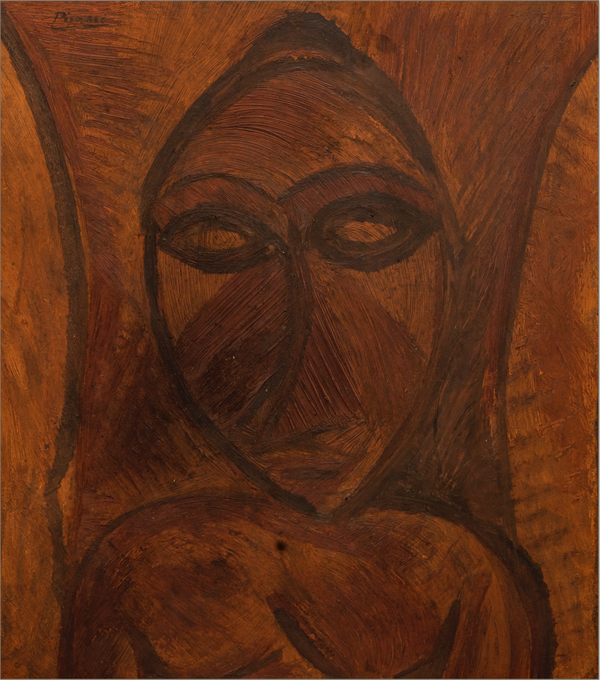
The special work, “Tête de femme” (Head of a Woman) – oil, cardboard, 39.4 × 34.9 cm – has arrived from a significant international private collection and will be on display in Öttevény as a unique presentation.
The artwork will not be auctioned.
This exceptional painting was presented as early as the beginning of the 20th century in Central Europe, when the general public could admire it at the SVU Mánes exhibition in Prague in 1913. The work was created around 1907, during Picasso's earliest cubist period, when he drew inspiration from the forms of African masks and sought new expressive tools for depicting the human face.
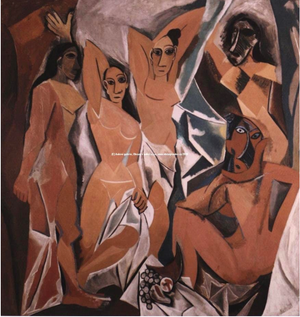
The reduced contrasts, the rhythmic harmony of the painterly tones, and the tension of the composition give this image its unparalleled dynamics and power. Today, the work is considered one of the outstanding creations of early cubism, and it is also a study related to one of the master's major works, Les Demoiselles d'Avignon, which is housed in the collection of the Museum of Modern Art in New York.
This current presentation is made possible thanks to the significant contributions of a notable Slovak collector, who acquired the painting from the legacy of František Pořický, a collector of modern art. Pořický, an early admirer of modern art and himself a painter, recognized the exceptional value of the work and kept it privately throughout his life.
The painting has not been publicly exhibited since the 1930s. Following the Entartete Kunst (“Degenerate Art”) exhibition, modern art was undesirable in Nazi-occupied countries, and during the war and the communist years after 1948, progressive movements were pushed into the background. Thus, the painting remained hidden in a private collection for decades.
Thanks to careful preservation and the responsible attitude of the owners, the work has remained in its original, excellent condition and can now be presented to the public after more than a hundred years.
This extraordinary event became a reality through the long international consultations by the curators of the Földváry Auction House and the goodwill of the collection owner, who contributed to the temporary loan of the work.
Pablo Picasso's “Tête de femme” (Head of a Woman) can be viewed at the FÖLDVÁRY Castle in Öttevény on October 26, 2025, between 11:00 and 17:00 (9153 Öttevény, Fő utca 153.)
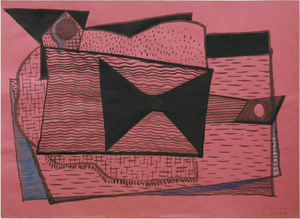
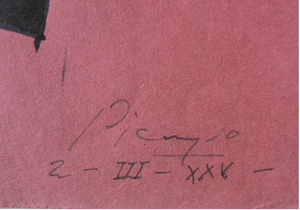
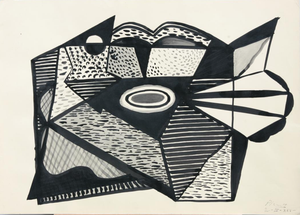
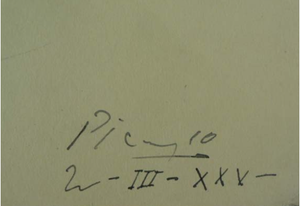
Two compositions with musical motifs, March 2, 1925
mixed technique on cardboard
The entire series is uniformly dated to March 2, 1925, and consists of eight pieces created using mixed techniques on cardboard.
These works are variations on the theme of still life – stylized into geometric shapes, primarily featuring a mandolin and goblet, with prominent decorative rhythm.
The fact that Pablo Picasso, one of the most significant painter personalities of the 20th century, was of Spanish descent is reflected to some extent in this collection.
In his works, echoes of folk and geometric motifs frequently appear – wave lines, grids, hatching, dots, and cross motifs – which enhance the decorativeness of the compositions.
In these drawings, we see objects as if placed on a fringed textile – this motif was also utilized by Picasso in his painting Three Musicians (1921).
The compositional principle and the goblet shape divided by a vertical line resemble other works of the artist, especially the work Still Life with Guitar (1922).
The characteristic hatching and planar composition highlight the extremely clear, linear signature of the drawings and the harmony of form and rhythm. The two compositions exhibited now are presented to the public for the first time in decades – in dialogue with the painting Tête de femme (1907), which evokes the beginnings of Picasso's cubist language.
Martha Majorová
art historian