Description
No description available yet.
Curators

Ács Érmes Károly
curator
ermesprojekt@gmail.com

Ohnhaus Éva
curator
eva.artdeco@gmail.com
Detailed description
Anton Einsle (30 January 1801 – 10 March 1871) was an Austrian portrait painter who became known as one of the leading figures of the 19th-century Biedermeier period.
Life
Einsle was born in Vienna, the son of Matthias Einsle, a manufacturer of surgical instruments. At the age of 13, he began his studies at the Vienna Academy of Fine Arts, where he developed under the guidance of Josef Klieber. He won prizes at a young age and was already receiving commissions by the age of 16. Early in his career, he painted in the style of late classicism, influenced by artists such as Michael Moritz Daffinger and Friedrich von Amerling. Invaluable+1askart.com+1Wikipedia – Die freie Enzyklopädieaskart.com+1Invaluable+1
In 1832 he moved to Budapest, where he worked for several years, before returning to Vienna in 1838, when he was appointed court painter to the emperor. From then on, he became one of the most sought-after portrait painters of the Austrian imperial family and aristocracy.
His art
Einsle's work includes detailed and elegant portraits typical of the Biedermeier period. His paintings often depicted members of the Austrian and Hungarian aristocracy, as well as the imperial family. Among his outstanding works is a portrait of Emperor Franz Joseph I, painted in 1851, when the emperor was only 21 years old. Invaluableonlineonly.christies.com
His works can be found in numerous museums and private collections, such as the Heeresgeschichtliches Museum in Vienna and the Hungarian National Gallery in Budapest. In 2025, the artist's descendants donated twelve of his paintings to the Residenzgalerie in Salzburg Wikipedia – Die freie Enzyklopädie.
Interesting facts
Einsle painted Emperor Franz Joseph I more than thirty times in the early years of his reign.
His works are still sought after on the art market today, with some of his works selling for tens of thousands of euros at auction.
In 1983, a street in Vienna-Leopoldau was named after him: Einslegasse.
Anton Einsle's work represents a defining chapter in 19th-century Austrian portrait painting, and his works are still impressive examples of the elegance and detail of the Biedermeier era.
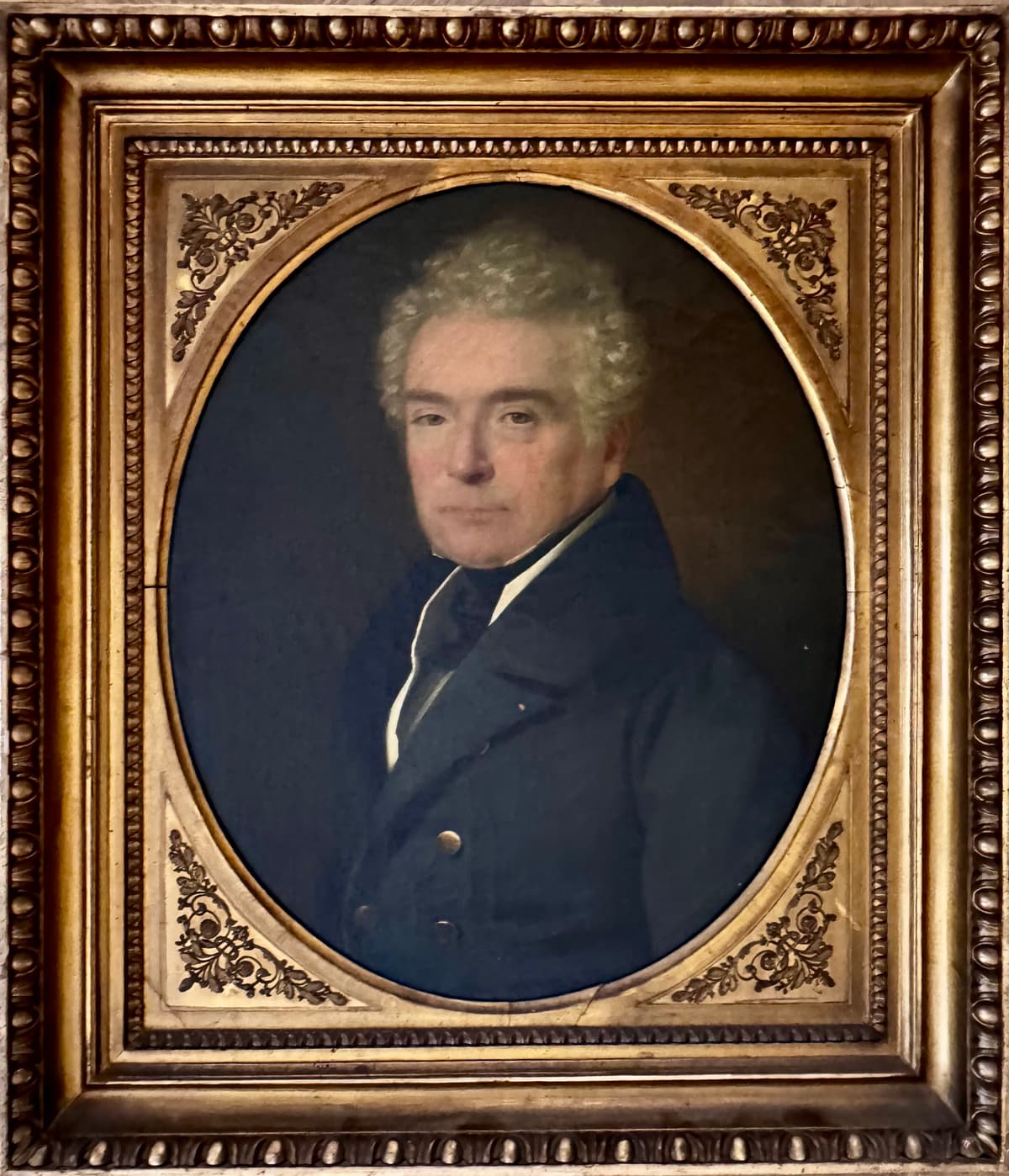
Ferenc Szepessy, a nobleman and temporary mayor of Pest on the eve of the 1848 revolution
The figure depicted is a typical representative of the pre-revolutionary era: a loyal official who had socialized under the Habsburg administration. His finely drawn noble features and the "von" before his name refer to his Szepessy origins and Hungarian commoner origins.
The painting is a particularly interesting document of the historical transition in which Hungary embarked on the path of bourgeois transformation. The figure of Francz von Szepessy appears in this portrait as a dignified but already fading representative of a fading era.