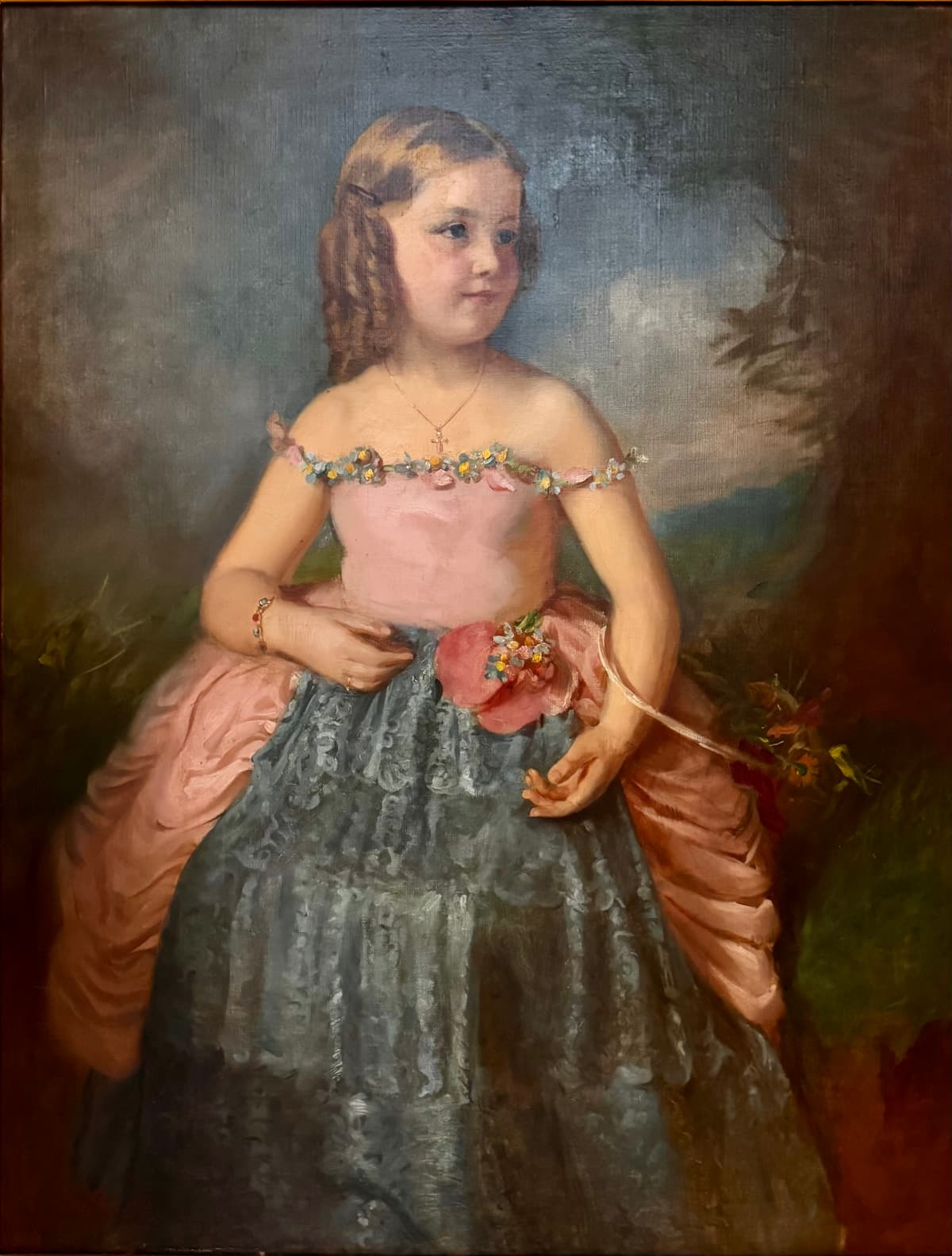
Description
No description available yet.
Curators

Ács Érmes Károly
curator
ermesprojekt@gmail.com
Ohnhaus Éva
curator
eva.artdeco@gmail.com
Detailed description
Gyula Asztalos: Life Work and Art
Gyula Asztalos (1900–1972) is a versatile figure in 20th-century Hungarian painting. His career was defined by the parallel practice of lyrical realism and modern visual language, always preserving a personal tone.
He studied at the Hungarian Academy of Fine Arts, where he familiarized himself with the influences of post-impressionism and expressionism while also exploring cubist experiments. His masters included Vilmos Aba-Novák and Károly Kernstok, who encouraged him in his form research.
His main genres include landscapes, still lifes, and portraits. Early works, such as Still Life with Flowers (1925) and Village Life (1930), combine a soothing yet dynamic representation of nature with delicate, painterly brushwork.
The work Self-Portrait, created in 1935, reflects his internal struggles and the geometric articulation of forms. His post-war creations present everyday life with refining tones and empathetic character portrayal, often taking the form of literary illustrations.
Between 1945 and 1965, he taught at the Academy of Fine Arts, carrying out significant pedagogical work. He participated in numerous solo and group exhibitions, and took part in the exhibitions of KUT and the Eight. In 1953, he was awarded the Kossuth Prize for his life's work.
Gyula Asztalos's legacy in painting is a unique blend of human-centered tone and formalist experiments. His influence extended to later generations, and his works continue to provide profound emotional and aesthetic experiences for audiences today.