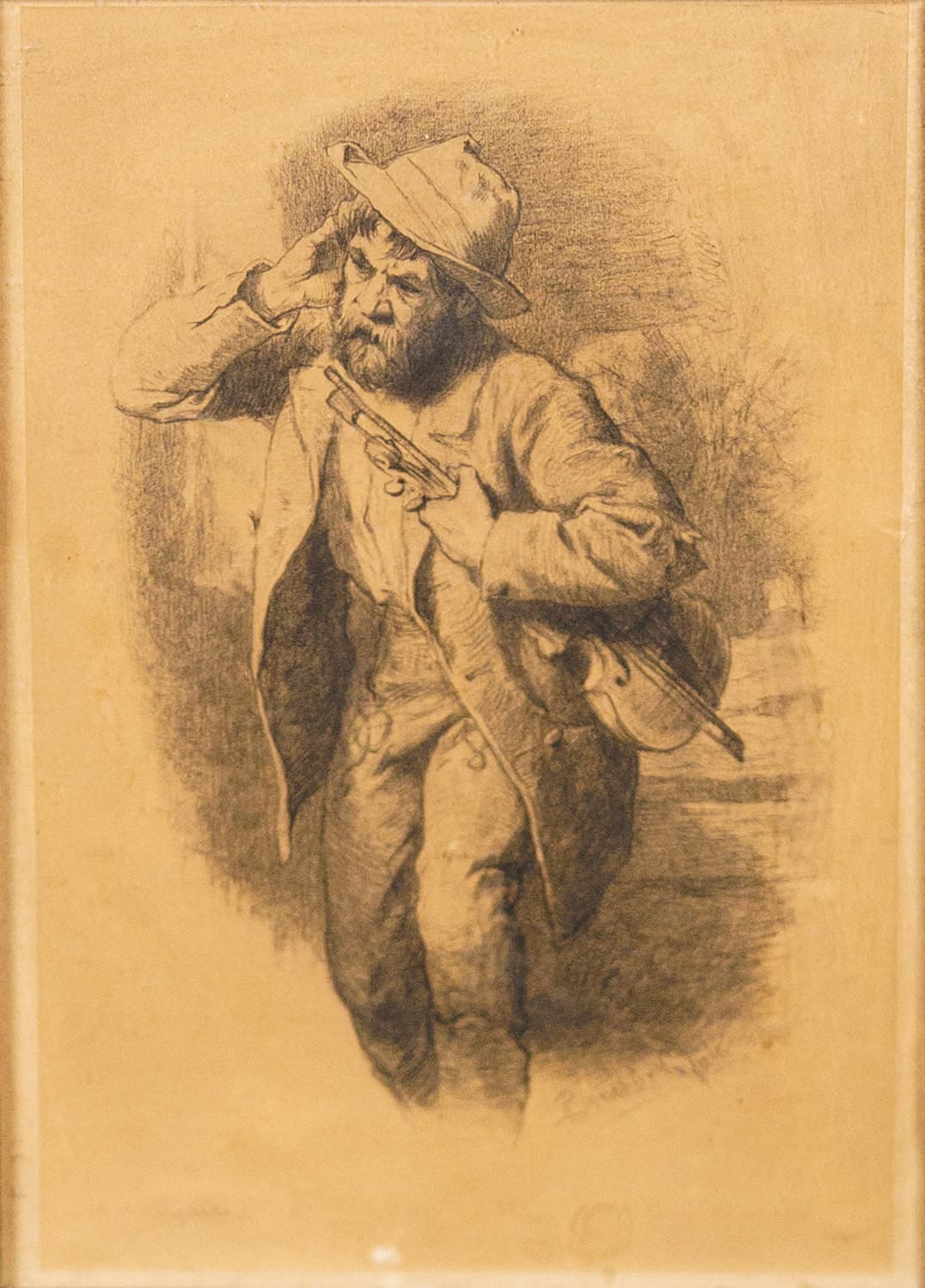
Description
No description available yet.
Curators

Ács Érmes Károly
curator
ermesprojekt@gmail.com

Ohnhaus Éva
curator
eva.artdeco@gmail.com
Detailed description
Benczúr Gyula: The Career and Art of the Hungarian Painter
Benczúr Gyula (1844–1920) was a prominent Hungarian painter at the turn of the 19th and 20th centuries, whose work straddles the boundary between historicism and realistic portrait painting. He studied at the Munich Academy of Fine Arts, where he absorbed the traditions of European historical painting. Early in his career, he achieved significant success at the Paris World Expositions, winning, among other awards, a gold medal.
Among his creations, particularly important are the historical themed paintings, such as “King Matthias and the Funny Students” and “The Shooting of Bánk bán.” In these works, Benczúr skillfully combined dramatic composition with the portrayal of the inner worlds of the characters. His dedication to detail is still impressive today: the authenticity of the clothing, weapons, and sets makes the scenes lifelike.
Realism and classical balance also resonate in his portraits: his likenesses, such as those of Gyula Andrássy or Crown Prince Rudolf, evoke the defining figures of contemporary political and social life. The delicate tonal modeling of the faces and the intensity of the gazes celebrate the artist's technical mastery.
As an educator, he was appointed professor at the Budapest Drawing School (now the Hungarian University of Fine Arts), where generations grew up with his methodology. Between 1883 and 1918, he trained over a hundred students who carried on the traditions of Hungarian painting.
Benczúr Gyula's oeuvre is one of the most important chapters in Hungarian art history: his works can be seen at the Hungarian National Gallery, the Hungarian Academy of Sciences, and various European collections. Throughout his career, his commitment to historicism and the meticulous representation of forms and faces secured his name's permanence in the visual arts.