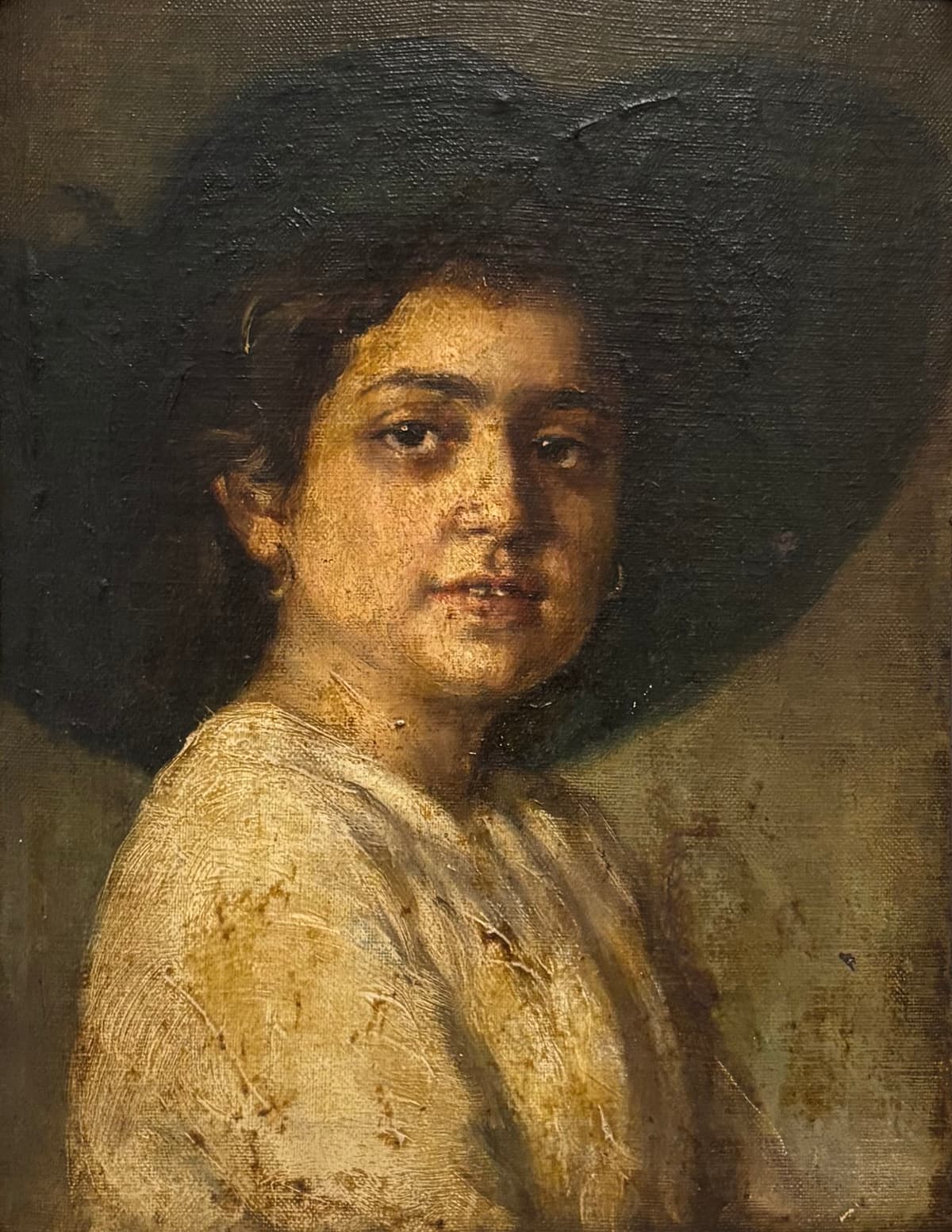
Description
No description available yet.
Curators

Ács Érmes Károly
curator
ermesprojekt@gmail.com

Ohnhaus Éva
curator
eva.artdeco@gmail.com
Detailed description
Sándor Bihari: Body of Work and Legacy
Sándor Bihari (1855–1906) is a prominent figure in Hungarian painting, whose oeuvre unfolded in the fusion of 19th-century naturalism and neobaroque delicacies. Throughout his career, he became known for depicting the everyday life of peasants and capturing the harmonious relationship between nature and man.
From Early Years to the Footsteps of Masters
Born in 1855, he studied at the Drawing School in Budapest at a young age and then furthered his education in Munich. During his studies, Meissonier's meticulous handling of forms and C. Corot's airy landscapes influenced him. Upon returning home, he developed his own style characterized by abundant folk motifs and dynamic compositions.
Artistic Style and Technique
Bihari's works are marked by fine brushwork, a muted color palette, and dramatic contrasts of light and shadow. On his canvases, besides the tangible reality of peasant life, the aim was to capture the mood and the moment. His paintings often feature the foggy landscape of the morning, the rich autumn sunlight, or the everyday poetry of rural life.
Outstanding Works
His most famous work is the "Autumn Legend" (1893), which depicts a carriage procession among vineyards. Also, the "Farmyard" (1898) made a significant impact, where the daily activities – kneading bread, caring for animals – are represented with such detail that the viewer can almost smell the scent of freshly baked bread.
Impact and Legacy
Sándor Bihari's artistry had a significant influence on the Hungarian landscape painters of the 1920s. His works were praised by the director of the National Museum and the Hungarian National Gallery, and they remain part of the most significant 19th-century collections today. His style contributed to the further development of realism and lyricism in Hungarian painting.
In summary, Sándor Bihari's creative life is a profound yet intimate presentation of the relationship between nature and man. His works continue to serve as inspiration for modern Hungarian landscape and genre painters.