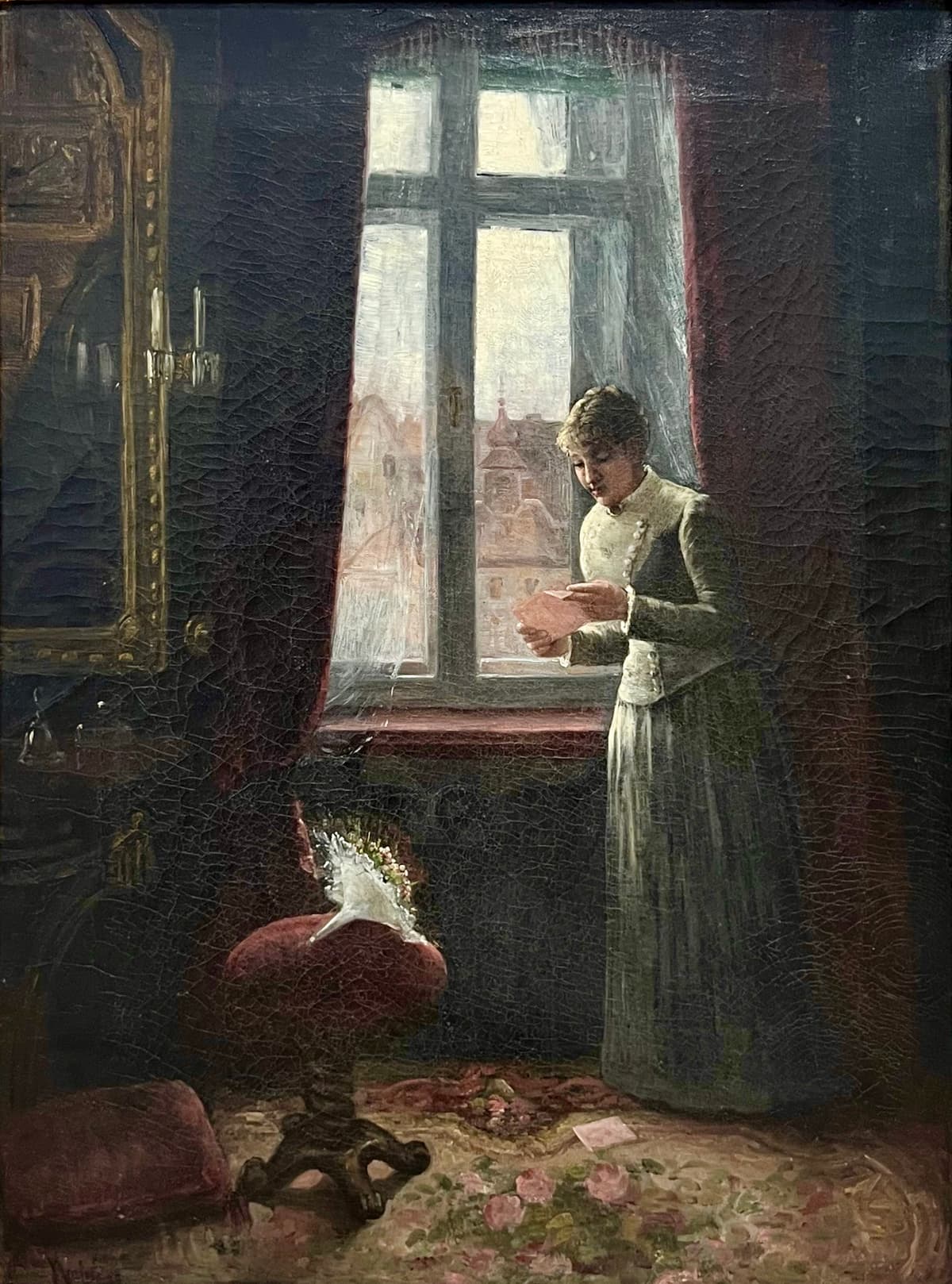
Description
No description available yet.
Curators

Ács Érmes Károly
curator
ermesprojekt@gmail.com

Ohnhaus Éva
curator
eva.artdeco@gmail.com
Detailed description
Introduction
The name of Louis Monziès (1849–1930) is now less known to the general public, yet his work is an important imprint of 19th-century European artistic life. As a portrait painter and illustrator, he gained recognition particularly in the field of book and magazine illustration.
Life and Career
Monziès was born near Paris and soon embarked on an artistic career. He studied at the Beaux-Arts academy in Paris and exhibited his works in several exhibitions. His style was fundamentally defined by realism and romanticism, yet he continuously experimented with techniques, as evidenced by his etchings and watercolors.
Work and Style
Monziès' body of work is dual in nature: on one hand, he created delicate, detail-rich portraits, while on the other, he produced illustrations for books and magazines as an illustrator. His visual world is sometimes lyrical, sometimes documentary, but he always placed great emphasis on character portrayal and mood creation. Thanks to his technical knowledge, he confidently applied both watercolor, ink, and etching.
Major Works
His most famous works include the watercolor series “Paris Street Atmospheres” and the etchings illustrating the works of Victor Hugo. Additionally, his drawings appear in several editions of literary classics, such as those by Dickens and Balzac. These graphics serve not only as accompanying elements but can also be interpreted as independent artworks.
Legacy
The art of Monziès is an important piece of the illustration tradition of the early 20th century. Although he did not cultivate direct followers, his influence can be felt in the later development of book and magazine illustration. Today, his works are appearing more frequently in art galleries and private collections, evoking the atmosphere and creative spirit of the era.