Description
No description available yet.
Curators

Ács Érmes Károly
curator
ermesprojekt@gmail.com

Ohnhaus Éva
curator
eva.artdeco@gmail.com
Detailed description
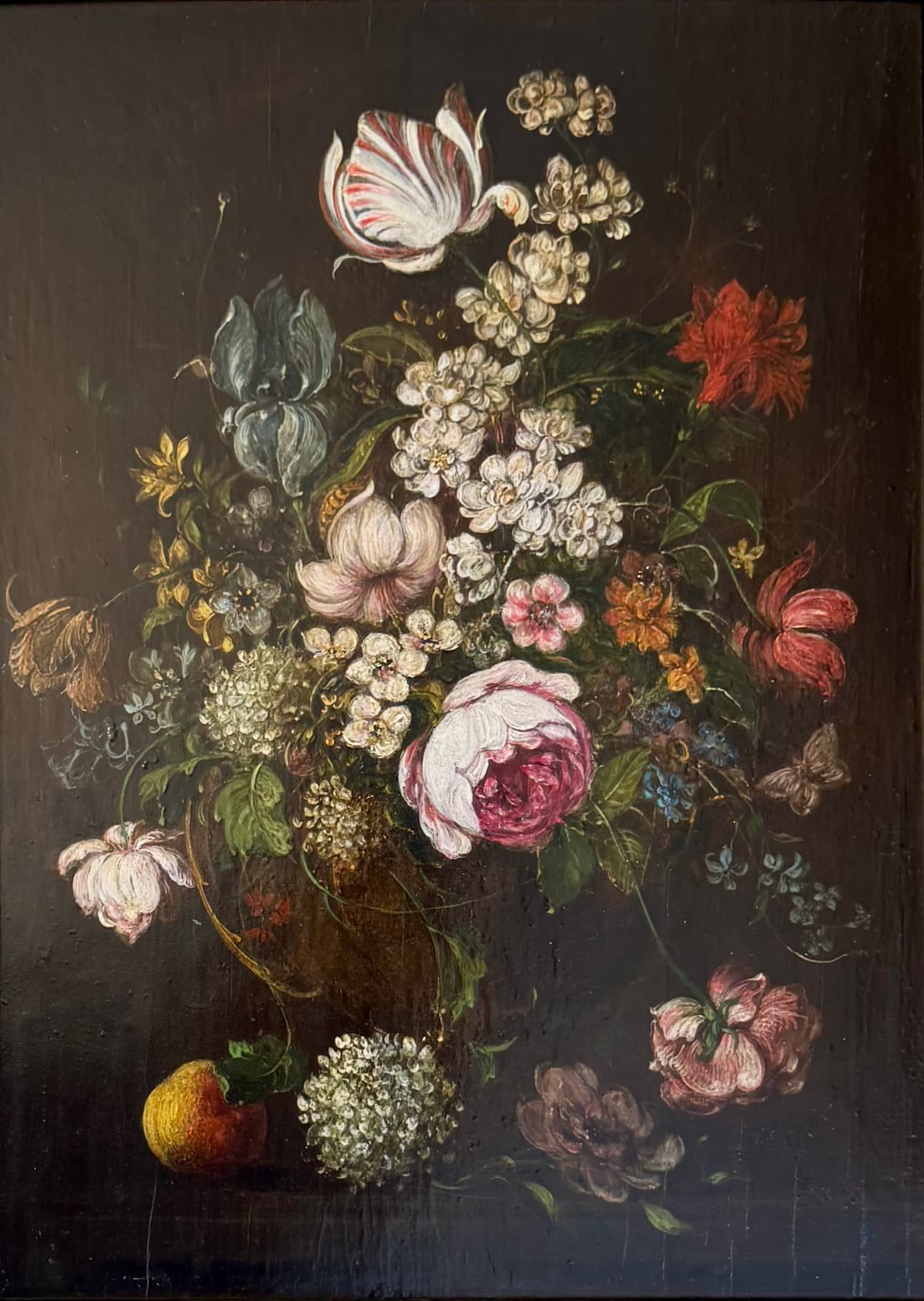
Franz Xaver Petter (1791 – 1866) was an Austrian painter and one of the most significant flower and still life painters of the Biedermeier era, whose work became known for its richness of detail and sensitivity to fine composition.
Life:
Franz Xaver Petter was born in Vienna in 1791, the child of a craftsman family. His talent for drawing showed early on, leading him to begin his studies at the Vienna Academy of Fine Arts, where he became a student of Johann Baptist Drechsler, the renowned flower painter. Under Drechsler's influence, Petter further developed the classical traditions of flower painting, increasingly moving towards the Biedermeier style.
Career:
Petter's art was built on the meticulous observation of nature and the elegance of composition. He is best known for his richly painted flower still lifes, as well as images depicting fruits, birds, or rarely insects, often evoking interiors enriched with classical backgrounds, antique vases, and silks.
His works were sought after by the contemporary Viennese bourgeoisie, and he received numerous commissions from court circles as well. His paintings were characterized not only by their aesthetic but also by botanical accuracy, which has led to them being regarded for a long time as decorative and scientific treasures.
Style and Significance:
Biedermeier style: clarity, harmony, richness of detail
Genre: mainly still lifes – flower still lifes, fruit compositions
Technique: oil painting, meticulous brushwork, fine shading
Legacy: a pinnacle of Austrian flower painting
Death and Legacy:
Petter died in 1866 in Vienna. His works are still highly valued by collectors of the Biedermeier era and can be found in several significant museums, such as the Belvedere Gallery.