Asher Brown Durand (1796 - 1886)
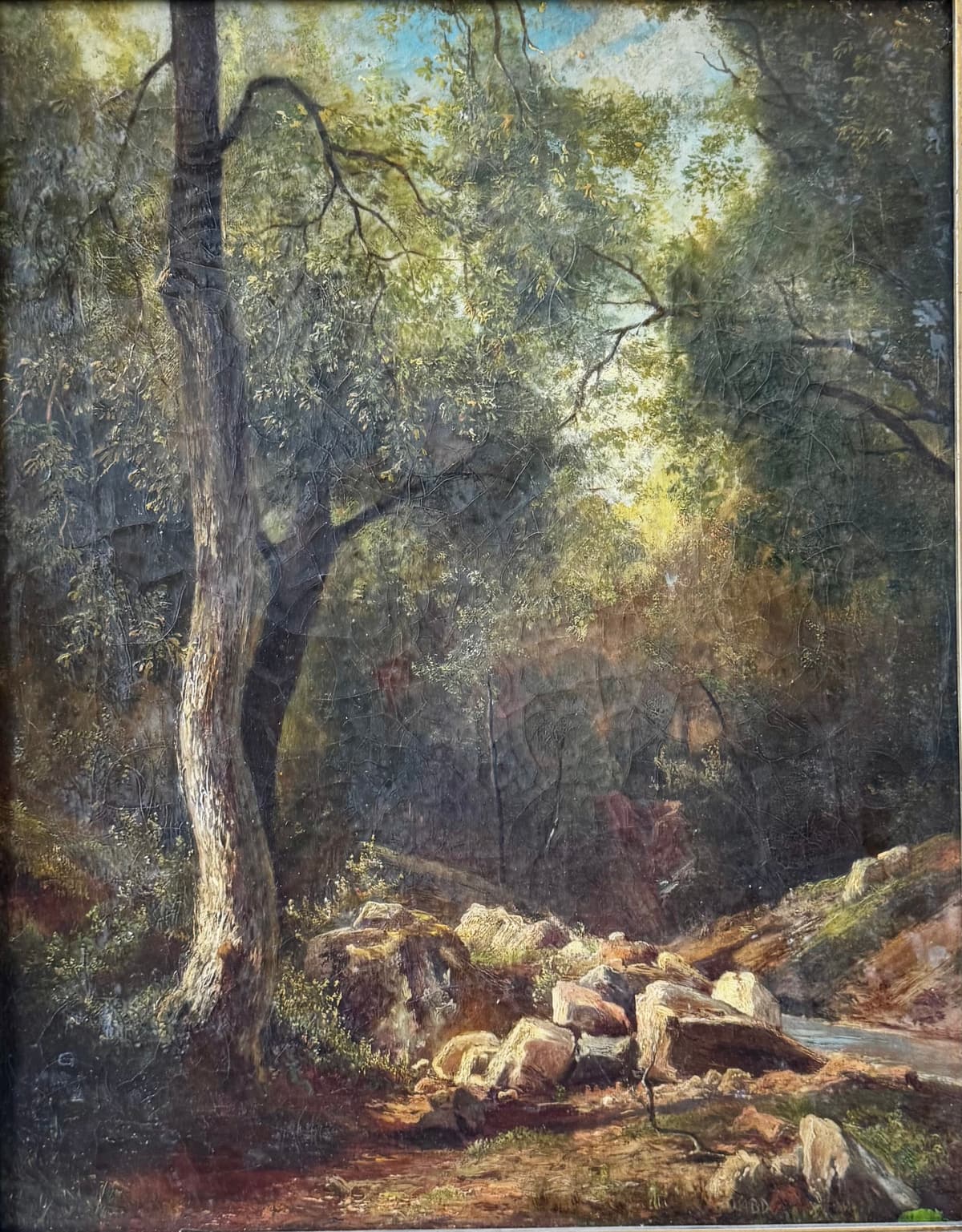
Forest detail, with stream bank
Description
No description available yet.
Curators

Ács Érmes Károly
curator
ermesprojekt@gmail.com

Ohnhaus Éva
curator
eva.artdeco@gmail.com
Detailed description
The Life and Art of Asher Brown Durand
Asher Brown Durand (1796–1886), a pioneer of American landscape painting, created monumental and romantic representations of mid-Atlantic landscapes as a member of the Hudson River School in the 19th century. His works convey a deep connection to nature and spirituality, reflecting the era's quest for American identity.
Early Life and Studies
Born in New York, he initially began his career as an engraver. He developed his artistic skills through Samuel F. B. Morse, who previously worked as a lightning rod inventor and painter. Durand adopted his master's precision and attention to detail, then turned towards nature representation.
Art and Style
Following the principles of the Hudson River School, Durand embraced the idea of romantic closeness to nature. In his paintings, the contrasts of light and shadow, the rich vegetation, and the immeasurable expanses of the landscape proclaim the close harmony between man and nature. His precise line work and sensitive color treatment enhance the idyllic atmosphere of the scenes.
Major Works and Their Impact
His most famous painting, “The Oxbow” (1836), became an icon of American landscape art, depicting the duality of wilderness and civilization. In the portrait “Kindred Spirits” (1849), he and Cole pay tribute to their friendship with nature. Other works, such as “Indian Pass” and “Monongahela Valley,” also celebrate the exploration of the continent's wilderness.
Legacy
Durand established the genre rules of American landscape painting, and his influence spans generations. His works are held in the Metropolitan Museum of Art and many university museums, reminding us of the 19th-century artists' love for nature and the perspective of the new world.