Balás István
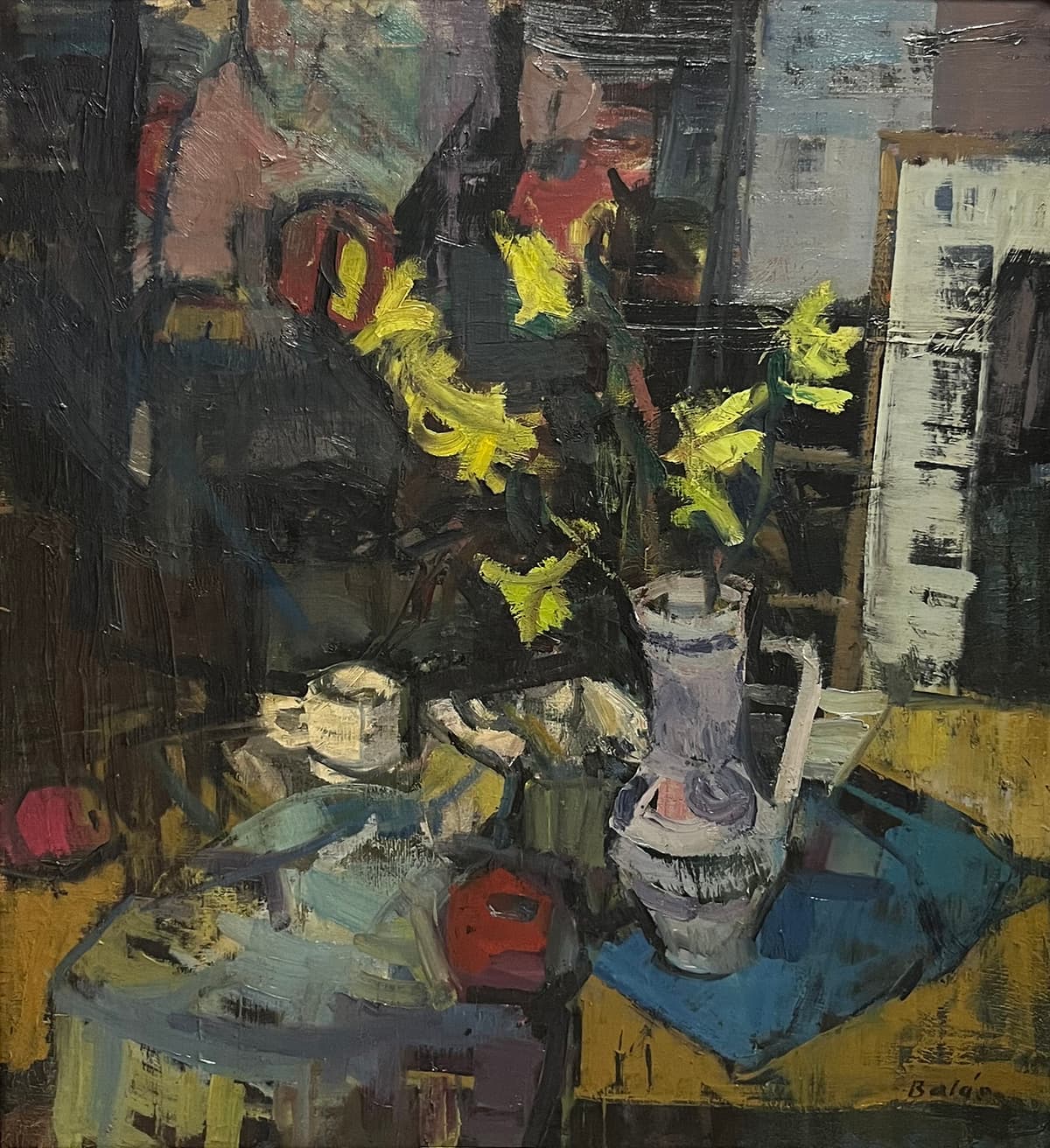
Blossoming Inspiration
Description
No description available yet.
Curators

Ács Érmes Károly
curator
ermesprojekt@gmail.com
Detailed description
Introduction of the artist Balás
István Balás is a contemporary Hungarian visual artist, born in 1975 in Budapest. He completed his studies at the Hungarian Academy of Fine Arts, where he explored the boundaries of abstract and figurative painting. From the beginning of his career, he has been concerned with the relationship between memory, identity, and space, which he portrays on his canvases in a unique, rich color palette.
Artistic concept and style
Balás's work is characterized by layered composition: his canvases combine traditional oil painting techniques with collage-like interventions. The central motif of the works often includes transitional spaces – hallways, balconies, old window frames – through which the artist examines the dialogue between inner emotions and collective memory.
Significant works and exhibitions
In 2008, he presented the series "Transition" at the Kieselbach Gallery, where visitors are captivated by the duality of tension and calm. In 2012, he participated in the Venice Biennale, where his triptych "Memory Images" was exhibited in the Hungarian pavilion. Additionally, among his public installations in Miskolc is the "Light Gate", which addresses the city's historical space with modern surfaces.
Impact and recognition
István Balás's art has given an important voice to 21st-century Hungarian painting. His works have been recognized with several domestic and international awards, including the Derkovits Scholarship (2005) and a nomination for the Kossuth Prize (2018). His exhibitions not only showcase the aesthetic value of the paintings but also reflect on social and psychological issues.
Summary
István Balás's artistic career positions itself at the intersection of conservative techniques and contemporary thought. In his works, the memories of the past meet the questions of the present, encouraging the viewer to discover their own inner landscapes. This dialogue makes his oeuvre permanently exciting and significant in today’s art scene.