Carl Jacob Lindstrom (1801-1846)
Visit
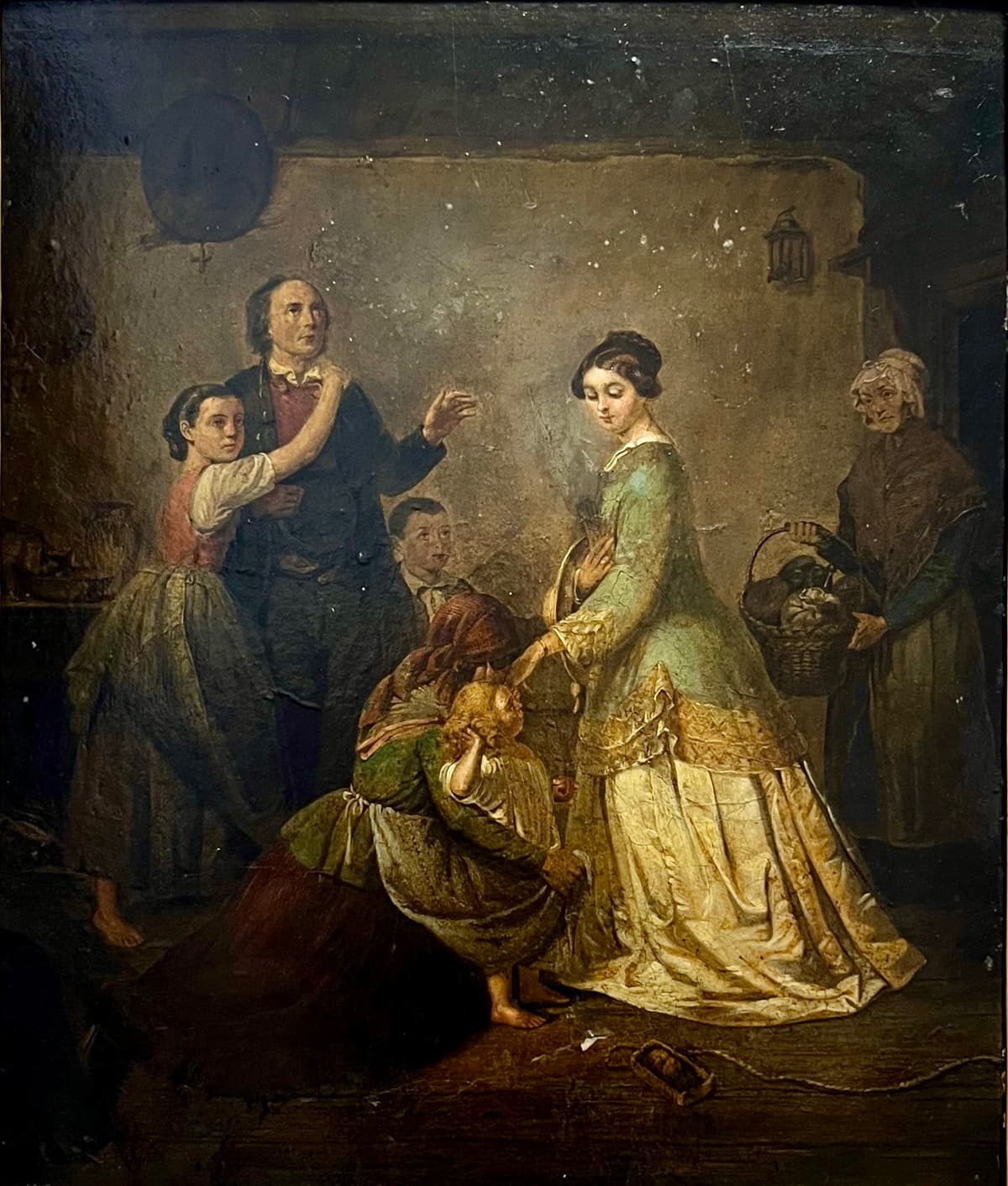
Description
No description available yet.
Curators

Ács Érmes Károly
curator
ermesprojekt@gmail.com
Detailed description
Carl Jacob Lindström: Biography and Style
Carl Jacob Lindström (1801–1846) was a Swedish painter, a distinctive figure of the Romantic era. He was born in a small Scandinavian town and discovered the beauty of nature in his childhood. He moved to Paris at an early age to study at the art academy, where he stood out with his delicate brushwork and rich color palette.
Career
Lindström dedicated his entire life to depicting nature. He primarily created landscapes and atmospheric paintings. His style combines elements of romanticism and realism: his works display both dramatic light effects and fidelity to details. Common themes in his paintings include still lifes by the waterside, the depths of forests, and the vibrant tones of the evening sky.
Notable Works
The work titled A Tavern Evening (1837) creates a melancholic atmosphere, where the light playing on the reflections of the lake gives the composition its dynamics. The Foggy Valley (1842) depicts the boundaries of fog with particular sensitivity, while the Swedish Coast (1845) showcases the power of waves and the stunning beauty of nature with its monumental spectacle.
Impact and Legacy
Lindström's work had a significant impact on the development of Scandinavian Romantic landscape painting. His painting solutions, especially the use of light and shadow play, provided inspiration for later generations. Although he lived a short life, his works can still be found in the collections of museums operating in Stockholm and Gothenburg.
Conclusion
Carl Jacob Lindström was one of the exceptional talents of Romanticism, through whose paintings the beauty of nature and the subtle nuances of atmosphere come to life. His creations celebrate the relationship between man and nature, reminding us that the power of art lies in capturing the moment.