Carlo Lasinio (1759–1838)
The Death of Lucretia
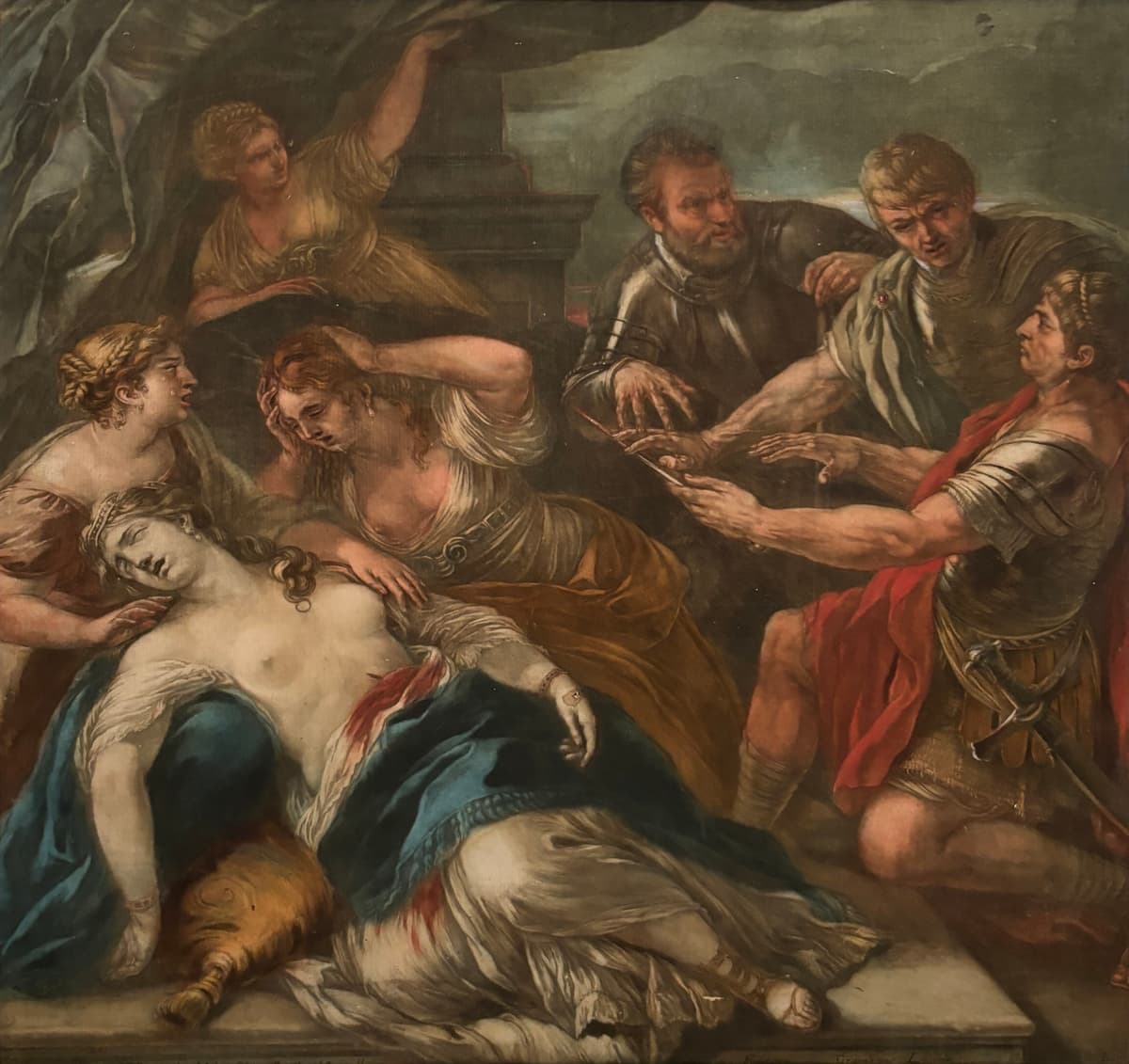
Description
No description available yet.
Curators

Ács Érmes Károly
curator
ermesprojekt@gmail.com
Detailed description
Gravée per Lasinio: A Neoclassical Engraving Artist
Carlo Lasinio (1759–1838) was born in Venice and became one of the most significant engraving masters of neoclassical aesthetics. At a young age, he honed his artistic talent at the Accademia di Belle Arti in Venice, and later studied ancient ruins and the works of Piranesi while traveling in Italy.
Lasinio excelled primarily in the genre of etching: he became famous for his fine line work and detailed tonal handling. In his works, he combined motifs of classical architecture with the romantic depiction of ruins, thus creating a neoclassical appearance that suited the contemporary taste.
His most notable publication is the Antichità di Pompei (1793–1804), in which he immortalized wall paintings, reliefs, and architectural details revealed during the Pompeii excavations in the form of a series of etchings. This work was also supported by Antonio Canova, who recognized Lasinio's significance in promoting classicism.
In addition, Carlo Lasinio founded several art academies in Paris and London, where he also served as a teacher. Through his students, the influence of his work was felt throughout Europe, laying the foundation for the genre of archaeological illustration in the 19th century.
Through his work, Lasinio showcased a fusion of respect for the memories of the past and technical precision. With his lasting legacy, he contributed to the renewal of the neoclassical language of forms and continues to inspire engravers to this day.