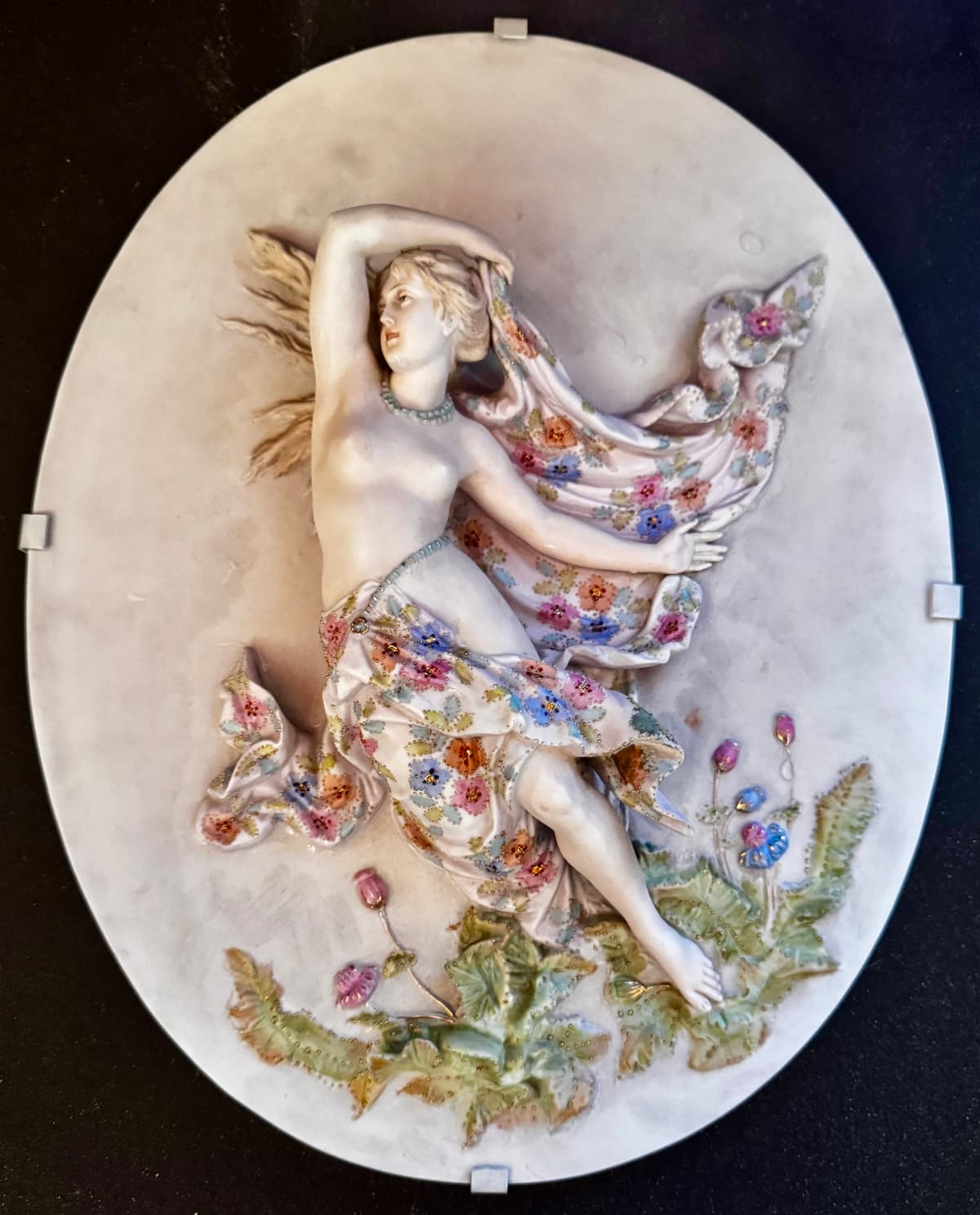
Description
No description available yet.
Detailed description
Biscuit porcelain is an unglazed, matte-finished porcelain that was primarily produced in Europe, especially France, during the 18th and 19th centuries. The biscuit technique allows porcelain sculptures or decorative objects to be made with fine details and a soft, matte surface, often complemented by painting or coloring. French porcelain art was outstanding during this period, and the Sèvres manufactory, for instance, became world-famous for its high-quality works. Such works typically served decorative purposes, often depicting mythological, allegorical, or everyday themes, and played an important role in artistic expression and the representation of social status. Painted biscuit porcelain works are finely crafted, and the painting technique greatly contributed to the uniqueness and value of the creation. Although the name of the creator is unknown, such objects reflect the rich tradition of French classical porcelain culture, which is still highly esteemed among collectors today.