Gerbmutter Imre (1894–1959)
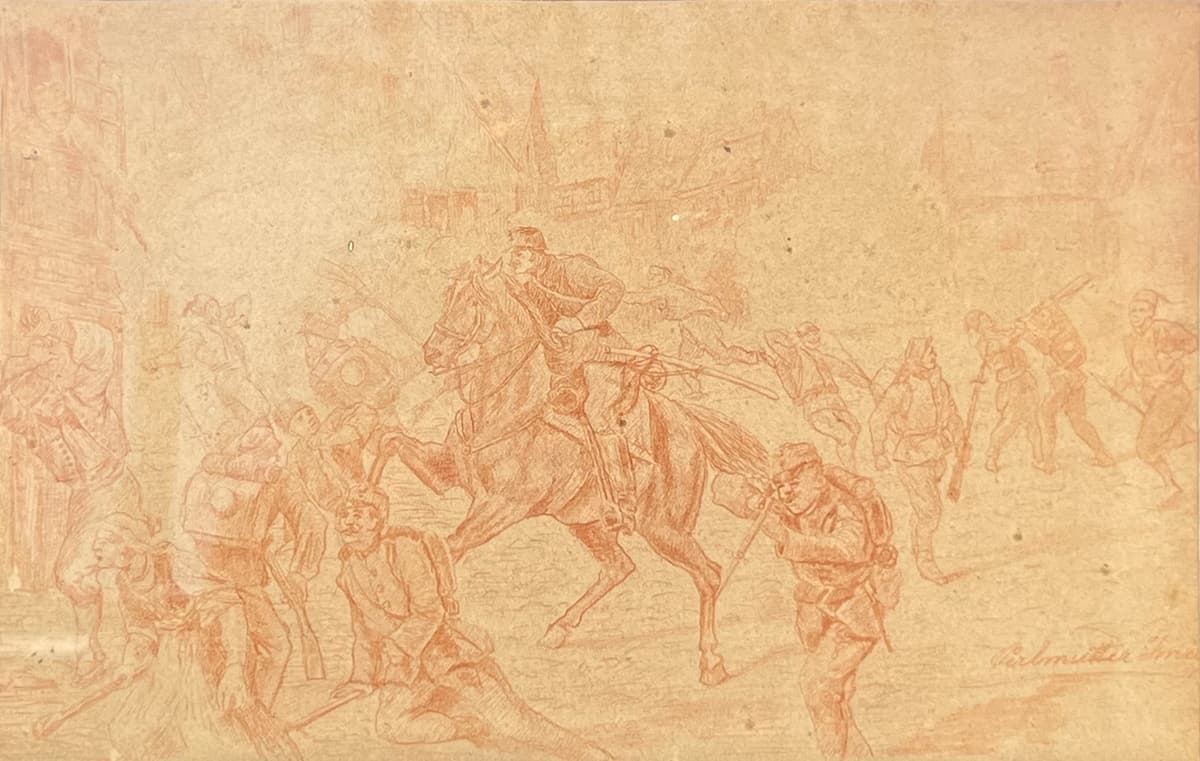
Hussars on the Battlefield
Description
No description available yet.
Curators

Ács Érmes Károly
curator
ermesprojekt@gmail.com
Detailed description
Introduction
Imre Gerbmutter (1948–2010) was a diverse and experimental creator of contemporary Hungarian art. Throughout his career, he operated at the intersection of abstract expressionism and conceptual art. In his works, he often explored the relationship between human existence and nature, experimenting with new material uses and installation solutions.
Artistic Career
He graduated from the Hungarian Academy of Fine Arts in the early 1970s and then exhibited at the emerging young generation exhibitions. In the 1980s, he began to gain attention on the international scene, participating in several European biennials. During this time, he developed his own organic-surrealist style, which combines sculptural elements with layers of painting.
Main Works and Style
His most famous work is the 1978 sculpture installation titled Memory Tree, which combines natural branch forms with glass components. In the canvas series titled Underwater City (1985), he aimed to poetically depict underwater landscapes. After 1990, in his project called Organic Structures, he experimented with recycled materials, emphasizing the issue of sustainability.
Legacy and Impact
Imre Gerbmutter's work had a significant impact on later generations: his pieces can be found in several museums in Hungary and abroad. His research anticipated the crossing of boundaries between material and form. His creative spirit continues to inspire contemporary visual art today.