Glatz Oszkár (1902–1985
Flutist Bojtár
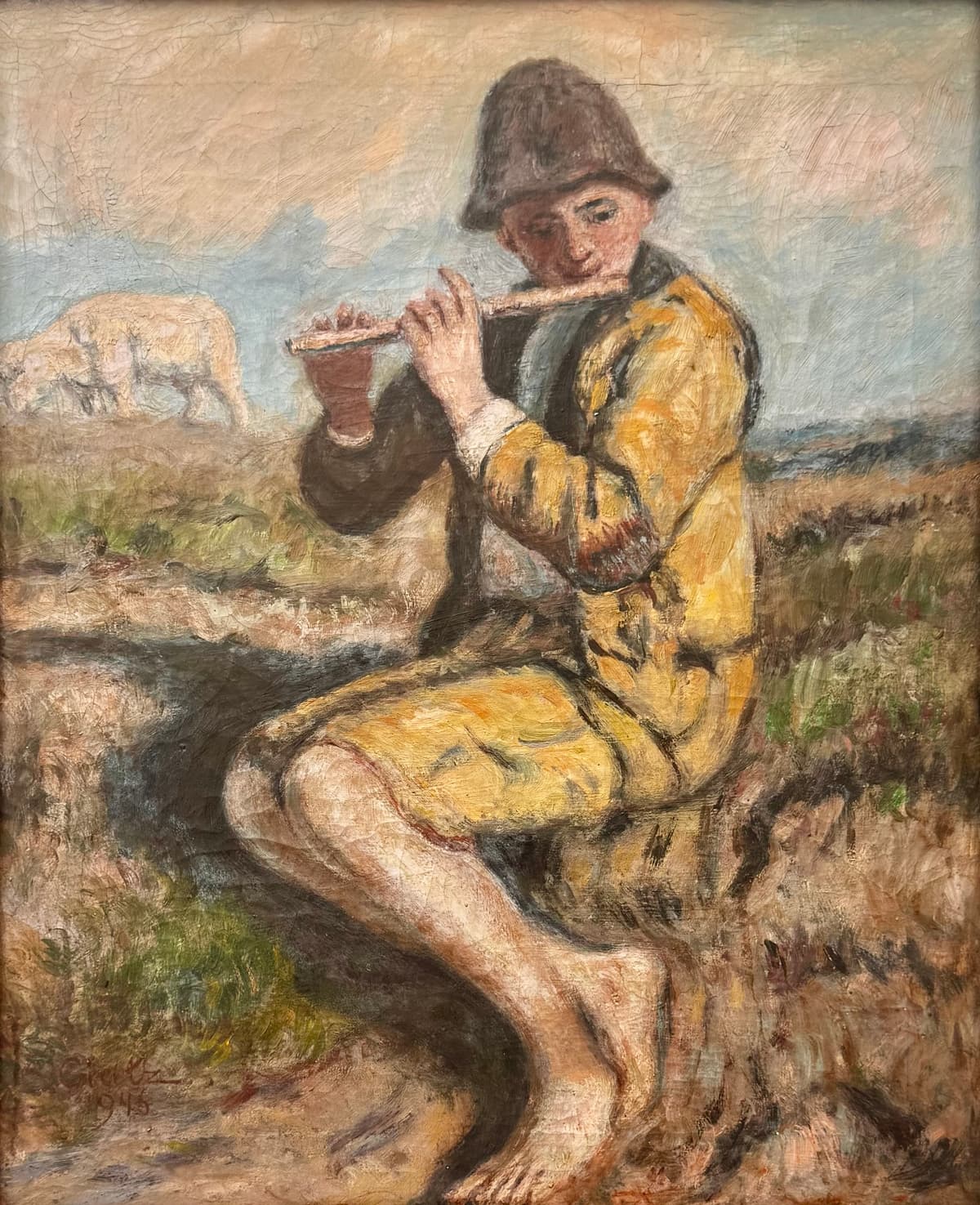
Description
No description available yet.
Curators

Ács Érmes Károly
curator
ermesprojekt@gmail.com
Detailed description
The Art and Career of Oszkár Glatz
Oszkár Glatz (1902–1985) was one of the prominent figures of 20th-century Hungarian painting. He studied at the Hungarian Academy of Fine Arts, where, influenced by his masters, elements of post-impressionism and expressionism appeared in his early works.
From the 1930s, his art was characterized by the play of light and shadow as well as conscious spatial organization. In his early landscapes—such as "Dappled Light in the Forest"—the lyricism of nature is highlighted, while in his urban scenes—like "Urban Symphony"—the dynamism of the city took center stage. During this period, he experimented with contrasts and the depiction of motion.
After World War II, Glatz returned to traditional techniques: in his watercolors, clarity and harmony became prominent. In his portraits from this time, he captured not only external appearances but also inner emotional states. Among his most recognized works are "Still Life by the Lake" and "Face of an Old Fisherman," which stand out for their delicate tonalities and emotional depth.
Throughout his career, he participated in numerous solo and group exhibitions; his works can be found in the Hungarian National Gallery as well as several regional museums. In Oszkár Glatz's art, the delicate balance of colors and forms is evident, inspiring contemporary painters as well. His oeuvre addresses the relationship between man and his environment as well as the possibilities of visual expression of emotions as a central theme.