Gulácsy Lajos (1882–1932) után
Eternal Bond
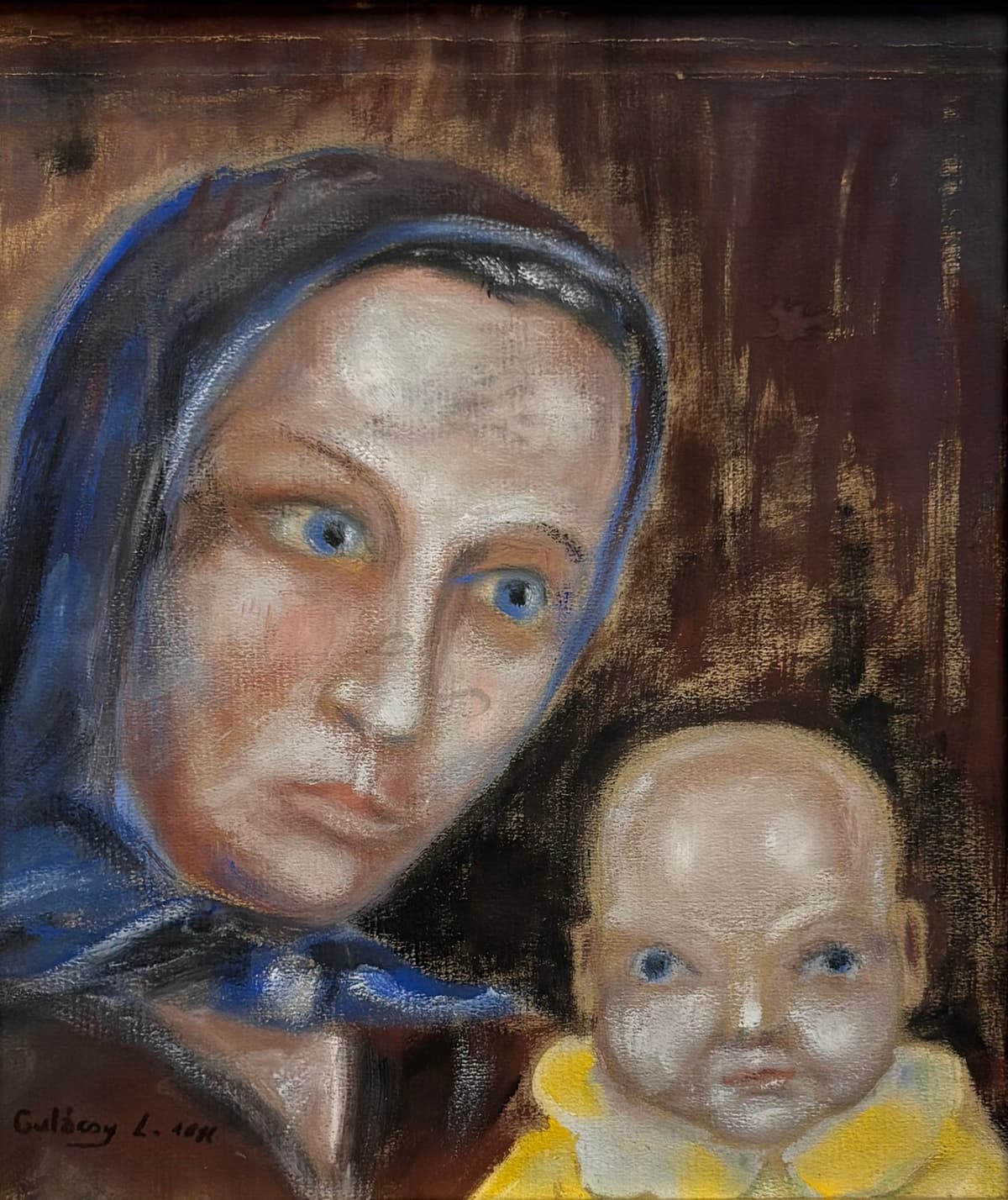
Description
No description available yet.
Curators

Ács Érmes Károly
curator
ermesprojekt@gmail.com
Detailed description
This 25 × 21.5 cm pastel work on cardboard clearly evokes the style of Lajos Gulácsy based on the composition and the indication ("Gulácsy L.") – especially through expressive yet lyrical facial expressions and the spiritual mother-child theme, although the work does not originate from Gulácsy.
The painting features a half-length composition of a woman in a headscarf and an infant. The woman's face is elongated, slightly tired, her eyes are blue and gaze into the distance, exuding a melancholic yet reverent atmosphere. The child also has blue eyes, their face illuminated by a yellowish-white light, with the two figures highlighted against a dark brownish background. The pastel technique gives a velvety softness to the surface, the lines almost tremble, which is a typical Gulácsy mark: the symbolic, non-realistic portrayal of motherhood.
Style: symbolist-expressive, probably from the 1910s–1920s.
Lajos Gulácsy: Life and Art
Lajos Gulácsy (1882–1932) is a prominent figure of Hungarian avant-garde and secession. He received his artistic training at the Budapest School of Decorative Arts and the Academy in Munich, where he mastered the language of Jugendstil and symbolism. He became acquainted with modern movements in Paris, with his travels building upon the landscapes of the Italian Renaissance and the Mediterranean light. His early exhibitions took place at the Műcsarnok, where he stood out from the beginning with his characteristic, dream-like compositions.
Work and Style
In his art, dream-like symbolism and rich decorativeness met. His paintings often feature mythical beings, visions, and geometric ornamentation. His favored technique was tempera and gouache on paper, which he complemented with metal foils and fine brushwork. Among his main works are Leda (1906), Blue Light (1911), Green Fairy (1912), and several self-portraits. Additionally, he designed sets and costumes for the National Theatre, bringing a new breath to the contemporary stage's visual world.
Heritage and Significance
The oeuvre of Lajos Gulácsy is a defining part of Hungarian modernism. His graphic works – posters, book illustrations, and graphic sheets – were published in the pages of the MA journal, shaping the artistic endeavors of his contemporaries. In his aftermath, the Museum of Fine Arts and the Gulácsy Memorial House in Salgótarján organized retrospective exhibitions, which continue to invigorate the effect of his colorful, mystical world to this day. Even after his death, he inspires young creators and has earned posthumous recognition.