Harmann Béla (1948–)
Badacsony landscape this year...
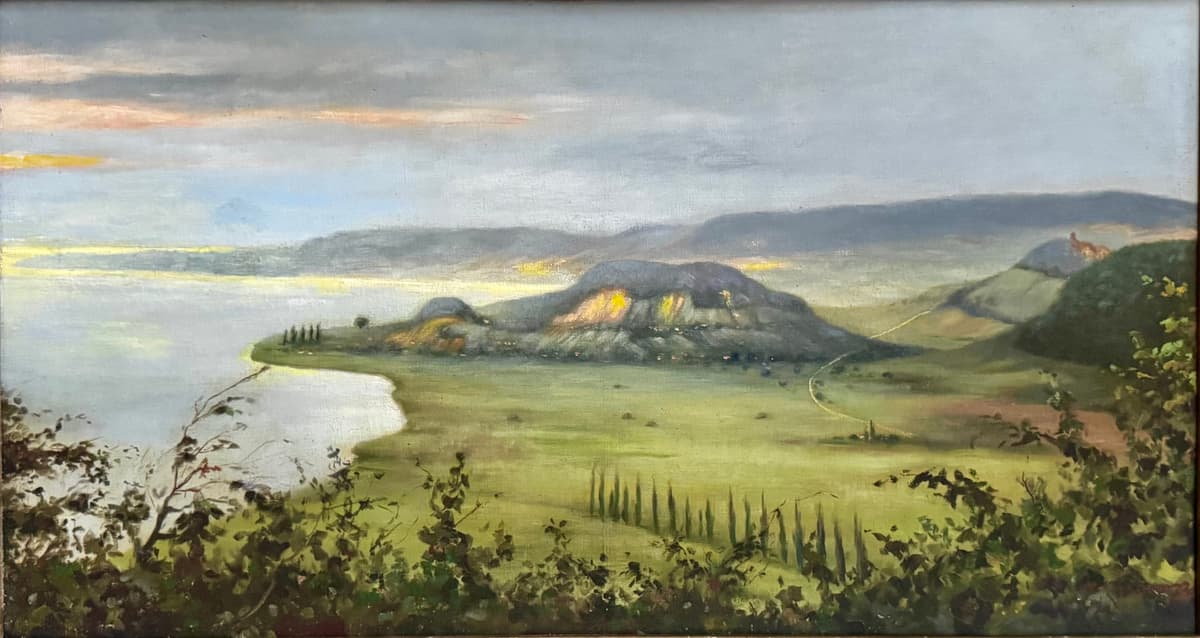
Description
No description available yet.
Curators

Ács Érmes Károly
curator
ermesprojekt@gmail.com
Detailed description
Béla Harmann's Artistic Career
Béla Harmann (1948–) is a defining figure in contemporary Hungarian visual arts, who began his career at the Academy of Fine Arts and became known in the 1980s. His works are often characterized by the combination of classical painting techniques and experimental elements. Pioneer in the combination of etching and acrylic, he opened new dimensions in the world of forms and textures.
Style and Themes
At the center of Harmann's art is the relationship between the human soul and the urban environment. In his early period, he favored figurative representation, exploring themes of loneliness and identity. Later, he transitioned to abstract compositions, realizing that the play of color and surface could evoke a more powerful emotional impact. His works commonly feature the contrast between cool and warm tones, as well as geometric and organic forms.
Main Works
His painting "Metaphysical Landscape" (1985) is a dreamlike reconstruction of an abandoned urban space. The delicate etching background and vibrant acrylic splashes create a dramatic contrast. The series "Dream Fragments" (1992–1995) was created through the collaboration of ceramics and canvas, where the broken glass pieces evoke fragmented memories. In the installation "Urban Symphony" (2003), metal panels pulse beneath LED lights, reflecting the rhythm of modern urban life.
Legacy and Impact
Béla Harmann's work has contributed to the international recognition of Hungarian postmodern art. His works are featured in institutions such as the Hungarian National Gallery and the Albertina collection in Vienna. His visuality and openness to technical innovations continue to inspire young visual artists, who follow their own paths in pushing the boundaries of form and material.