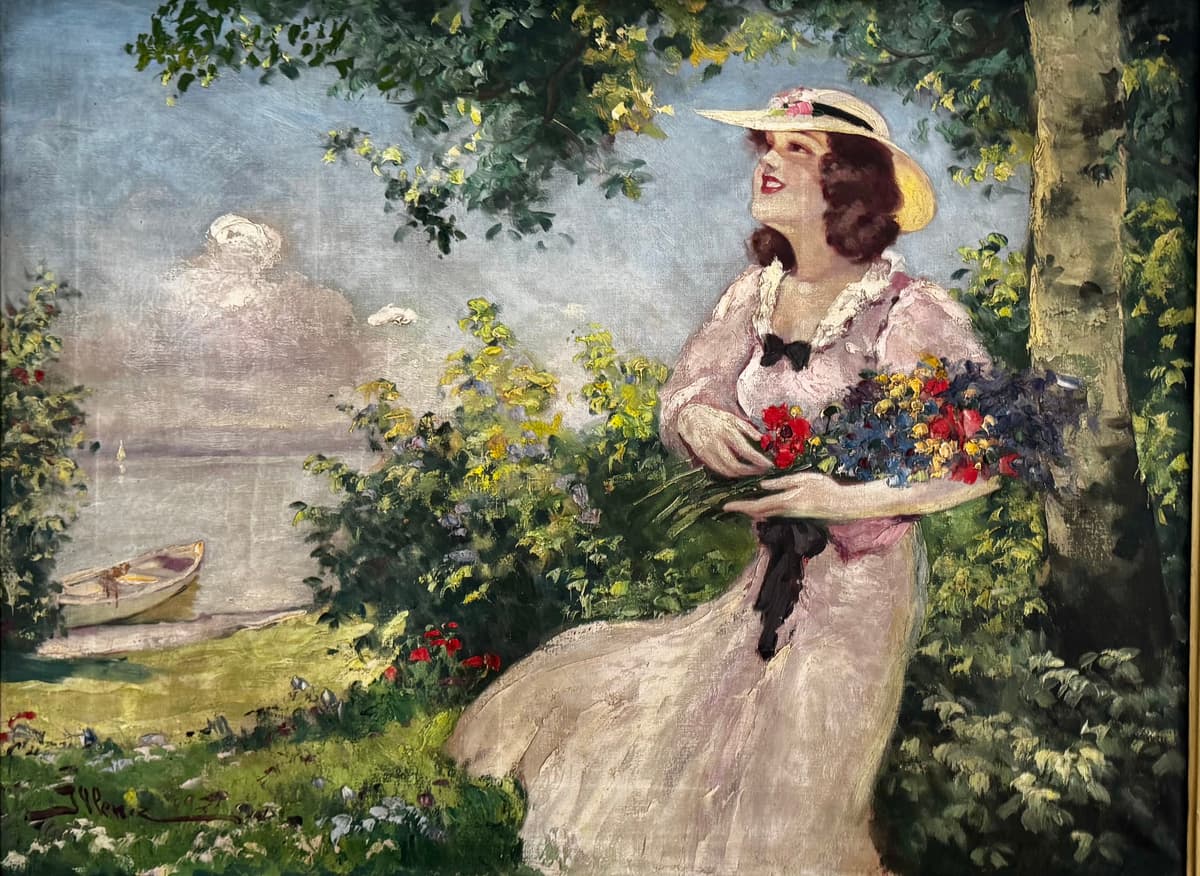
Description
No description available yet.
Detailed description
The Art of Lipót Illencz
Lipót Illencz (1880–1956) was one of the most significant yet lesser-known figures in Hungarian painting. He began his career at the Budapest Academy of Fine Arts, where he combined the avant-garde aspirations of the era with the traditional academic school. In his works, he often experimented with the expressive effects of colors and forms, thus creating pieces that reflect both the personal inner world and the social changes of the time.
In his early period, in the early 1900s, Lipót Illencz primarily painted landscapes and still lifes. One example is the painting titled “Calm by the Danube”, where he exceptionally used the contrast of light and shadow, alluding to the inner rhythm of the ever-changing nature. During this time, his characteristic brushwork developed, which combined the airiness of French Impressionism with the structural strength of Post-Impressionism.
In the 1920s and 30s, Illencz's style took a strong turn: he employed geometric shapes and vibrant, almost symbolic colors. In his 1932 work “Urban Rhythm”, the influence of Cubism is already noticeable, yet the lyrical rhythm of the composition remains. The cityscapes he painted during this period depicted both the pulse of the modern metropolis and human loneliness.
Perhaps the most personal piece of Lipót Illencz's oeuvre is the “Self-Portrait in a Storm” from the 1940s, where the artist projects the anxieties of wartime onto the canvas. The strong, often contrasting pastel colors simultaneously convey inner tension and hope, making his work one of the most poignant creations of the era.
In summary, Lipót Illencz left behind a rich and diverse body of work, where technical innovations, stylistic experimentation, and human sensitivity come together in a unique unity. His works continue to inspire Hungarian painting today and have contributed to the renewal of artistic thought in the 20th century.