Kende Géza (1889 -1952)
HABSBURG - Portrait of Archduke Franz Ferdinand of Lorraine - Austro-Hungarian Crown Prince
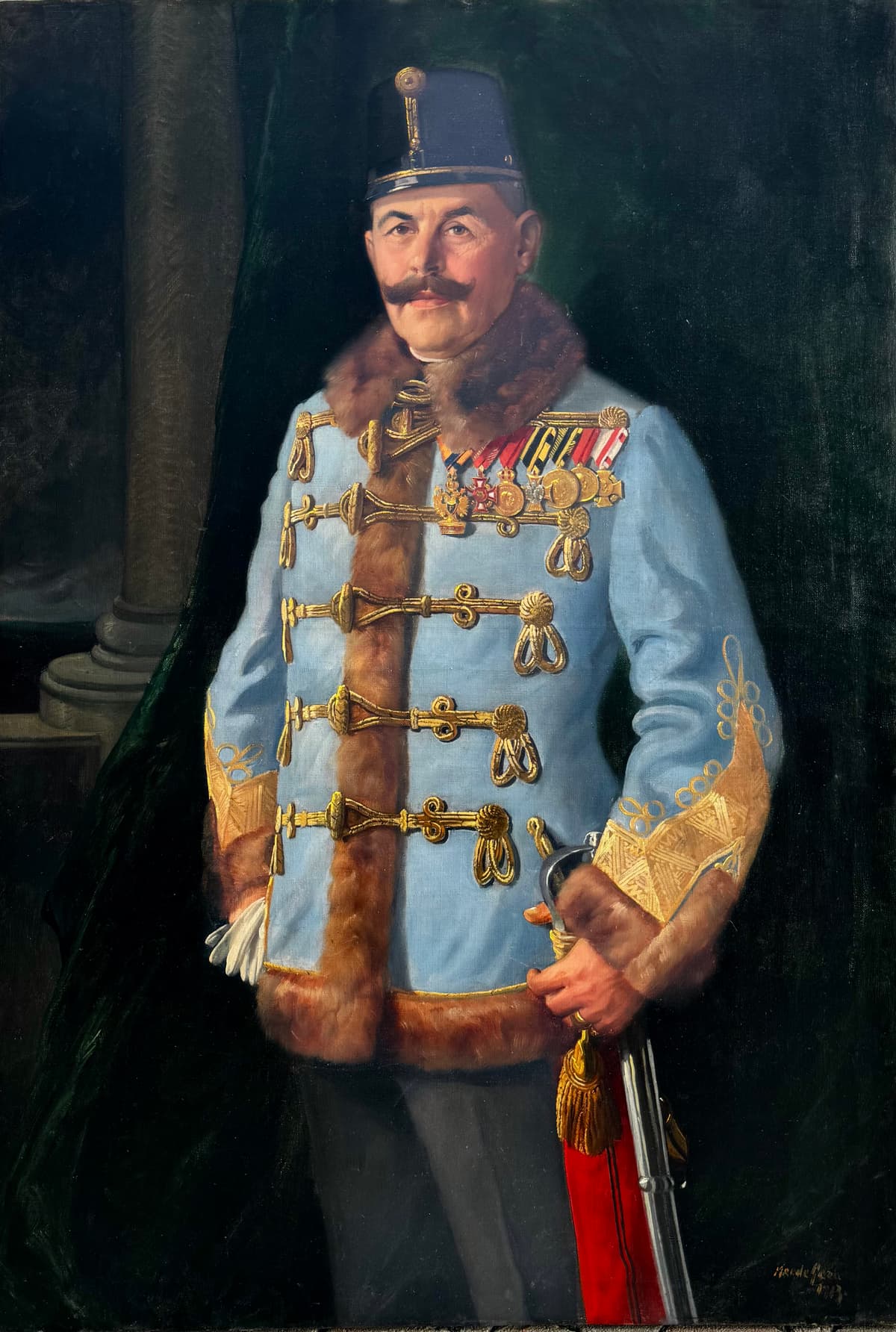
Description
No description available yet.
Curators

Ács Érmes Károly
curator
ermesprojekt@gmail.com

Ohnhaus Éva
curator
eva.artdeco@gmail.com
Detailed description
Introduction
Géza Kende (1889–1952) was a prominent figure in 20th century Hungarian fine arts. Throughout his graphic, painting, and sculpture career, he fused various genres while preserving his individual perspective. His works were unique among his contemporaries due to the rich detail in representation and the blend of emotional depth.
Life Journey and Artistic Career
He was born in Budapest, where he studied at the Hungarian Academy of Fine Arts from 1907. Among his masters were Viktor Madarász and Leó Roux. Between 1912 and 1914, he traveled to Vienna, where he became acquainted with the currents of Austrian Art Nouveau and Expressionism. After World War I, he returned home and started exhibiting regularly at the National Salon from 1923.
Artistic Style and Significant Works
A recurring motif in his works is the depiction of the Hungarian rural landscape and folk life. His favored techniques include linocut and woodcut, where rich tones of black create intense contrasts. Significant works include The Horsemen (1925), The Village World (1928), and Mecsek Landscape (1931). His paintings and drawings merge impressionistic color harmonies with precise detailing.
Heritage and Influence
Géza Kende's art is an integral part of Hungarian modernism; his works are currently preserved at the Hungarian National Gallery and several provincial museums. His body of work served as inspiration for later generations of graphic and painter artists. His creations embody the intersection of folk traditions and international trends, thus representing lasting value in the history of domestic art.
The Outstanding Significance of the Work
On June 28, 1914 - During the Sarajevo assassination, GAVRILO PRINCIP shot the imperial couple... - This assassination was the motive for the DECLARATION OF WAR sent to SERBIA, which subsequently triggered World War I...