Kolozsváry Zsigmond után
Intermezzo
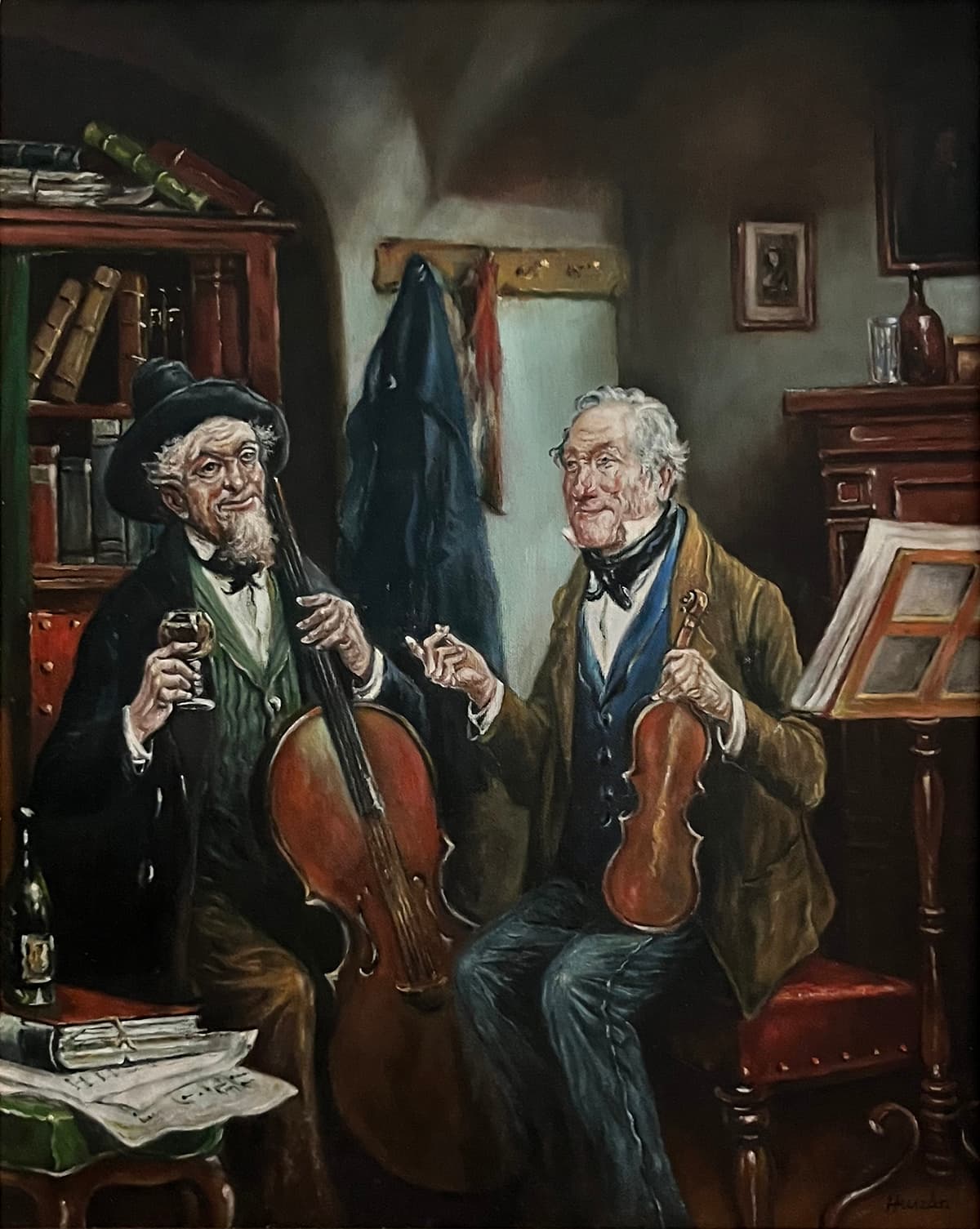
Description
No description available yet.
Curators

Ács Érmes Károly
curator
ermesprojekt@gmail.com
Detailed description
The Legacy of Adolf Huszár
Adolf Huszár (1887–1960) was a prominent figure in Hungarian painting, who played an important role in the avant-garde movements of the 20th century. He studied in Budapest, Munich, and Paris, where he became acquainted with post-impressionist and expressionist trends. Throughout his career, he combined the spirit of the Nagybánya artist colony with modern European movements.
Early years and studies: Adolf Huszár began his studies at the Hungarian Academy of Fine Arts in 1905, then continued in Munich, where he emphasized the play of colors and light. In Paris, under the influence of Cubism and the Fauves, his individual style began to emerge: on his canvases, formal deconstruction and rich color contrast became defining features.
Style and major works: Huszár's art is characterized by compact brushwork, geometric composition, and a vibrant palette. His most renowned works include The Seaside (1922), Garden Scene (1925), and Urban Landscape (1931). In these works, a close-to-nature atmosphere and modern lyrical quality coexist. Additionally, he also worked as a graphic artist: his woodcuts and lithographs highlight the simple beauty of rural life.
The legacy of Huszár: The artist was an active exhibitor at the National Salon and the Janus Pannonius Museum, and his works are now preserved in the Hungarian National Gallery and several regional collections. His influence extended to later generations, facilitating the modern transformation of Hungarian painting. The oeuvre of Adolf Huszár is an exceptional example of the convergence of form and color in 20th-century art history.