Koszta József (1861 - 1949)
On the Field
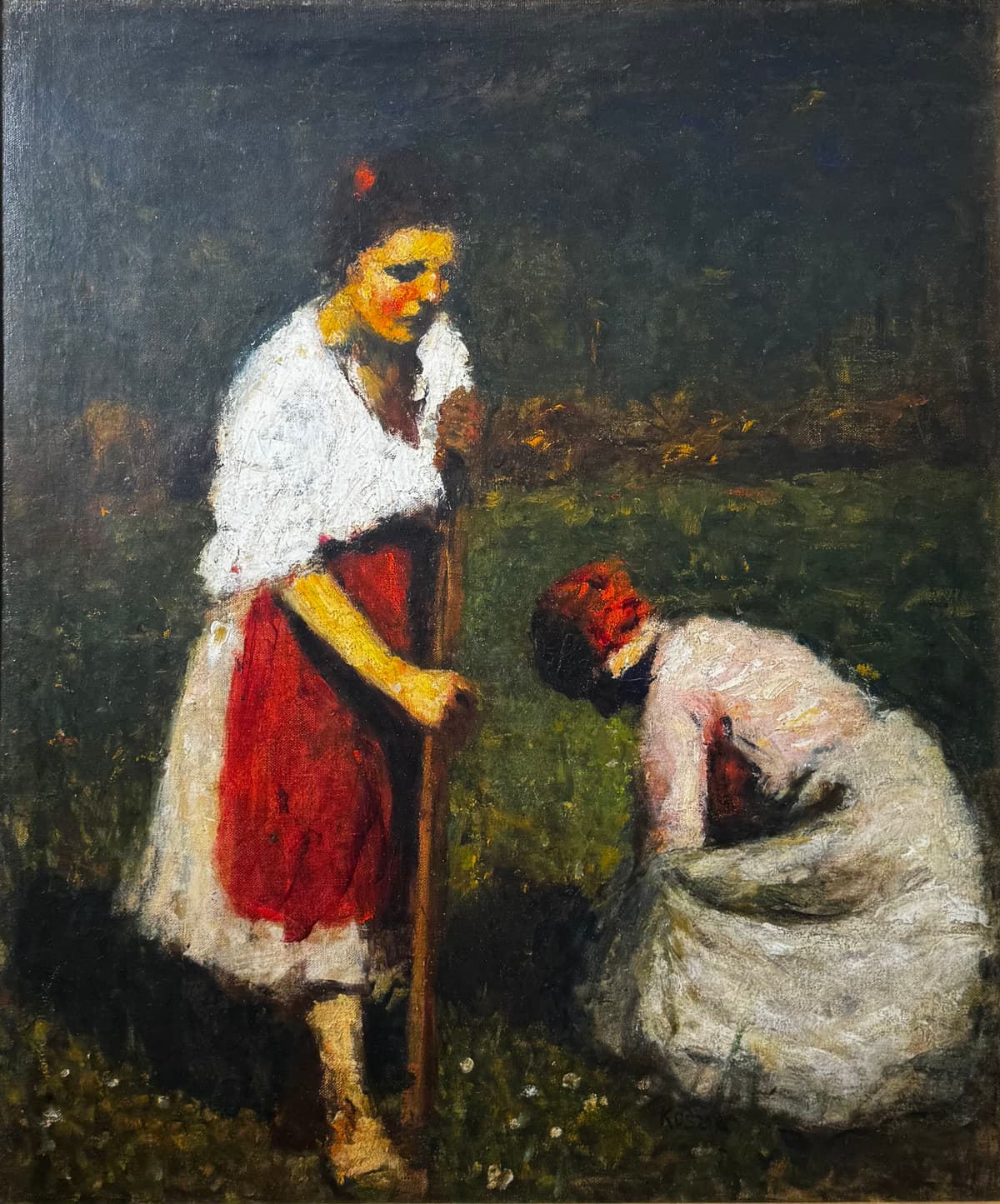
Description
No description available yet.
Curators

Ács Érmes Károly
curator
ermesprojekt@gmail.com

Ohnhaus Éva
curator
eva.artdeco@gmail.com
Detailed description
Koszta József: His Life and Work
Koszta József (1861–1949) was a defining figure in Hungarian painting, who mastered the technique of plein-air style at the turn of the 19th and 20th centuries and established it in Hungary. Even his early works reveal a strong interest in natural light as well as the depiction of the everyday lives of rural people.
He began his career at the Mint Drawing School in Budapest and in Munich, where he gradually left behind the excessive detail influenced by the German academic school. Between 1896 and 1901, he worked in Paris, where he became acquainted with contemporary impressionists and further refined his brushwork. Upon returning home, he became a teacher at art academies, but he always maintained his creative independence.
At the center of his art was the perception of the relationship between light and shadow: the dramatic tones of sunrise and sunset, the atmosphere of quiet evening landscapes regularly appeared in his canvases. His favored themes included rural roads, farmhouse buildings, and the wildlife of forests and riverbanks. His brushstrokes employed loose, sometimes sketchy solutions to avoid unnecessary detail, allowing light to take center stage.
Among his most famous works are Autumn Forest (1905), which portrays the warm colors of leaf fall on the canvas; the lyrically toned Winter Stream (1912), capturing the dynamic contrast between ice and water; and the late-period work Dusk Landscape (1930), which radiates a kind of meditative calm. His paintings have been exhibited at numerous shows in Hungary and abroad, winning awards in Venice and Munich as well.
Koszta József's oeuvre encompasses the transitional period of Hungarian painting, where naturalism still held strong influence, but the pulsating spirit of impressionism and post-impressionism was already perceptible. His legacy remains inspiring today: his works are enduring testaments to the love of the Hungarian landscape and the painterly representation of light, which continue to live on in the history of Hungarian visual art.