LOTZ KÁROLY (1833 - 1904)
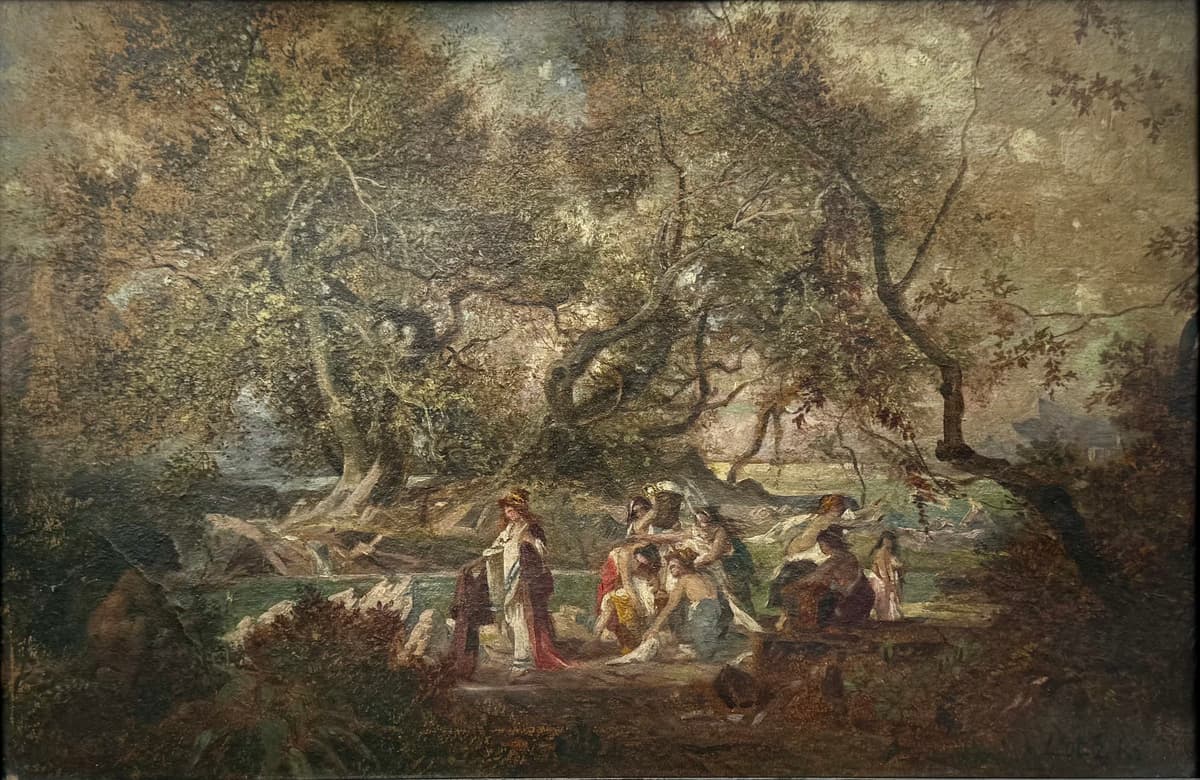
Bathing women
Description
No description available yet.
Curators

Ács Érmes Károly
curator
ermesprojekt@gmail.com

Ohnhaus Éva
curator
eva.artdeco@gmail.com
Detailed description
The Art and Work of Károly Lotz (1833–1904)
Károly Lotz is one of the most significant Hungarian painters of the second half of the 19th century, whose works combine elements of neo-Renaissance, Romanticism, and Academism. He studied in Vienna and Paris, where he learned the techniques of the best masters of the time. Upon returning home, his artistic creed was built on the rich visuality of historical and mythological themes.
Studies and Early Years
Lotz was a student at the city academy in Vienna and then at the École des Beaux-Arts in Paris between 1851 and 1858. Through his masters, he learned the classical methods of fresco and canvas painting, which later became defining in his decorative works.
Frescoes of the Parliament
His most famous works are the frescoes that adorn the walls and dome of the parliamentary grand halls, created between 1885 and 1896. Here, he depicted significant moments of Hungarian history, coronation scenes, and allegorical representations with unparalleled craftsmanship and monumental impact.
Other Emblematic Works
Lotz worked in the Great Hall of the Vigadó, the Hungarian State Opera House, as well as during the interior renovation of the Matthias Church in Buda. Everywhere, he emphasized the play of light and shadow, vibrant color handling, and richly detailed compositions.
Mythological figures, angels, and allegories are frequent in his paintings, but he also excelled in portraits. His technical virtuosity lay in creating lifelike textures and subtle facial expressions even on the rough surfaces of frescoes.
Legacy and Impact
Károly Lotz's work remains significant in Hungarian decorative arts today. His monumental frescoes are the jewels of domestic public buildings, and in his style, he represents the highest standard of 19th-century Academism. His legacy has also served as inspiration for later generations of painters.