Description
No description available yet.
Detailed description
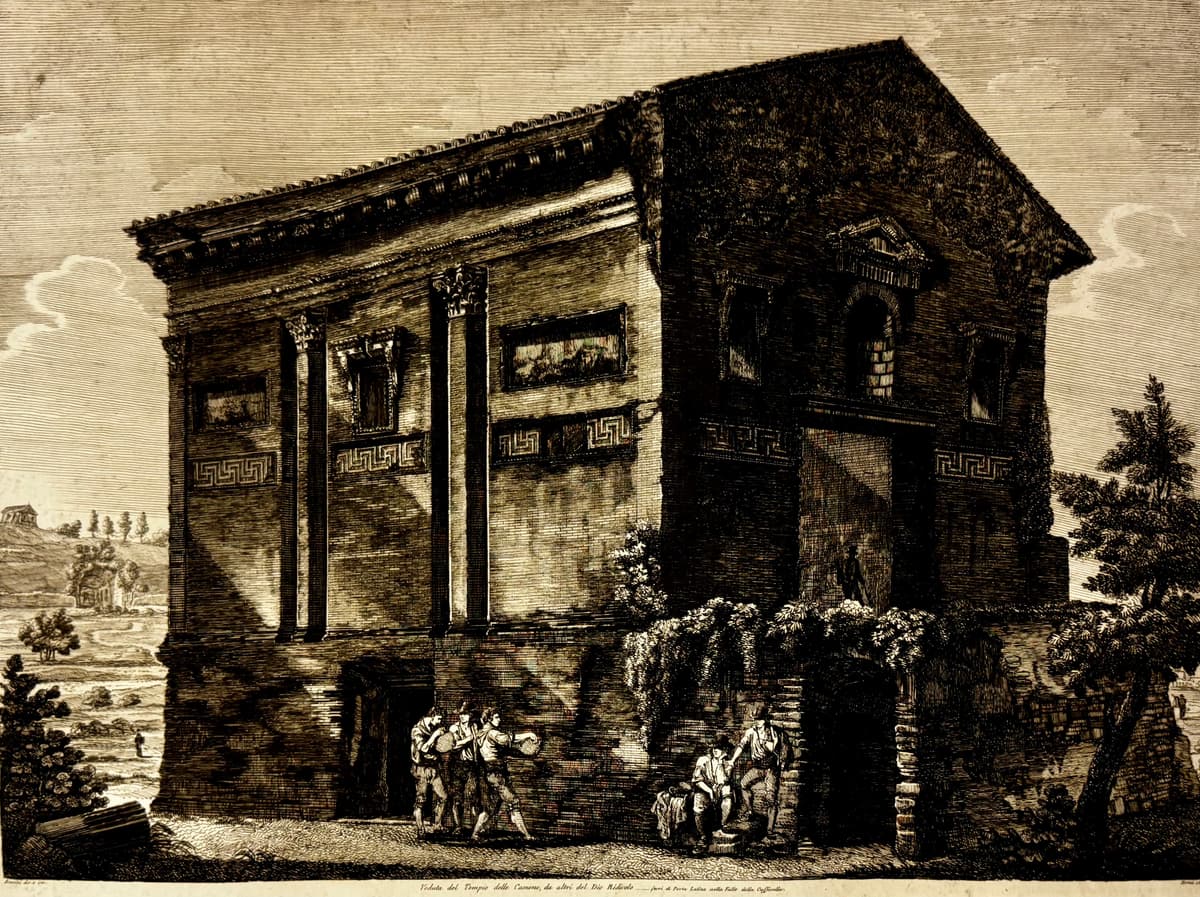
Luigi Rossini (1790–1857) through his works showcased the lesser-known yet remarkable sites of ancient Rome, such as the Temple of Comus, which, according to ancient sources, was erected in honor of the "Dio Ridicolo" (God of Laughter). Comus was the embodiment of revelry and satire in ancient Roman mythology and is often mentioned as a symbol of the ironic questioning of social norms.
Rossini's etching depicts the ruins of the temple, which preserved classical elements of Roman architecture, such as Corinthian columns and finely carved friezes. Despite the modest size of the structure, it held symbolic significance as it reflected a unique aspect of the spiritual life of Roman society, which was based on humor and irony.
The work stunningly presents the surviving details of the temple, while in the background, the romantic elements of the Roman landscape also appear. Rossini's work not only focuses on architectural beauty but also reminds us of the importance of preserving mythological and cultural traditions, while offering a glimpse into the colorful and rich social life of ancient Rome.