Description
No description available yet.
Detailed description
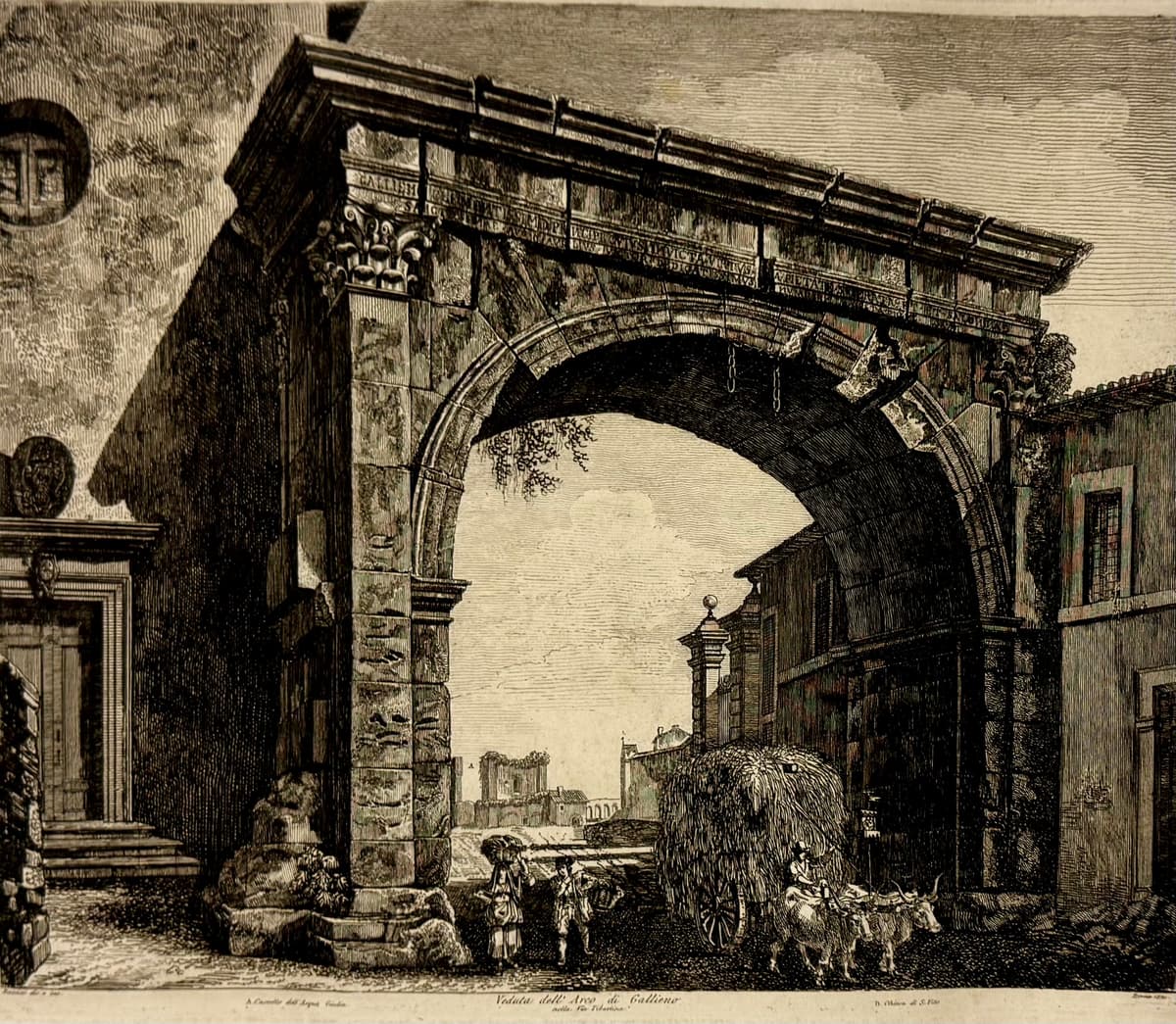
Luigi Rossini (1790–1857) immortalized numerous less well-known yet historically significant monuments of ancient Rome in his engravings, among them the Arch of Gallienus. This simple structure was originally part of an older city gate, the Porta Esquilina, which was modified and dedicated during the late Roman imperial period, under the reign of Emperor Gallienus (AD 253–268).
The arch was commissioned by a certain Marcus Aurelius Victor in honor of Emperor Gallienus and his wife, Salonina, as evidenced by the surviving inscription. The one-arch structure stands out with its simplicity and clean lines, representing a typical example of late antique architecture.
Rossini's work presents the arch within its environment, alongside the Roman landscape and the traces of medieval insertions. The creation reveals the delicate details of the columns and the façade, which have preserved the grandeur of Roman architecture despite the passage of time.
Although the Arch of Gallienus is more modest than other Roman arches, it serves as a reminder of the historical and political circumstances during the decline of the empire. Rossini's engraving highlights the cultural and architectural significance of the monument while conveying the romantic beauty of ancient Rome's heritage. The work celebrates the timeless intersection of history and architecture.