M. S. Karách (19–20. század fordulója, osztrák–német nyelvterület)
Among Mountains, Along the Stream
Description
No description available yet.
Curators

Ács Érmes Károly
curator
ermesprojekt@gmail.com
Detailed description
Identification of the painting
Artist: signature: M. S. Karách
Technique: oil, canvas
Size: 68 × 89 cm
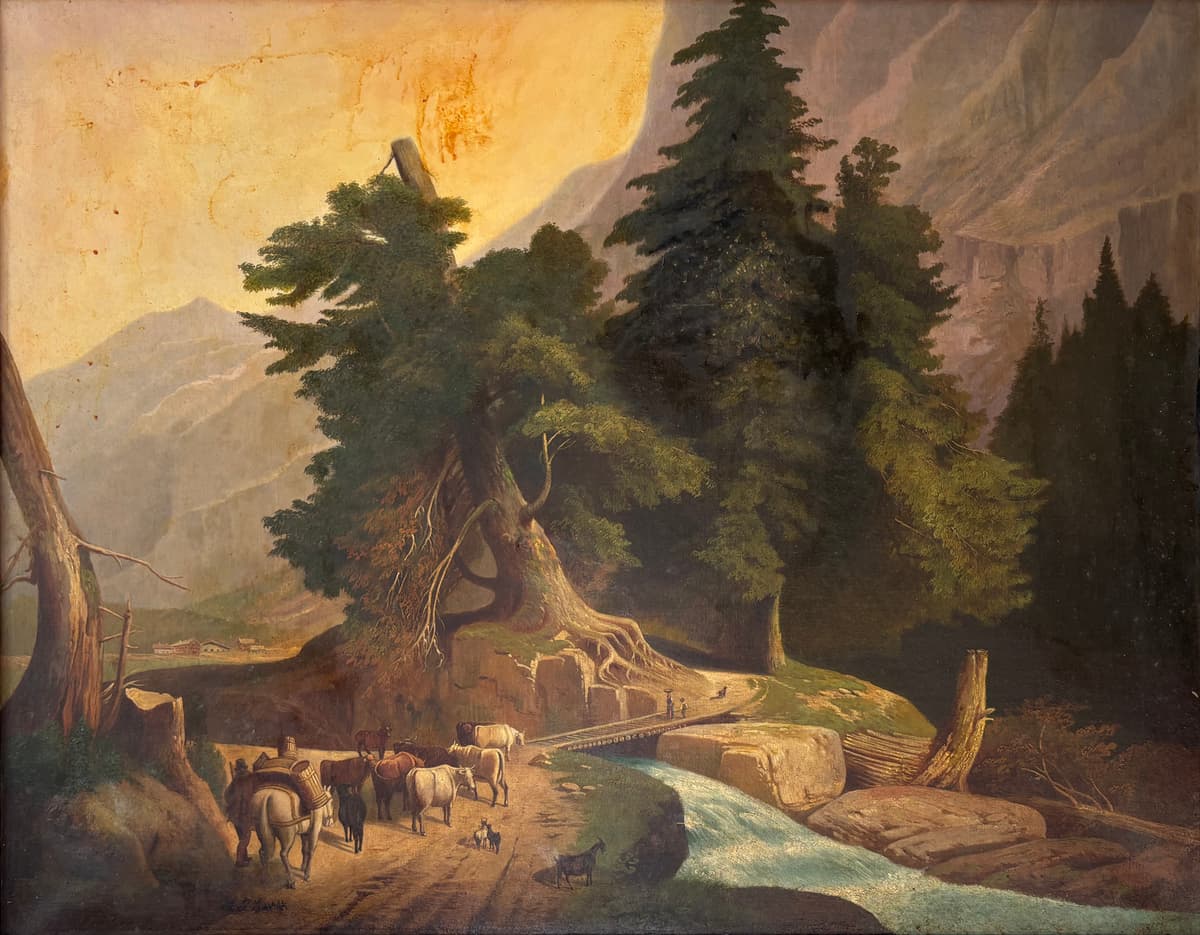
Depiction: Alpine landscape: forested mountainside, huge pines, rocky stream with a wooden bridge crossing it. On the road, a cart and animals (cows, horses, goats), as well as shepherds and travelers. In the background, steep mountain peaks.
Style: romantic-realistic landscape painting, characteristic of Austrian–German and Swiss painters in the mid to late 19th century.
Artist
The name “M. S. Karách” does not belong to the well-known Hungarian painters, it is more likely that the painter was connected to the Austrian–German-speaking area, possibly with ties to Hungary. Based on the signature, he could also be a regional, less documented painter who continued the tradition of classical Alpine landscape painting.
Artistic circle
Comparable to the Munich Academy school and the Austrian Alpine landscape painters (e.g., followers of Franz Richard Unterberger, Albert Zimmermann).
The detailed depiction of animals and the emphasis on large trees are characteristics of 19th-century romantic landscape painting.
Valuation
Minimum value: 400,000 – 600,000 HUF
Maximum value: 1,200,000 – 1,800,000 HUF (if the painter can be accurately identified and proves to have an exhibition history)
Suggested starting price: 450,000 HUF
Summary description for the catalog
M. S. Karách (turn of the 19th–20th century, Austrian–German-speaking area)
Alpine landscape with travelers and flock
Oil, canvas, 68 × 89 cm, signed in the lower right corner: “M. S. Karách”
The painting presents a classic Alpine landscape: at the center of the composition, there are huge pines, a rocky hillside, and a waterfall-like stream over which a wooden bridge crosses. In the foreground, shepherds and animals – horses, cows, goats – move along the road, bringing life to the monumental natural environment. The work continues the tradition of romantic Alpine landscape painting, which enjoyed great popularity among the middle-class audience in Central Europe in the second half of the 19th century.