Neogrády Antal (1898–1974)
Street Meeting
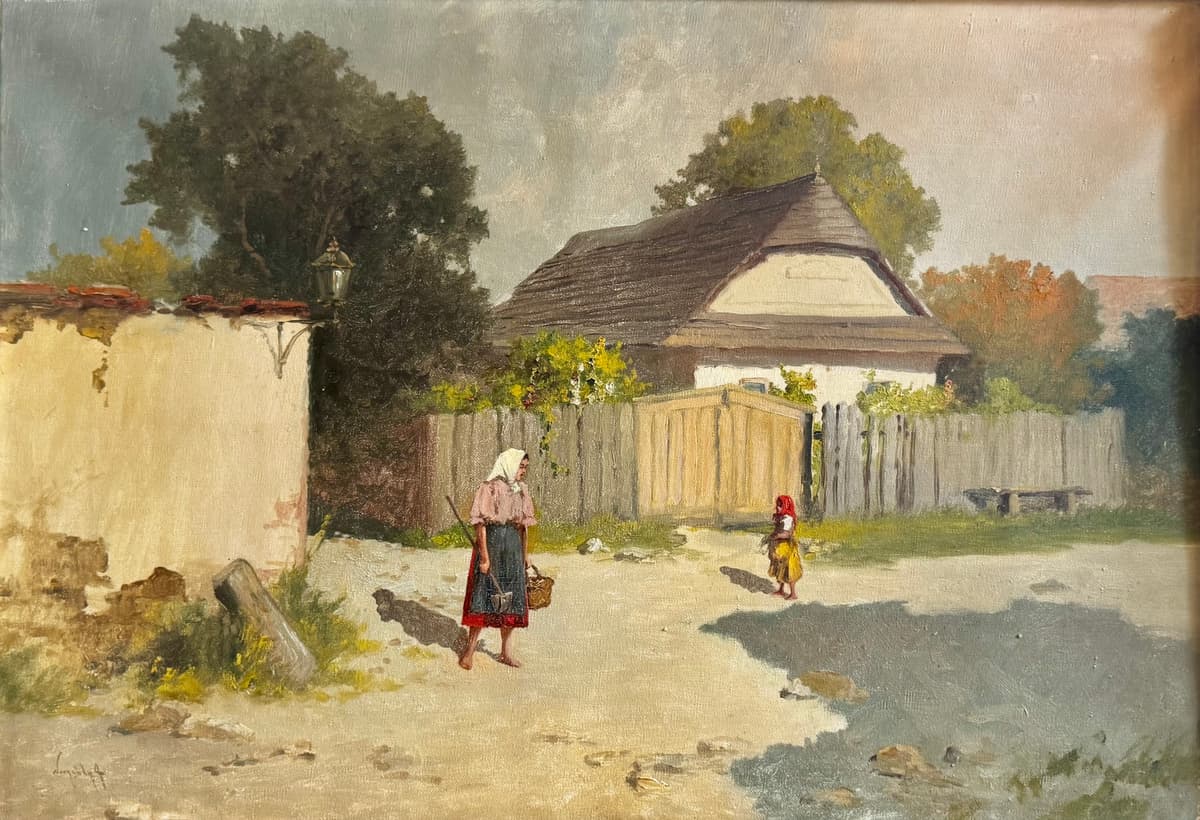
Description
No description available yet.
Curators
Ács Érmes Károly
curator
ermesprojekt@gmail.com
Detailed description
Antal Neogrády: Life Path and Art
Antal Neogrády (1898–1974) is a defining figure of 20th century Hungarian painting, whose art merges post-impressionism and modern realist currents. Throughout his life and career, both natural light and the dynamics of urban life played a central role.
He studied at the Hungarian Academy of Fine Arts, where he was influenced by the well-known masters of the time, such as Béla Czóbel and Vilmos Aba-Novák. In his early works, delicate brush handling and a love for nature dominate, but later he turned towards urban scenes and industrial landscapes.
The artist can be divided into three major creative periods. In the first (1920s), the landscape is prominent, with an emphasis on impressionistic color handling. In the second phase (1930–40s), social themes – workers and urban life – appear in an expressive form. In the third period (1950–60s), Neogrády experimented with profound symbolic motifs.
Among his best-known works are “Dunai reggel” (1924), “Fagyos gyárudvar” (1938), and “Űrhajózók érkezése” (1961). The first is a landscape working with subtle light effects, the second is a dramatic depiction of social reality, while the third mixes futuristic and surrealist elements.
Antal Neogrády's legacy continues to have a vibrant impact on contemporary Hungarian painting. His works can be found in the Hungarian National Gallery and several regional museums, where they are regularly presented in exhibitions.
In summary, Antal Neogrády's art combines the natural and urban spaces, as well as the traditions of post-impressionists and modern realists, enriching Hungarian visual art.