Rakssányi Rezső (1879 - 1950)
After the ball
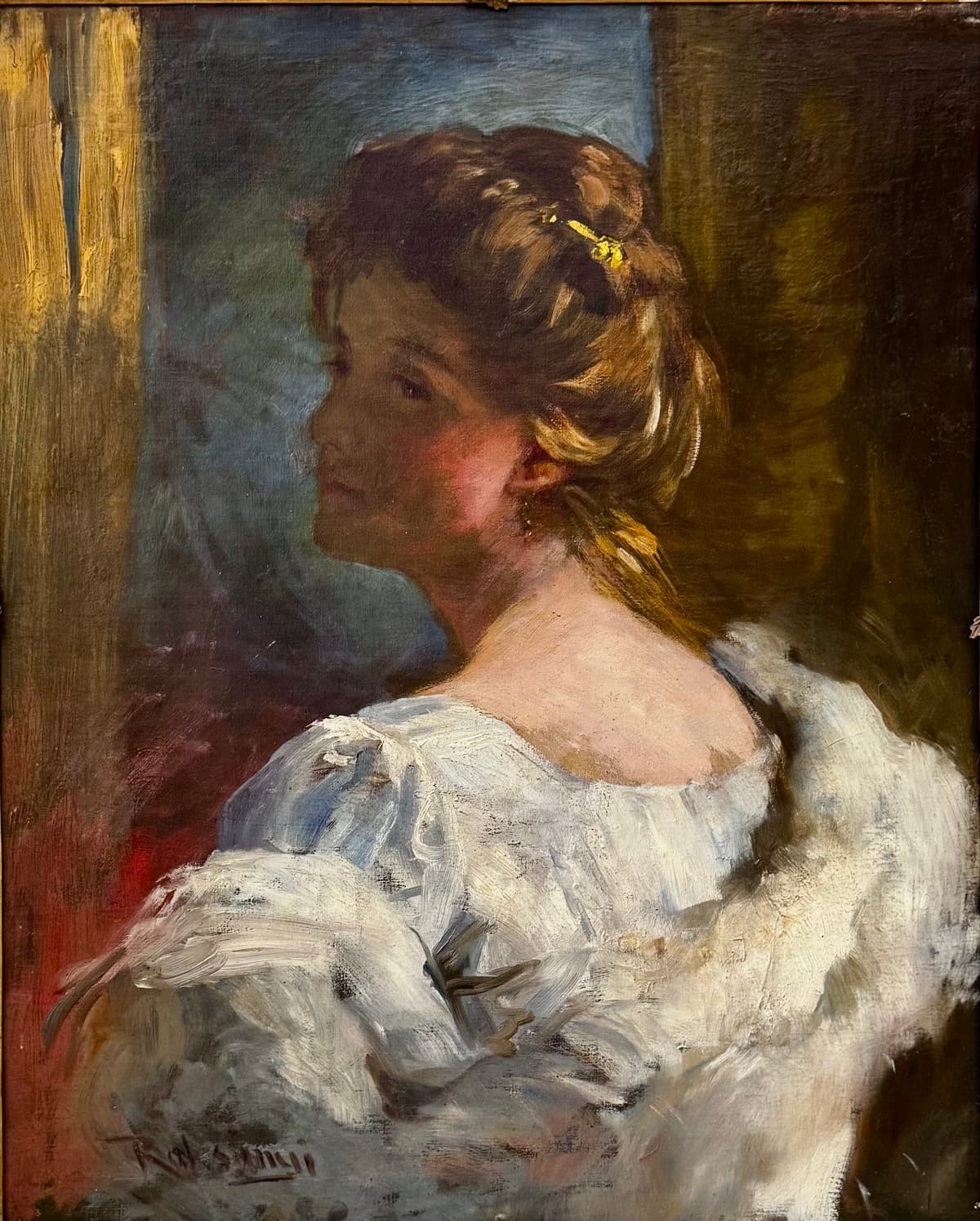
Description
No description available yet.
Curators

Ács Érmes Károly
curator
ermesprojekt@gmail.com

Ohnhaus Éva
curator
eva.artdeco@gmail.com
Detailed description
Introduction
Rezső Raksányi (Budapest, 1879 – Budapest, 1950) was a versatile Hungarian composer, conductor, and musicologist of the first half of the 20th century. He was known for his compositions, music theory works, and folk music collections. His work contributed to the renewal of serious music education and music historical research in Hungary.
Studies and Career
He graduated in 1901 from the Liszt Ferenc Academy of Music, where he was a pupil of Hans Koessler. From 1905, he worked as a conductor at the Hungarian Royal Opera House, and then from 1920 he taught composition, music theory, and folk music collecting at the academy for many decades. Among his students were several later renowned composers.
Artistic Activity
In Raksányi's works, traditional formal structures meet Hungarian folk music motifs. He wrote oratorios, chamber pieces, church choral works, and piano cycles. In particular, he combined the simplicity of folk songs with advanced composition techniques in his song cycles.
Significant Works
His most famous works include the 1928 series of symphonic Hungarian dances, the operetta The Queen's Dream (1935), and several church choral works, such as the Magnificat and Christmas Night. He also wrote music for stage performances and short films, in which he sensitively treated the narrative characters.
Legacy and Impact
From 1914, he was a corresponding member of the Hungarian Academy of Sciences. His music theory handbooks and studies on folk music serve as fundamental sources. Through his teaching, he significantly influenced the development of Hungarian music education, and his legacy continues to thrive in the realm of classical music, serving as an example for modern Hungarian composers.