Rubint Ávrahám Péter
Joy of the Paint
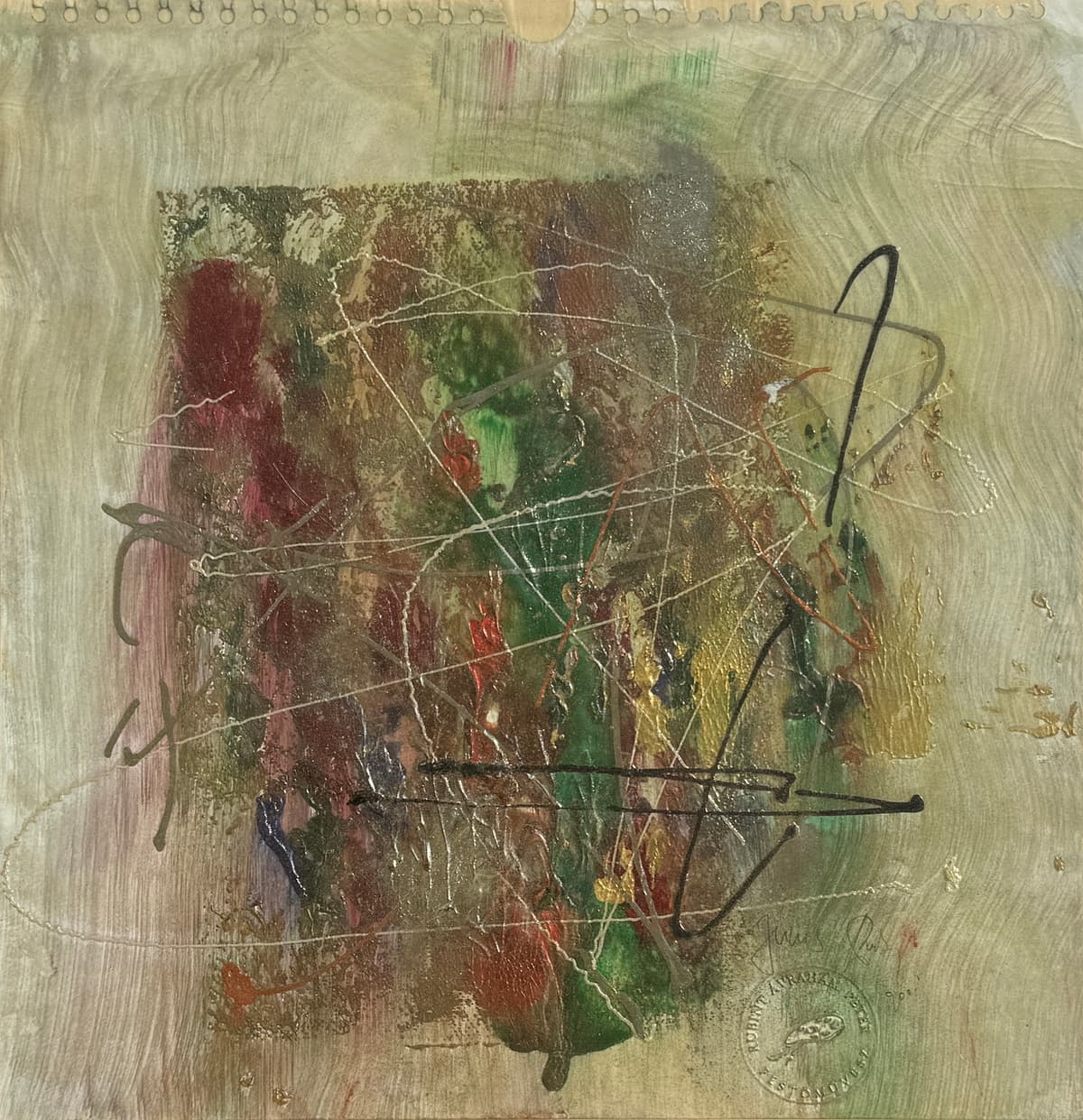
Description
No description available yet.
Curators

Ács Érmes Károly
curator
ermesprojekt@gmail.com
Detailed description
Ávrahám Péter Rubint: The Artist of Innovation
Ávrahám Péter Rubint is one of the most exciting and innovative personalities in contemporary Hungarian art. He began his career as a painter, and his interest in digital technologies and conceptual art led him to the world of multimedia installations. In his art, human identity, memory, and the influence of space have always played a central role.
He studied at the Hungarian University of Fine Arts, where he already stood out with his theses: in his series titled Reflections, he experimented with mirror surfaces, light effects, and sound installations. These early works pushed the boundaries between interior space and external reality, encouraging the viewer to participate actively.
His most famous work, Urban Echoes, debuted in Berlin in 2018: a multi-channel video installation that presented urban noises and human voices, transforming them into constructions that showcased the collision of globalization and local culture. In this project, the audience could assemble the noise collage themselves, thus becoming part of the artwork's constantly changing dynamics.
In recent years, Ávrahám Péter has developed interactive works in digital painting and VR laboratories where hybrid reality and physical space intertwine. The project titled Memory Network, presented at the 2022 Venice Biennale, evoked the vanishing urban gardens and courtyards through three-dimensional projection.
His art is sometimes introspective, sometimes socially critical, yet it always emphasizes the tension of memory and presence. Ávrahám Péter's works are not merely installations; they are living laboratories where the viewer becomes an inevitable part of the artwork.
Ávrahám Péter's influence also extends to younger generations: he holds workshops at the University of Fine Arts, and his lectures expand the toolbox of new media art and conceptual practice. His work inspires us to view art not just as observation, but as an active dialogue with the audience and the space.