Rubint Ávrahám Péter
The Embrace of the Back
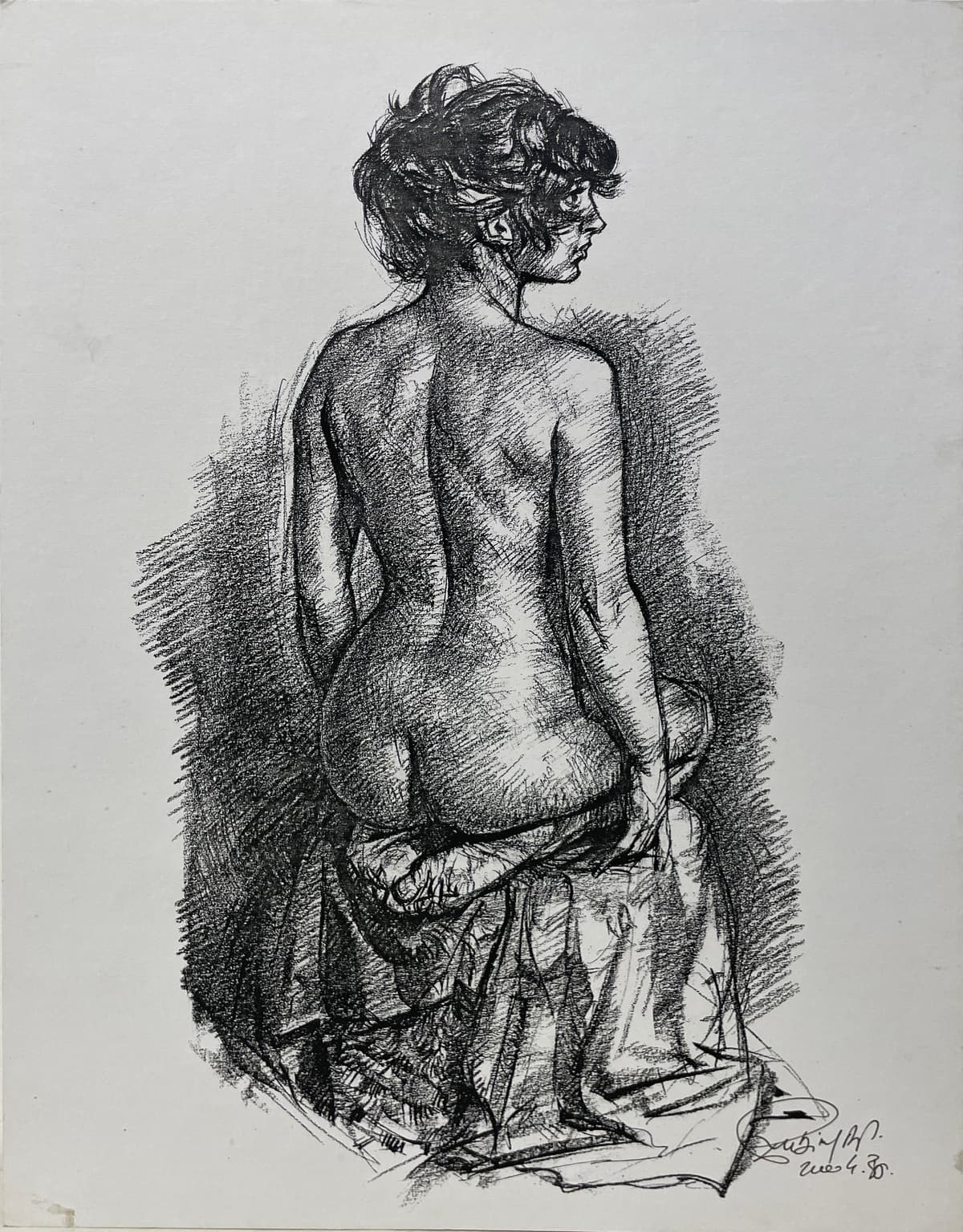
Description
No description available yet.
Curators

Ács Érmes Károly
curator
ermesprojekt@gmail.com
Detailed description
Introduction of Rubint Ávrahám Péter as an Artist
Rubint Ávrahám Péter (1975–) is a versatile figure in contemporary Hungarian visual arts. In his works, he combines classical painting techniques with modern media while exploring questions of social and personal identity. Throughout his artistic career, Péter has deemed experimentation important, never sticking to a single style, thus keeping his works fresh and provocative.
He completed his studies at the Hungarian University of Fine Arts, where his masters were representatives of the realism and expressionism movements. In his early works – including the series titled “Self-Examination” and “Mirror Play” – the motif of revealing the inner world already emerged. In these paintings, portraiture and abstract forms coexist, enriched with symbolic references.
From the mid-2000s, Péter began experimenting with digital graphics and video installations. For instance, in the project titled “Urban Vibrations”, he created interactive surfaces using sound-based motion detectors that shaped the visual experience in response to the viewer's movements. With this work, he not only examined the relationship between art and technology but also sought to blur the boundaries between the audience and the creation.
He has participated in numerous solo and group exhibitions both at home and abroad, including the Kiscelli Museum, MODEM in Debrecen, and the Contemporary Gallery in Warsaw. Among his awards, the Young Artists Award from the Hungarian Academy of Arts (2012) and the scholarship from the European Cultural Fund (2016) stand out.
According to Rubint Ávrahám Péter's artistic creed, the primary task of art is to initiate a dialogue with the viewer. Through his rich technical repertoire and continuously renewing themes, his works still pose an inspiring challenge in pushing the boundaries of visual arts today.