Rubint Ávrahám Péter
Art of Chance
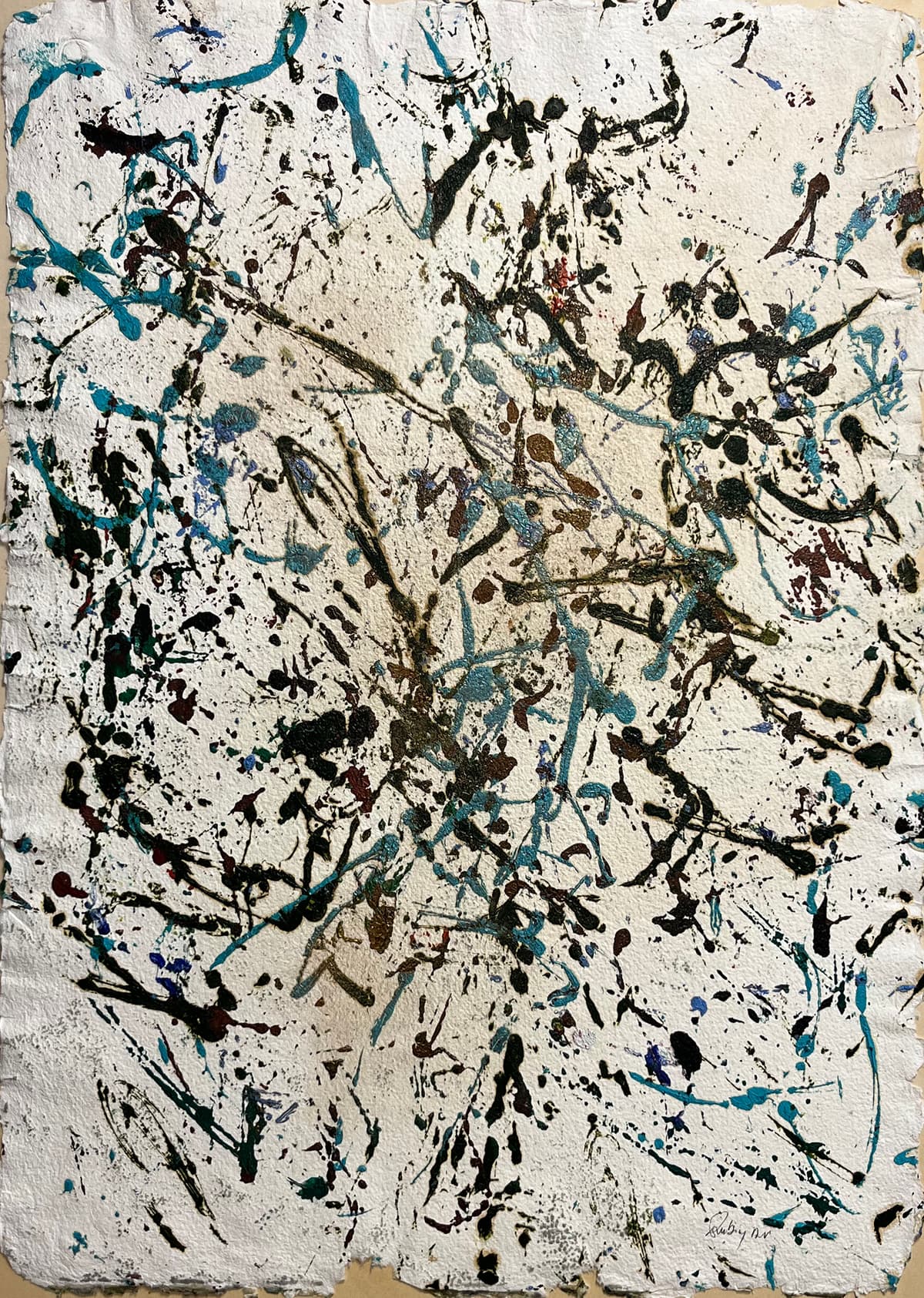
Description
No description available yet.
Curators

Ács Érmes Károly
curator
ermesprojekt@gmail.com
Detailed description
Péter Ávrahám Rubint's Artistic Perspective
Péter Ávrahám Rubint is a multifaceted figure in contemporary Hungarian visual art, integrating the genres of painting, sculpture, and installation. His works reflect a commitment to both tradition and innovation, drawing their visual world from personal experiences. The creator's oeuvre explores the relationship between human existence, space, and light.
His early works bear the marks of minimalist geometry, yet soon incorporated organic forms and layered textures. Ávrahám Rubint is famous for his "Reflections" series, where the dynamic interplay of blot-like elements on canvas and reflective materials creates the illusion of movement. In these works, the viewer experiences the composition from a constantly changing perspective.
The "Light Stream" installation cycle opened new dimensions in the creator's career: the multi-meter, steel-framed sculpture groups project fragmented shadows and light spots onto their surroundings through their internal lighting. In this project, Ávrahám Rubint examines the symbiosis of space and light, emphasizing the viewer's active participation in the reception process.
His graphic works, especially the paper installation titled "Collective Play", build on the delicate balance between materials. He attempts to capture the interplay of memory and presence through collage techniques and hand-dipped ink drawings. The resulting works are both lyrical and conceptual.
Ávrahám Rubint also works as an educator, encouraging young creators in his workshops to experiment with materials and rethink traditional techniques. The personal nature of the creative process and the impact of communal experience play a central role in his philosophy of art.
Overall, Péter Ávrahám Rubint's art combines formal elegance with conceptual depth. His creations prompt the recipient not only to observe but also to actively shape the relationship between the work and the space, thereby rethinking their own perception and experience.