Rubint Ávrahám Péter
The Silence of the Flower
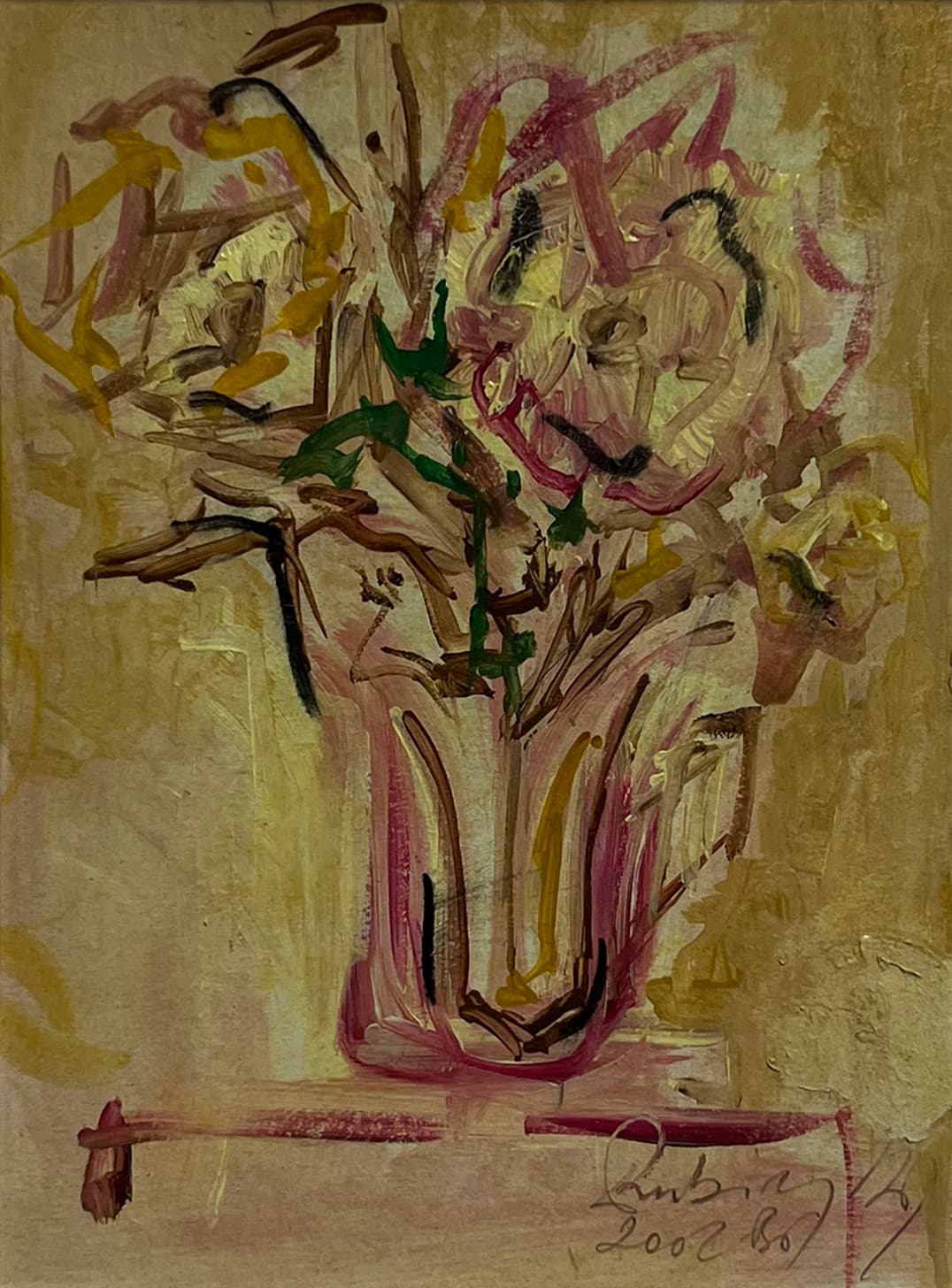
Description
No description available yet.
Curators

Ács Érmes Károly
curator
ermesprojekt@gmail.com
Detailed description
Ávrahám Péter Rubint: At the Edge of Contemporary Art
Ávrahám Péter Rubint (born in 1975, Budapest) is one of the most exciting figures in Hungarian contemporary visual art. His art explores the interaction between reality and dreams, making the viewer an active participant as well. His goal is to uncover layers of our inner world beyond the visual experience in his creations.
During his studies, he obtained a degree in graphic design and painting from the Hungarian University of Fine Arts. Even during his university years, he participated in international workshop series in Barcelona and Berlin, where he learned the principles of conceptual art.
His artistic style is a blend of geometric abstraction and delicate brushstrokes: he weaves fine textures and symbolic motifs into spacious, monochromatic surfaces. In his works, he creates a dialogue between traditional and digital techniques, offering a new perspective in painting.
Among his most well-known series are "Spirit Walk" (2014–2016), where he represents the intertwining of the past and present in transparent layers. In his work titled "Light and Shadow" (2018), he experiments with light effects, while the "Metamorphosis" (2021) series examines the changes in human identity.
Péter has participated in several solo and group exhibitions – including at Műcsarnok, MODEM, and the Venice Biennale. His works can be found in both private and public collections, with recognition from a number of independent curators and art critics.
The artist not only exhibits but also regularly conducts art workshops and lectures, contributing to the development of younger generations. His work is driven by an innovative spirit and deeply personal philosophical questions.
Ávrahám Péter Rubint's art is born from a continuous dialogue: it's the meeting of tradition and innovation, the internal experiences and the external forms presented on these canvases. His creations encourage the viewer to complement what they see with their own interpretation, thus becoming an active participant in the artistic experience.