Rubint Ávrahám Péter
Abstract artwork
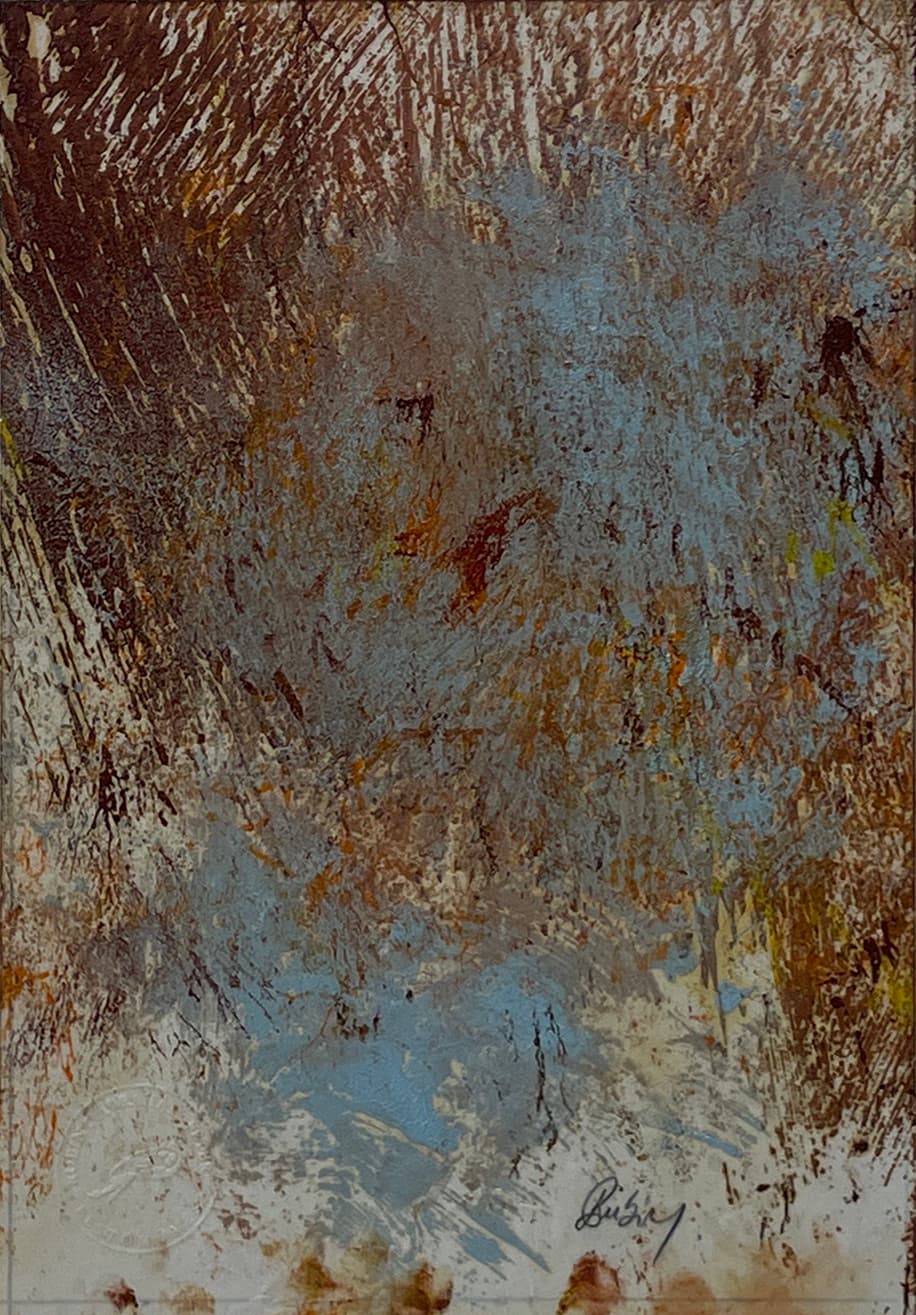
Description
No description available yet.
Curators

Ács Érmes Károly
curator
ermesprojekt@gmail.com
Detailed description
Biography Overview of Péter Rubint Ávrahám
Péter Rubint Ávrahám (b. 1975, Budapest) is a prominent figure in contemporary Hungarian visual arts. He obtained his degree from the Hungarian University of Fine Arts, where he pursued art theoretical research while exploring painting, sculpture, and installation genres. He established his career at the end of the 1990s with his installations and large canvas paintings, influenced by abstract expressionism and postmodern theoretical trends.
Artistic Vision and Style
In Péter's works, the exploration of the relationship between space and light takes center stage. His creations are often characterized by layered material use, color contrasts, and a playfulness of organic forms. During his artistic experiments, he employs experimental compounds and reinterprets classical sculptural solutions, such as the combination of glass and metal.
Exhibitions and Significant Works
Péter is a regular participant in both domestic and international exhibitions. Among his most notable works is the series "Portraits without Faces," which explores the labyrinths of human identity; the "Spatial Illusion" installation, where the viewer is physically involved in the artwork; and the "Light Visions" cycle, which centers on the dialectic of light and shadow.
Impact and Legacy
Péter Rubint Ávrahám's art has had a significant impact on the Hungarian contemporary artistic community. His pedagogical activities are also notable: he has mentored numerous young visual artists. His work has been recognized with several awards, including the Munkácsy Mihály Prize. Péter's art builds on the dynamic dialogue between forms and light, opening new perspectives in the field of visual culture.