Rubint Ávrahám Péter
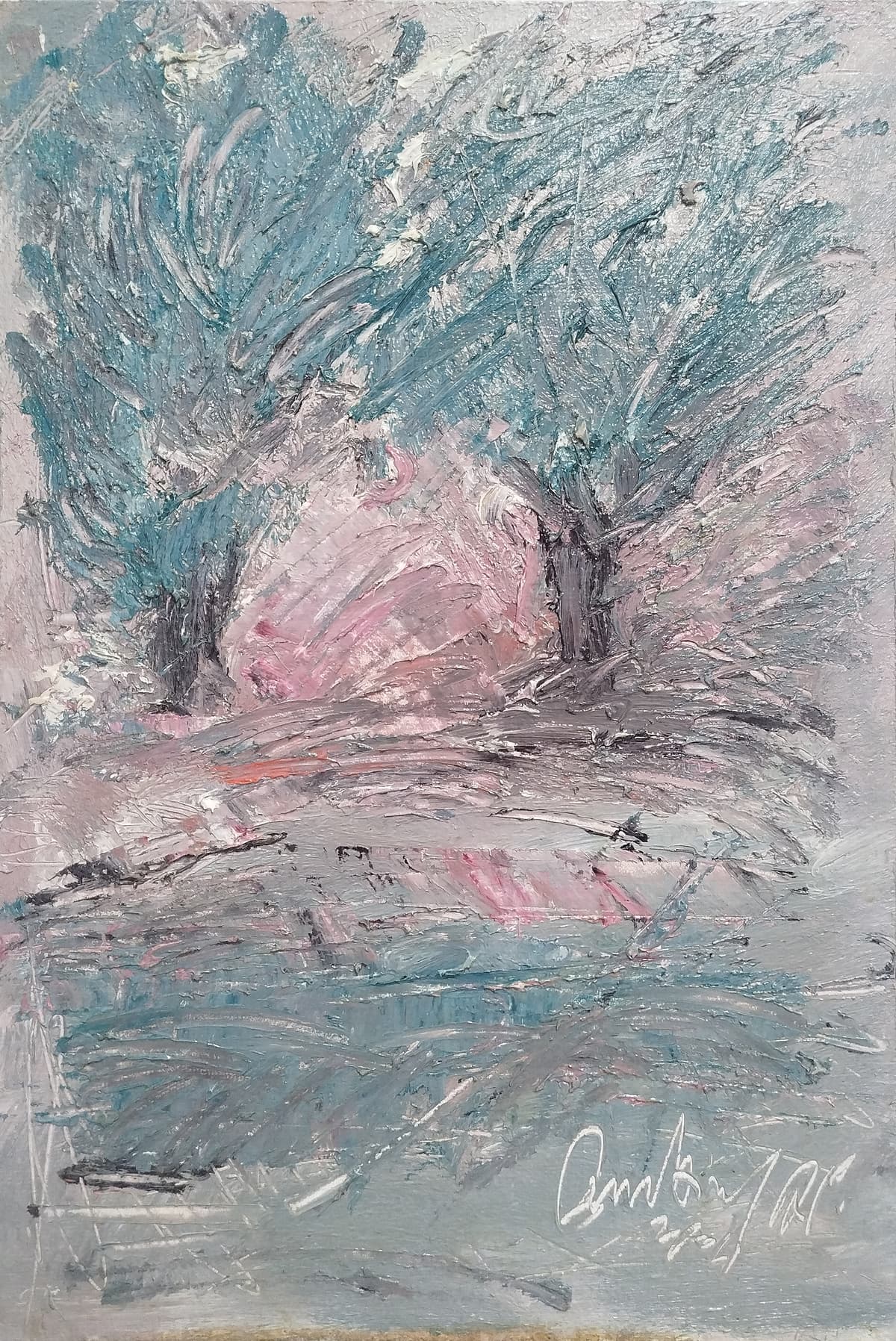
Abstract Trees in Winter
Description
No description available yet.
Curators

Ács Érmes Károly
curator
ermesprojekt@gmail.com
Detailed description
Péter Ávrahám Rubint's Art: Summary and Presentation
Péter Ávrahám Rubint is a prominent figure in contemporary Hungarian visual art, opening new dimensions in visual narrative with his paintings and spatial installations. His works draw from both the traditions of classical compositions and the modern tools of abstraction.
Early Years and Training: Ávrahám Péter was born in Budapest in 1975. He graduated from the painting department of the Hungarian University of Fine Arts, where he already aimed to explore color theory and formal contrasts as a student. He presented the series "Light Layers" at his first solo exhibition in 2002.
Style and Technique: At the heart of his art lies the exploration of the internal relationship between material and light. In his oil and acrylic paintings, he works with thick brushstrokes while also employing the play of projected shadows and reflections on the canvas. His sculptural works feature undulating surfaces made from recycled metal sheets.
Main Works: In the series "Reflections" (2005–2007), a dialogue emerges between interior space and external reality. The installation titled "Harmony of Fragments" (2011) showcases organic forms colliding with strict geometric elements on steel panels over three meters in size.
Exhibitions and Reception: Ávrahám regularly participates in group exhibitions both domestically and abroad (Berlin, Vienna, Paris), and in 2018 held a large-scale solo exhibition at the Ludwig Museum. Critics acknowledge that his works have both lyrical and intellectual impact.
Impact and Significance: His alchemical visuality reinterprets the classical foundations of painting, while his contemporary endeavors encourage viewers to engage in dialogue within the artistic environment. Péter Ávrahám Rubint's art represents a fresh, dynamic current in Hungarian visual art.