Rubint Ávrahám Péter
Entry
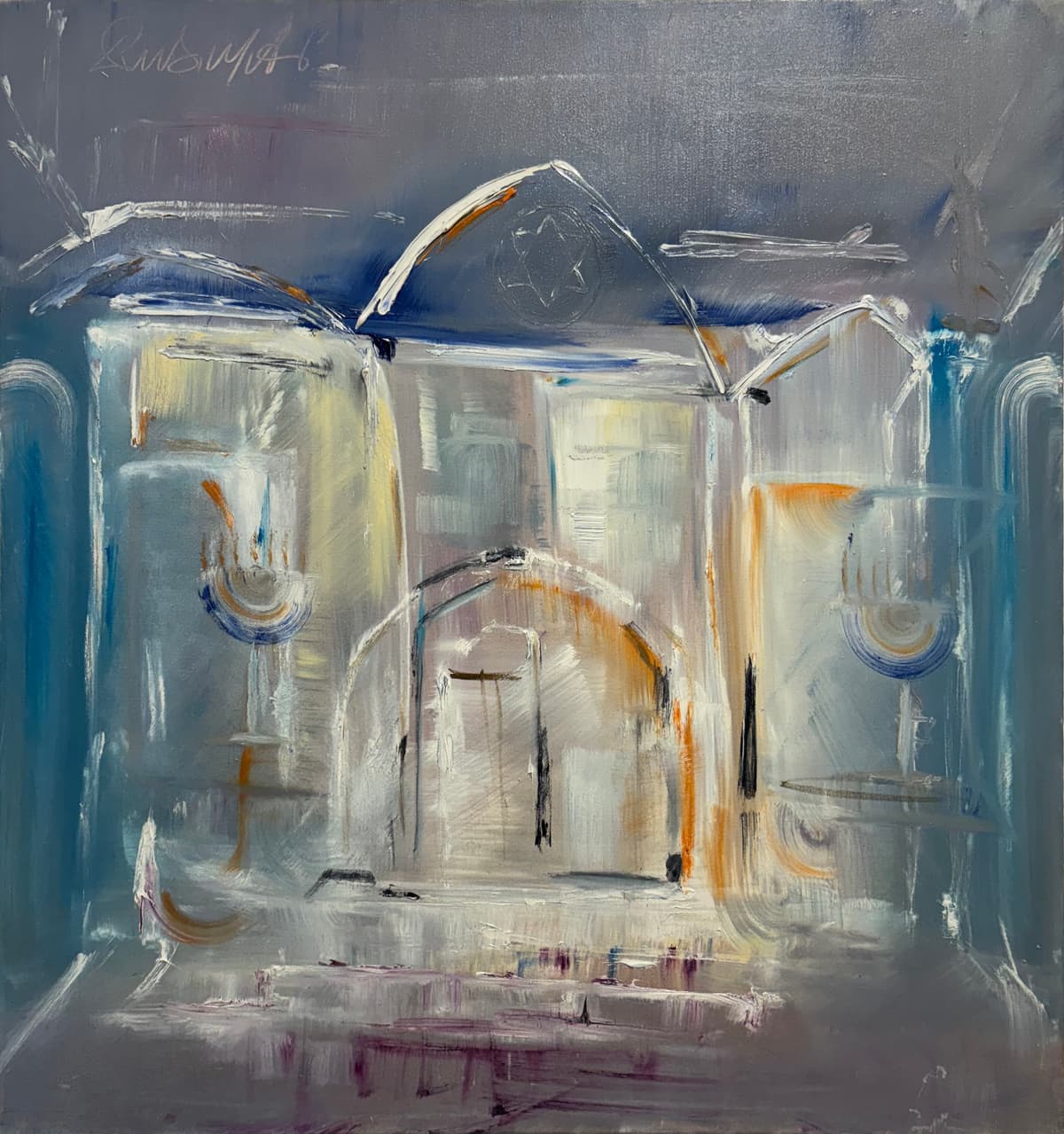
Description
No description available yet.
Curators

Ács Érmes Károly
curator
ermesprojekt@gmail.com
Detailed description
Peter Ávrahám Rubint's Art – Summary and Presentation
Peter Ávrahám Rubint (1975–) is one of the most exciting figures in contemporary visual art in Hungary. He started his career as a painter and developed into an installation artist, creating new dimensions in artistic expression by turning towards digital technologies. His work is characterized by the meeting of traditional techniques and innovation, while always keeping emotional depth and audience engagement at the forefront.
The artist's style is defined by the contrast of geometric forms and organic textures. His early works are characterized by minimalist painting, while his later shift in scale is defined by interactive installations. He draws inspiration from the Bauhaus heritage, while also reflecting on the visuality of the digital age: through experimental light projections and generative algorithms, he explores the relationship between space and light.
Among his most well-known works is the installation "Eternal Motion" (2012), which brings to life the continuous transformation of the surrounding space using motion sensors and projection surfaces. In the series titled "Light Play" (2016), he visualizes the passage of time through a combination of glass and LED panels, while in the series titled "Spatial Cross-section" (2019), he adapts a virtual reality platform to allow visitors to enter a floating world composed of abstract geometries.
Peter Ávrahám Rubint's works not only provide a visual experience but also initiate an intellectual dialogue about the relationship between technology and human experience. His art reflects the aesthetic challenges of the 21st century and encourages the audience to become active participants in the artwork. In summary, it can be said that Peter's work expands the boundaries of contemporary art while preserving the depth and intensity of expression.