Rubint Ávrahám Péter
Birds Come and Go
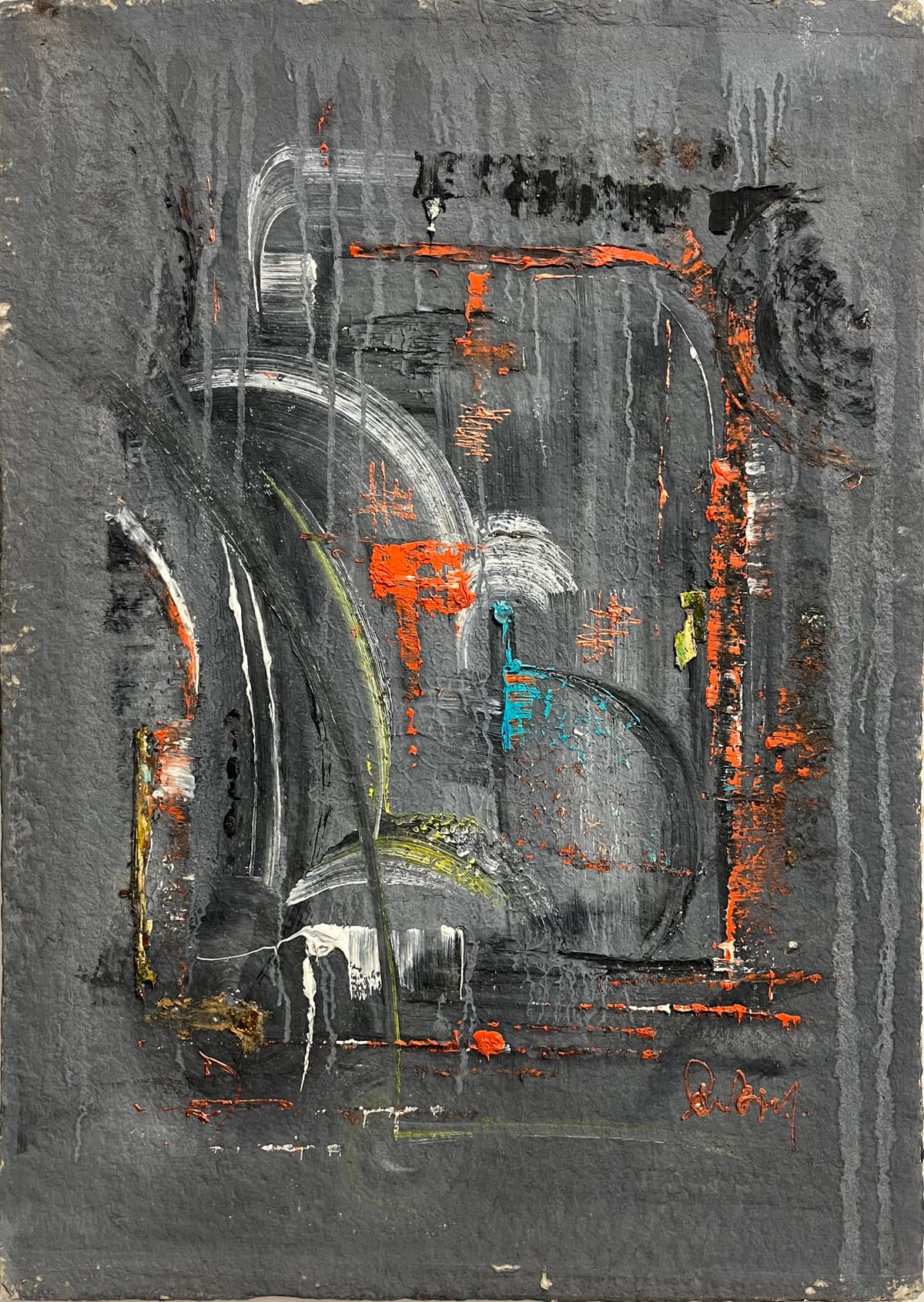
Description
No description available yet.
Curators
Ács Érmes Károly
curator
ermesprojekt@gmail.com
Detailed description
Ávrahám Péter Rubint: Artistic Career and Body of Work
Ávrahám Péter Rubint (1975, Budapest) is one of the most exciting contemporary Hungarian visual artists today. He graduated from the Hungarian University of Fine Arts in 1998, then expanded his horizons through art scholarships in several major cities across Europe. His early works were characterized by figurative experiments, but he quickly switched to abstract geometric compositions.
At the center of his creations lies the dynamics of light and space. In his painting series titled Light Pathways, the artist examines the relationship between natural and artificial light effects, while the curved forms evoke subtle movement. The Water Mosaic installation was created by combining glass panels and projected shadows, elevating the concepts of surface and depth to a new dimension.
Ávrahám Rubint often works with mixed media techniques: canvas, acrylic paint, glass, and neon tubes converge in his works. In the exhibition titled Dialogue of Forms, posters, graphics, and large wall paintings created a unity, emphasizing the tension between form, color, and material.
His works have been showcased at numerous national and international exhibitions: among his solo presentations are the Ludwig Museum (2005) and the Műcsarnok (2010), and at group exhibitions, he represented Hungary as a guest artist at the Venice Biennale (2015). He has been recognized with the Munkácsy Prize (2008) and the Széchenyi Scholarship (2012), and his works can be found in the collections of the Museum of Fine Arts, MODEM, and the Strabag Art Collection.
Ávrahám Péter Rubint's art represents one of the defining directions of contemporary Hungarian visual art: it combines minimalist abstraction with experimental investigations of light-color effects. His works offer new perspectives on spatial experience and encourage the viewer to explore the subtle interactions between form, color, and light.