Rubint Ávrahám Péter
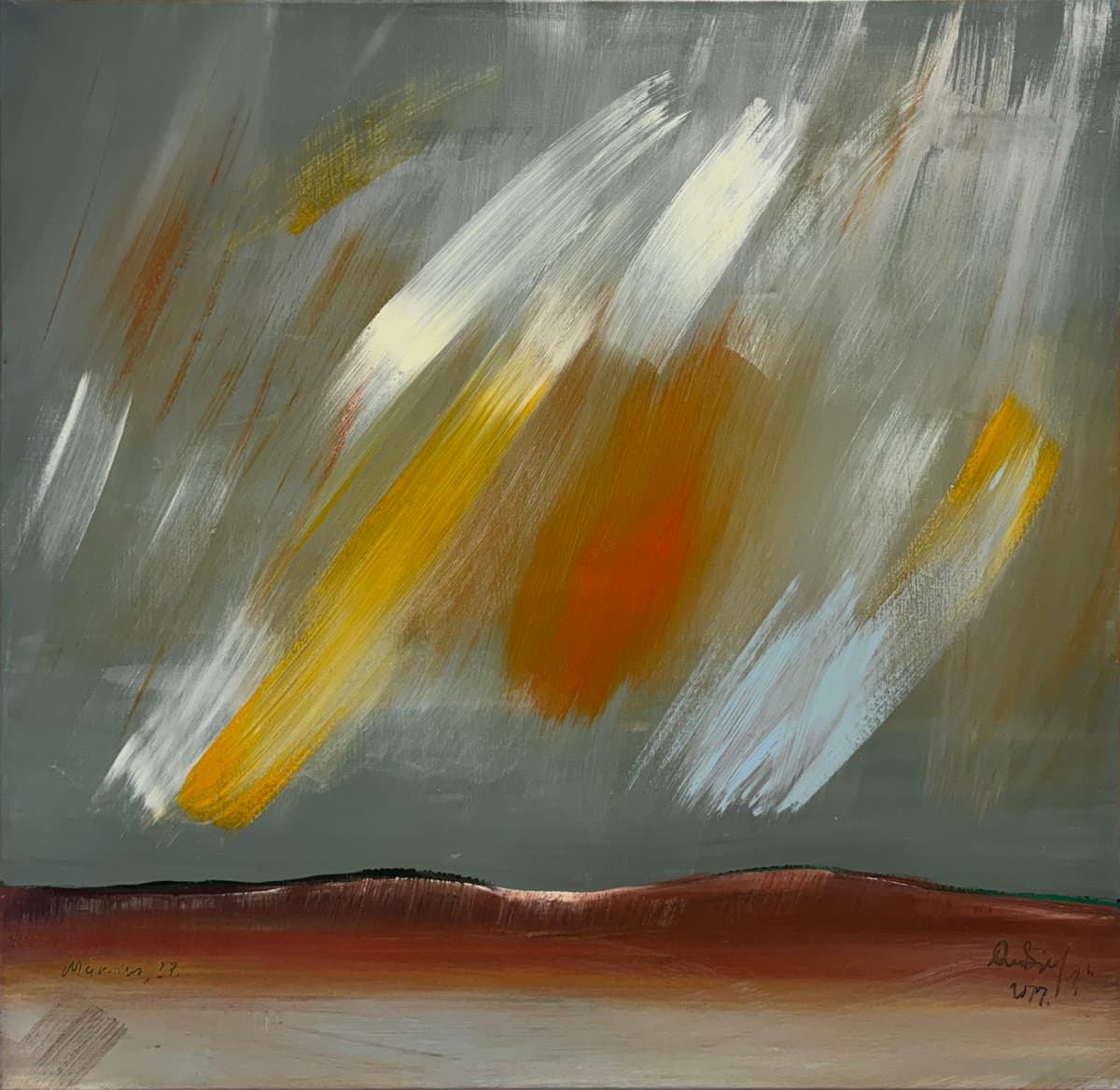
Foggy Sunset
Description
No description available yet.
Curators

Ács Érmes Károly
curator
ermesprojekt@gmail.com
Detailed description
Ávrahám Péter Rubint's Artistic Career
Ávrahám Péter Rubint is one of the most distinctive figures in contemporary fine arts in Hungary. Born in 1975 in Budapest, he was drawn to the world of painting and graphics at a young age. He completed his studies at the Hungarian University of Fine Arts, where he quickly gained recognition in artistic circles. Throughout his career, he combines traditional techniques with modern experimentation, creating unique and multifaceted works.
Style and Artistic Approach
Péter's art operates on the border of symbolism and expressionism. His creations often consist of layered structures where the interplay of texture and color contrast evokes a strong emotional impact. In his oil and acrylic paintings, deep tones and bold brush strokes harmoniously align with each other. One of his main motifs is the human face, in which he explores the hidden dimensions of the inner world.
Key Works and Themes
Among his most well-known works are "Soul Presence" (2010), which navigates the boundary between portraiture and abstraction while invoking the layers of human consciousness. His large canvas titled "Urban Symphony" (2014) showcases the internal rhythm of metropolises by combining historical and contemporary elements. In 2018, his series "Dialogues of Light and Shadow" examined the role of light in the interpretation of forms, incorporating installation elements as well.
Impact and Legacy
Ávrahám Péter Rubint's art has resonated greatly in both domestic and international exhibitions. His works can be found in numerous collections, including the Ludwig Museum and private collections. His artistic endeavors inspire younger generations who seek their own voice built upon the past.
Summary
Overall, Ávrahám Péter Rubint's art seeks the harmony of form, color, and content, while raising questions about the identity of the modern individual and their inner world. His body of work further enriches contemporary Hungarian fine arts, opening new perspectives for visual expression.