Rubint Ávrahám Péter
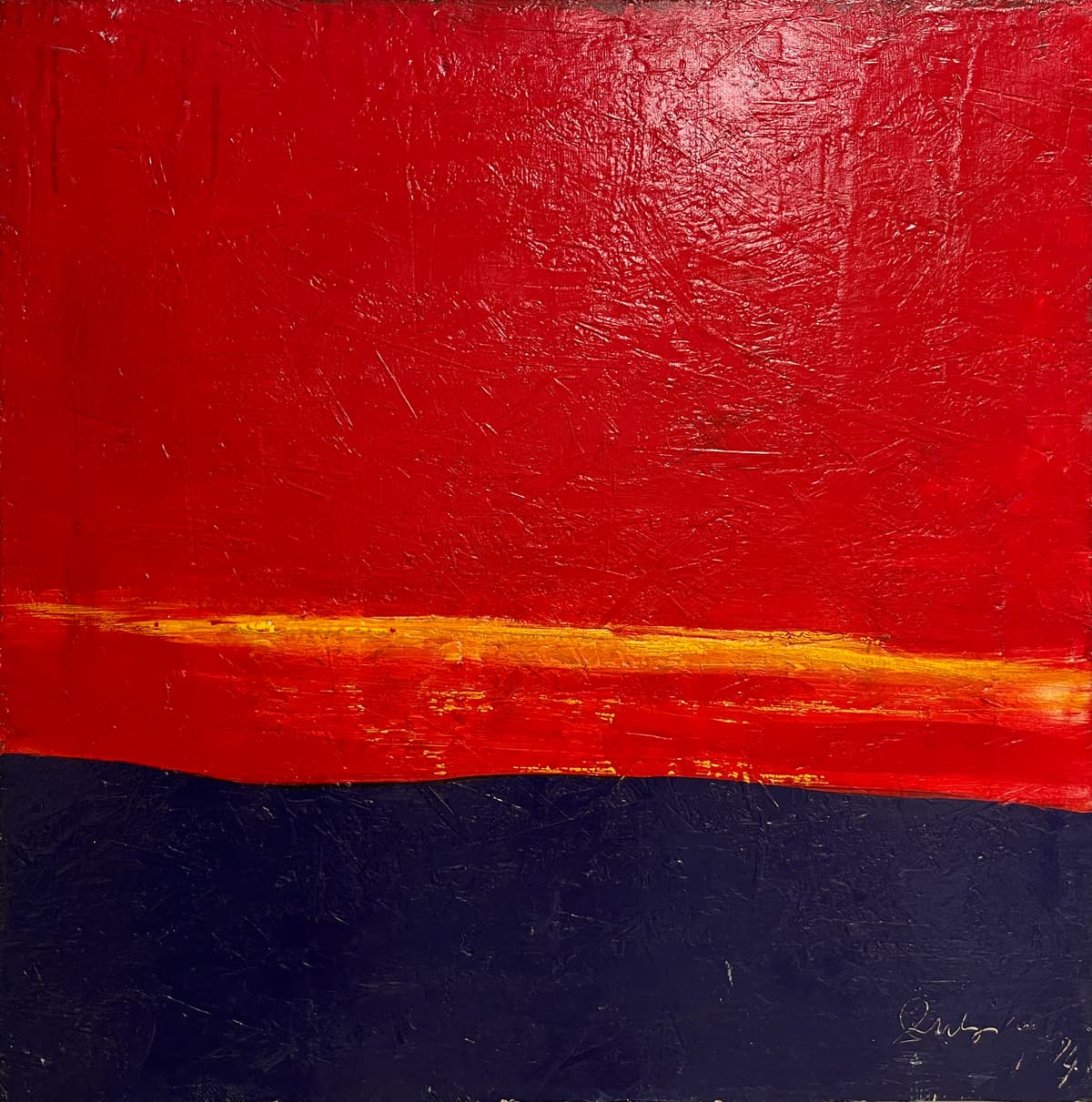
Sunset - Pilis
Description
No description available yet.
Curators

Ács Érmes Károly
curator
ermesprojekt@gmail.com
Detailed description
Ábrahám Rubint: The Multicolored Voice of Contemporary Art
Ábrahám Rubint (1978, Budapest) is a prominent creator of contemporary Hungarian visual art, whose works combine elements of painting, sculpture, and digital media. At the center of his art are the concepts of human identity, collective memory, and space, which he examines in always new contexts.
He completed his studies at the Hungarian University of Fine Arts, where his first exhibitions already drew the attention of the professional community. His working methods are characterized by experimentation and the diverse use of materials: he paints on canvas, builds installations with recycled metals, and even designs interactive digital surfaces that rely on viewer participation.
Notable works include "City of Shadows" (2012), where he creates a kind of dynamic urban panorama with layered acrylic and LED lighting, as well as his sculpture installation "Trans-Formation" (2016), in which he reinterprets the classic memento mori motifs.
Rubint's works have been featured in numerous prestigious domestic and international exhibitions, including collaborations with the Ludwig Museum, the Kunsthalle, and the Berlinische Galerie. In 2019, he won the National Cultural Fund's Ars Poetica award, and in 2021, he received a scholarship from the Visegrad Art Residency.
Alongside his artistic endeavors, he considers education and curatorial work important: he regularly holds workshops and studio visits for young visual artists, thereby supporting new generations. In addition, he is an active member of several art collectives, where he works on community projects.
Ábrahám Rubint's art reflects on the past while opening up to innovation. With his impressive use of materials and research into the effects on space, he initiates a continuous dialogue with his viewers, thus enriching the palette of contemporary art.