Rubint Ávrahám Péter
Female Silhouette in Harmony
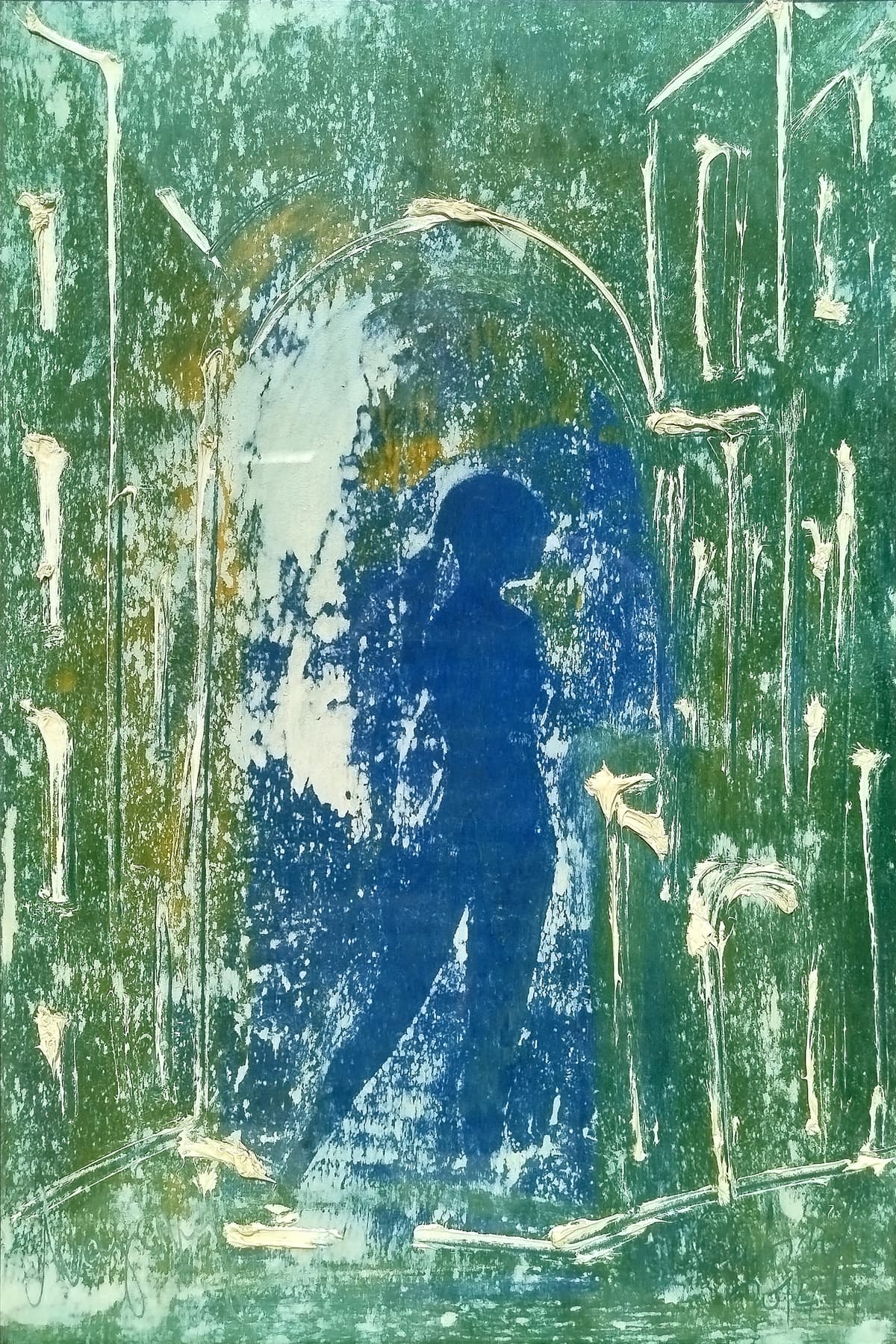
Description
No description available yet.
Curators

Ács Érmes Károly
curator
ermesprojekt@gmail.com
Detailed description
Rubint Ávrahám Péter's Art
Rubint Ávrahám Péter (1980–) is a contemporary Hungarian visual artist who became known in the art scenes of Budapest and Berlin. His works stretch the boundaries of painting, installation, and video art while engaging in a continuous dialogue about the hidden connections of social identity, personal memory, and visual culture.
Early Years and Artistic Sources
Péter graduated from the Art History program at ELTE University, then deepened his knowledge with scholarships in Munich and New York. His early paintings combine traditional composition with modern expressionism: strong color contrasts, dynamic brushstrokes, and abstract structures characterize them.
Main Works and Themes
His series titled “Mirrors” examines the relationship between personal and collective memory by repainting old family photographs. In his installations, the boundaries between real objects and painted surfaces blur, making the viewer an active interpreter. In his video works, he connects the language of moving image narrative with static painterly images, often using old documentary footage placed in new contexts.
Exhibitions and Recognitions
Péter's works have been exhibited at the Ludwig Museum in Budapest, the KW Institute for Contemporary Art in Berlin, and MoMA PS1 in New York. In 2016, he won the National Cultural Fund's New Art Award, and in 2019, he received a special award from the Horizon Prize among young European visual artists.
Impact and Future Directions
Rubint Ávrahám Péter's art is built on the continuous tension between space and memory. His works strongly reflect the challenges of digital culture while reinterpreting the possibilities of traditional painting. In his latest projects, he creates interactive compositions relying on artificial intelligence that also involve viewer participation. It is promising that in the near future we will see his solo exhibitions at significant contemporary galleries in Asia and South America.