Rubint Ávrahám Péter
Altar
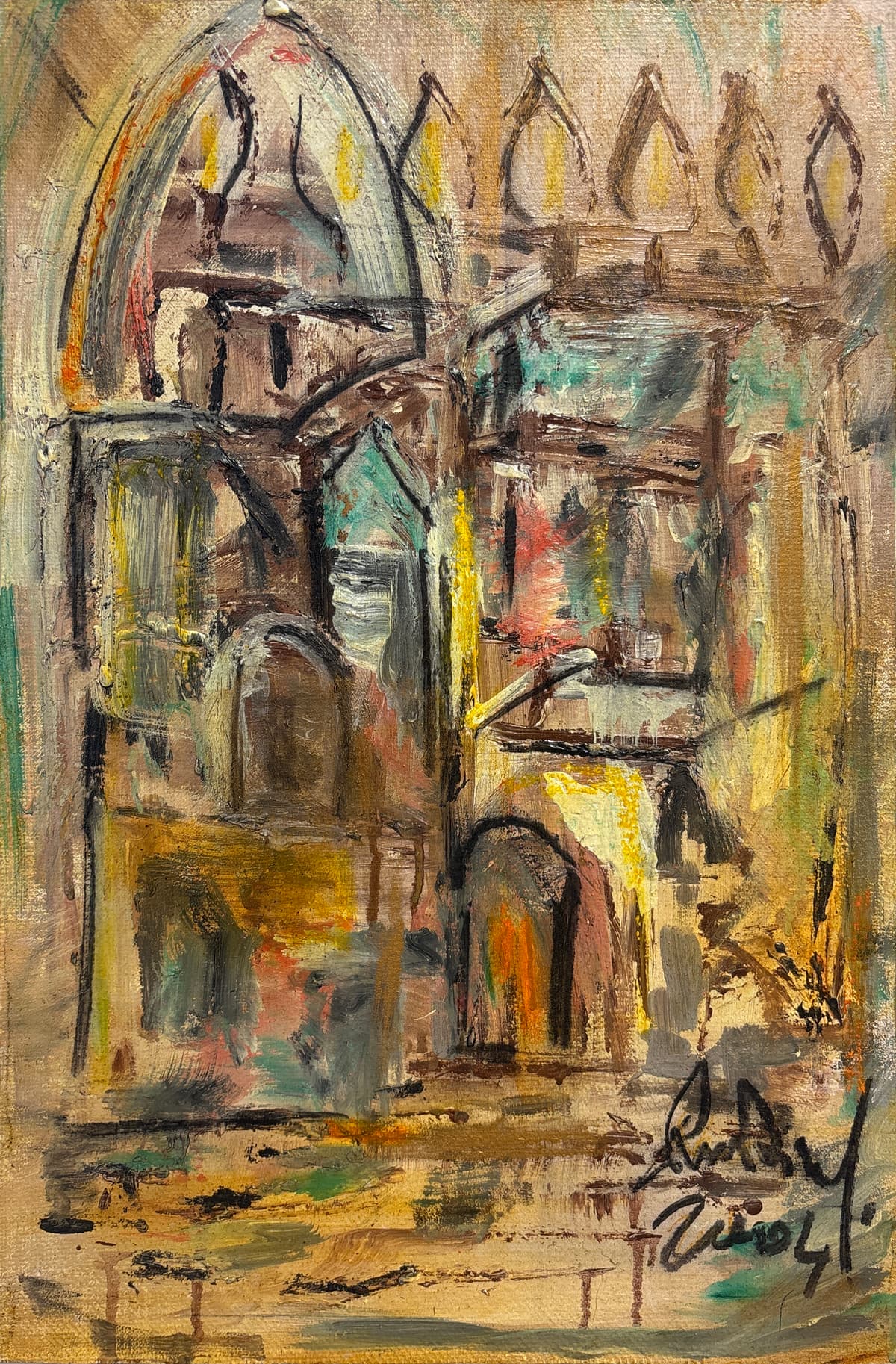
Description
No description available yet.
Curators

Ács Érmes Károly
curator
ermesprojekt@gmail.com
Detailed description
Péter Ávrahám Rubint's Artistic Career
Péter Ávrahám Rubint is one of the most debated and recognized figures in contemporary Hungarian visual arts. He was born in Budapest in 1975 and graduated with a degree in painting and sculpture from the Hungarian University of Fine Arts. His artistic career is characterized by avant-garde experimentation; as a young artist, he participated in the New Wave movement, where he worked on the fusion of new media and languages of form.
Style and Thematic Focus
His creations are characterized by a multimedia approach and social-cultural reflection. His paintings often feature abstract forms, complemented by photo installations and sound sculptures. Thematically, he examines the frontier of identity, memory, and technological advancement: in his works, the dialogue between traditional canvas painting and digital projection is in tension with each other.
Notable Works
In 2005, he presented his series titled "Memorytropia," where he digitized old family photographs and supplemented them with abstract brush strokes, thus reconstructing collective memory. In 2012, the "Techné and Transcendence" installation at the Ludwig Museum received outstanding critical acclaim: the interaction of a live code generator and a motion sensor sculpture made the viewer's own bodily presence in the artwork visible.
Impact and Legacy
Péter Ávrahám Rubint's works have been featured in solo and group exhibitions worldwide, including in London, New York, and Tokyo. He also worked as an art educator, sharing his craft with young visual artists. At the end of his life, he contributed to the renewal of contemporary art by rethinking the digital-material boundary, and his legacy is preserved by museums, collections, and the inspirations of the next generation.