Rudnay Gyula (1878-1957)
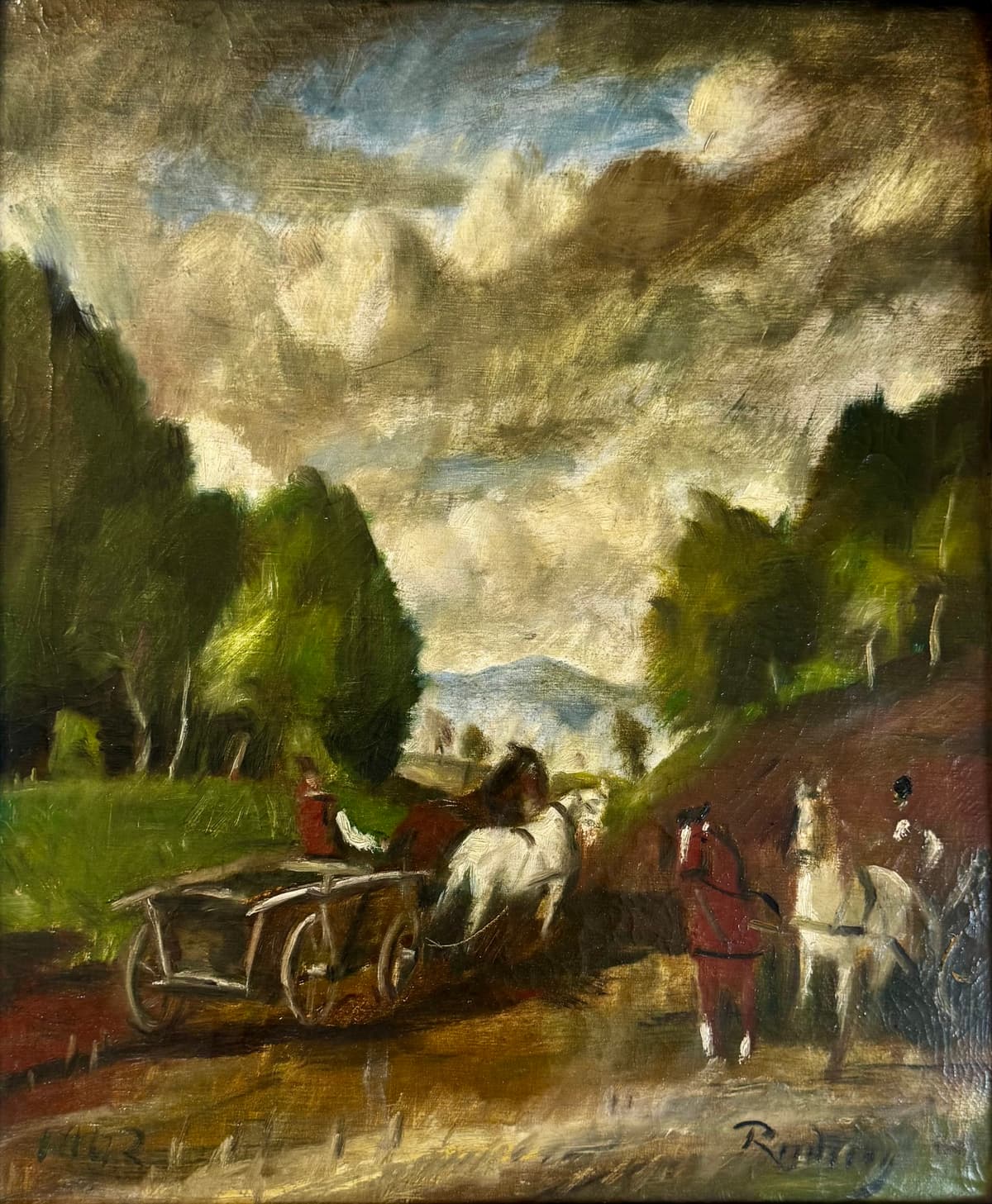
Horse-drawn carriages meeting
Description
No description available yet.
Curators

Ács Érmes Károly
curator
ermesprojekt@gmail.com
Ohnhaus Éva
curator
eva.artdeco@gmail.com
Detailed description
Gyula Rudnay was born on January 9, 1878, in Pelsőc. He was a student of Simon Hollósy from 1895 in Munich and Nagybánya. Later, he continued his studies in Rome and Paris. His youthful experiences, particularly the Russian critical realist literature, influenced his art, which focused on the depiction of rural life and realism. In 1905, he moved to Hódmezővásárhely, where he presented his works in Budapest in 1910. Due to the war, he painted monumental dramatic compositions that depicted refugees. In 1918, he held his first major successful exhibition at the Ernst Museum. In 1922, he was appointed a professor at the Academy of Fine Arts. His works have been featured in numerous domestic and international exhibitions, including in Vienna, Genoa, and Barcelona. His awards include the Kossuth Prize (1949) and the title of Excellent Artist (1954).
The painting titled "Horse-Drawn Carriages" is one of Gyula Rudnay's significant works, depicting rural Hungarian life and the use of horse-drawn carriages. The artist dynamically and richly details the horse-drawn carriages in the painting, highlighting the movement of the vehicles and the beauty of the landscape. The color palette and composition of the painting bear the hallmarks of 20th-century Hungarian realism, reflecting Rudnay's artistic style and technical expertise.