Vörös Géza (1897 - 1957)
Street detail in the Danube Bend...
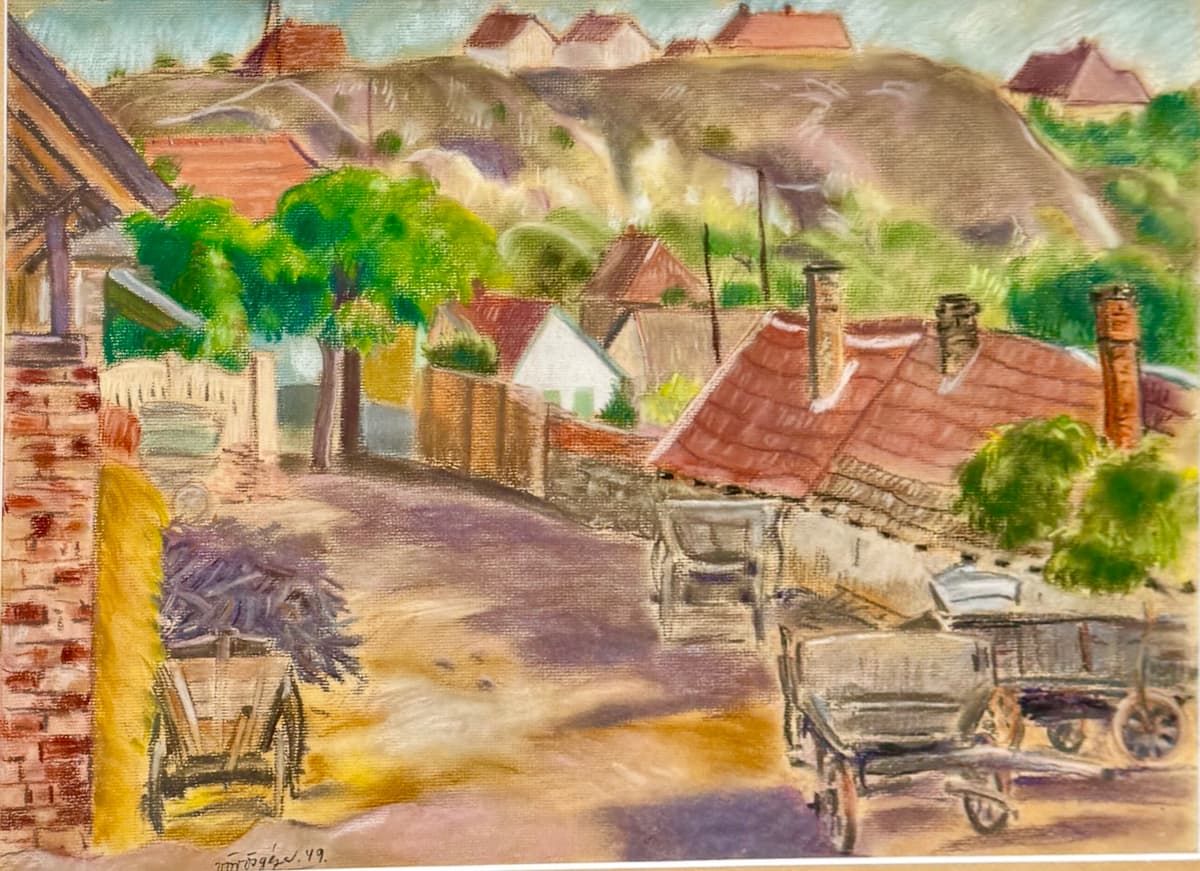
Description
No description available yet.
Curators

Ács Érmes Károly
curator
ermesprojekt@gmail.com
Detailed description
Géza Vörös (1897–1957): Presentation of Life and Art
Géza Vörös is a prominent figure in 20th-century Hungarian painting, whose art operates on the border between avant-garde and realist approaches. Born in 1897 into a family of artists in Budapest, he was introduced to the worlds of theater and visual arts from an early age. He began his career at the Hungarian Academy and later developed his style further in Paris, within the vibrant artistic circles of Montparnasse.
During his early years, he was strongly influenced by cubism and fauvism, which he viewed not just as a style but also as a mode of emotional expression. Later, he enriched his unique language with motifs from Hungarian folk painting.
Among his most famous works are Strada Afternoon (1932), which evokes the rush of urban life through strong colors and geometric forms, and Still Life with Charcoal Burners (1941), where he creates an unusual unity of nature-inspired and modern formal elements.
Throughout his artistic career, Géza Vörös participated in numerous solo and group exhibitions, including the exhibitions at the National Salon and the Triennial. His works are a permanent part of the Hungarian National Gallery and many provincial collections.
After his death, his art fell into obscurity for a long time, but around the turn of the millennium, it was rediscovered, and today he is regarded as one of the defining and versatile personalities of 20th-century Hungarian painting. Géza Vörös' legacy is a dynamic ensemble of colors and forms that continues to inspire contemporary creators.