Zsolnay manufaktúra
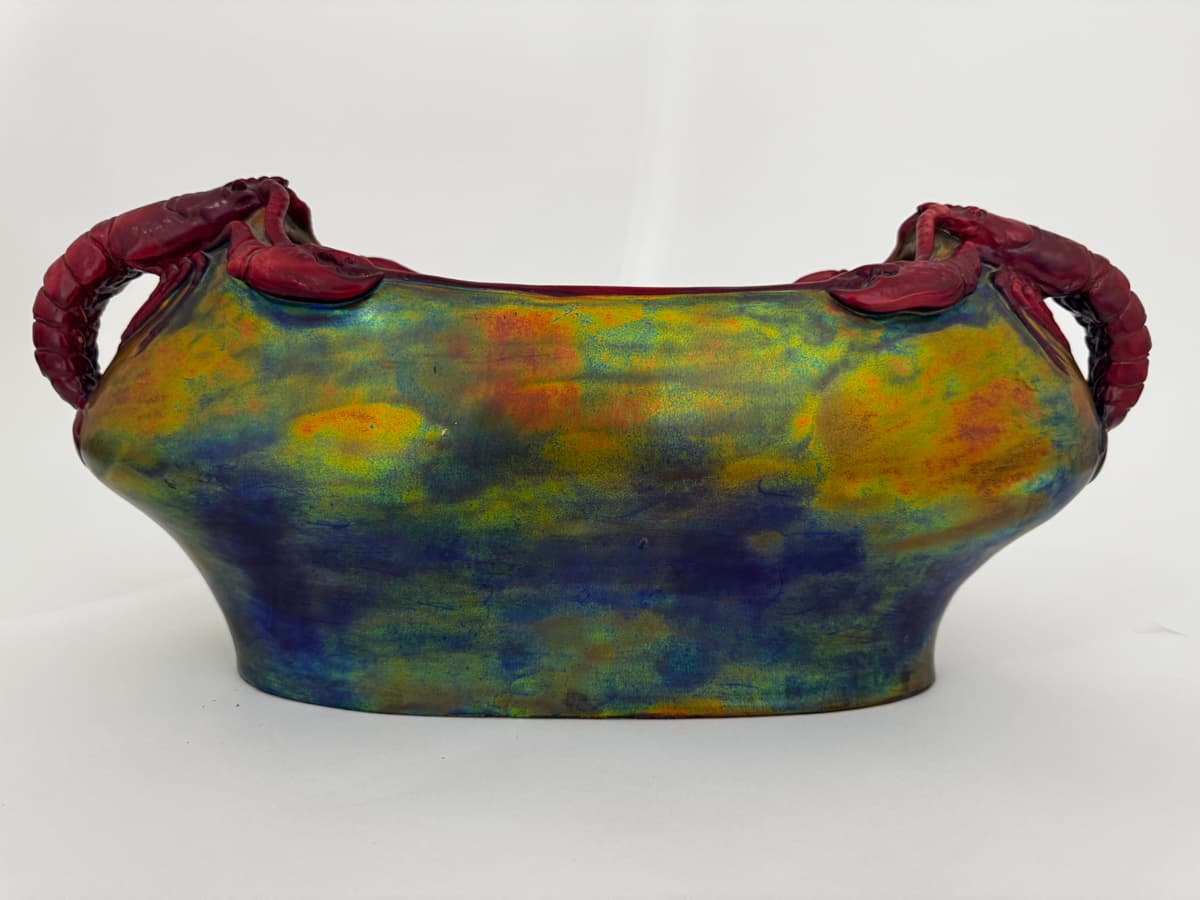
Zsolnay Crab table decoration offering - With a border decorated with plastic crabs
Description
No description available yet.
Curators

Ács Érmes Károly
curator
ermesprojekt@gmail.com

Matuszné Poltz Judit
curator
mpjuci@gmail.com
Detailed description
Vilmos Zsolnay – Innovator and Artist
Vilmos Zsolnay (1839–1900) is synonymous with revolutionary innovations in the Hungarian ceramics industry. As the head of the Zsolnay Manufactory, he was not just a businessman, but a technically and aesthetically outstanding artist who turned the Pécs factory into one of Europe’s most recognized porcelain and decorative ceramics workshops.
Under his leadership, the iconic eosin and bishop's gown glazes were born, which, thanks to their shimmering, iridescent surfaces, lend unparalleled color richness to decorative items. These inventions revolutionized the ceramics industry, and the Zsolnay brand became synonymous with luxury and avant-garde design.
Another significant merit of the artist figure is the modern reinterpretation of folk and historical motifs: Eastern ornamentation, Art Nouveau lines, and Hungarian folk art elements fused in his works. An example is the peacock-themed decorative dish series showcased at the 1885 Paris World Expo, where the subtle shades of the bird's plumage came to life through new techniques.
Plates, vases, candelabra, and smaller sculptures made in Vilmos Zsolnay’s studio represent the highest artistic and industrial standards of the era. One of his most famous pieces is the 1891 "Pirogranite" vase, which became a precursor to high-temperature, unglazed ceramics.
His legacy is still relevant today: the Zsolnay factory continues to use and further develop the techniques named after him in the 21st century. Vilmos Zsolnay's work is a milestone not only in the history of art but also in the history of industrial innovation.