Feltehetően Charles-André van Loo (1705–1765)
Hero and Leander
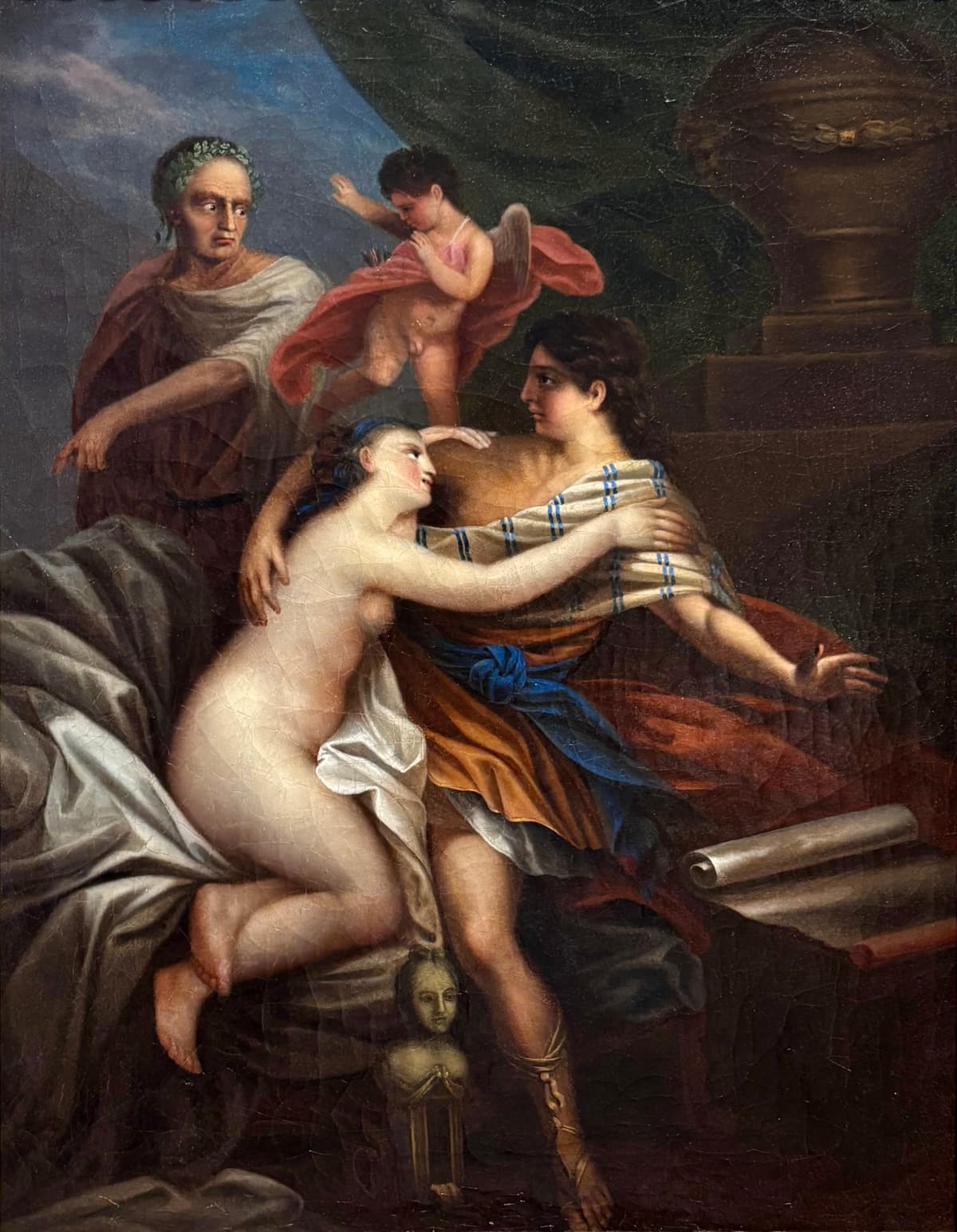
Description
No description available yet.
Curators

Ács Érmes Károly
curator
ermesprojekt@gmail.com

Ohnhaus Éva
curator
eva.artdeco@gmail.com
Detailed description
Carle van Loo – His Life and Art
Charles-André van Loo (1705–1765), commonly known as Carle van Loo, was one of the prominent masters of French Rococo. He was born in Aix-en-Provence, and as a young man, he learned the art of painting in the workshop of his father, Jean-Baptiste van Loo. His career was shaped by the magnificent court commissions of 18th century France.
During his Roman scholarship, he studied ancient sculpture and the masterpieces of Raphael, later settling in Paris. In 1735, he was elected as a member of the French Royal Academy, where, with the support of his masters, including François Lemoyne, he quickly earned the respect of his contemporaries. His artistic versatility was highly valued at the courts of Louis XIV and Louis XV.
His style was characterized by finely nuanced transitions of color, soft light falling on objects and faces, and vibrant color contrasts. His figures move fluidly through space, and their gestures are natural. In his allegorical and mythological compositions, a balanced harmony of dramatic effect and decorative details predominates.
His most famous works include David and Bathsheba (Louvre), Allegory of Music (Versailles), and Jupiter and Callisto. In addition, his portraits, including the likeness of Madame de Pompadour, capture the subtle nuances of courtly relationships. Throughout his career, he created around two hundred paintings, which can still be seen in museums worldwide today.
His era-defining significance is illustrated by the fact that his pupils and family members – including Louis-Michel and Charles-Amédée van Loo – also became defining figures in art history. Carle van Loo's legacy, combining the delicacy of Rococo and the purity of Classicism, paved new paths in painting, and his influence remained felt even in the artist generations of the 19th century.