Lot details
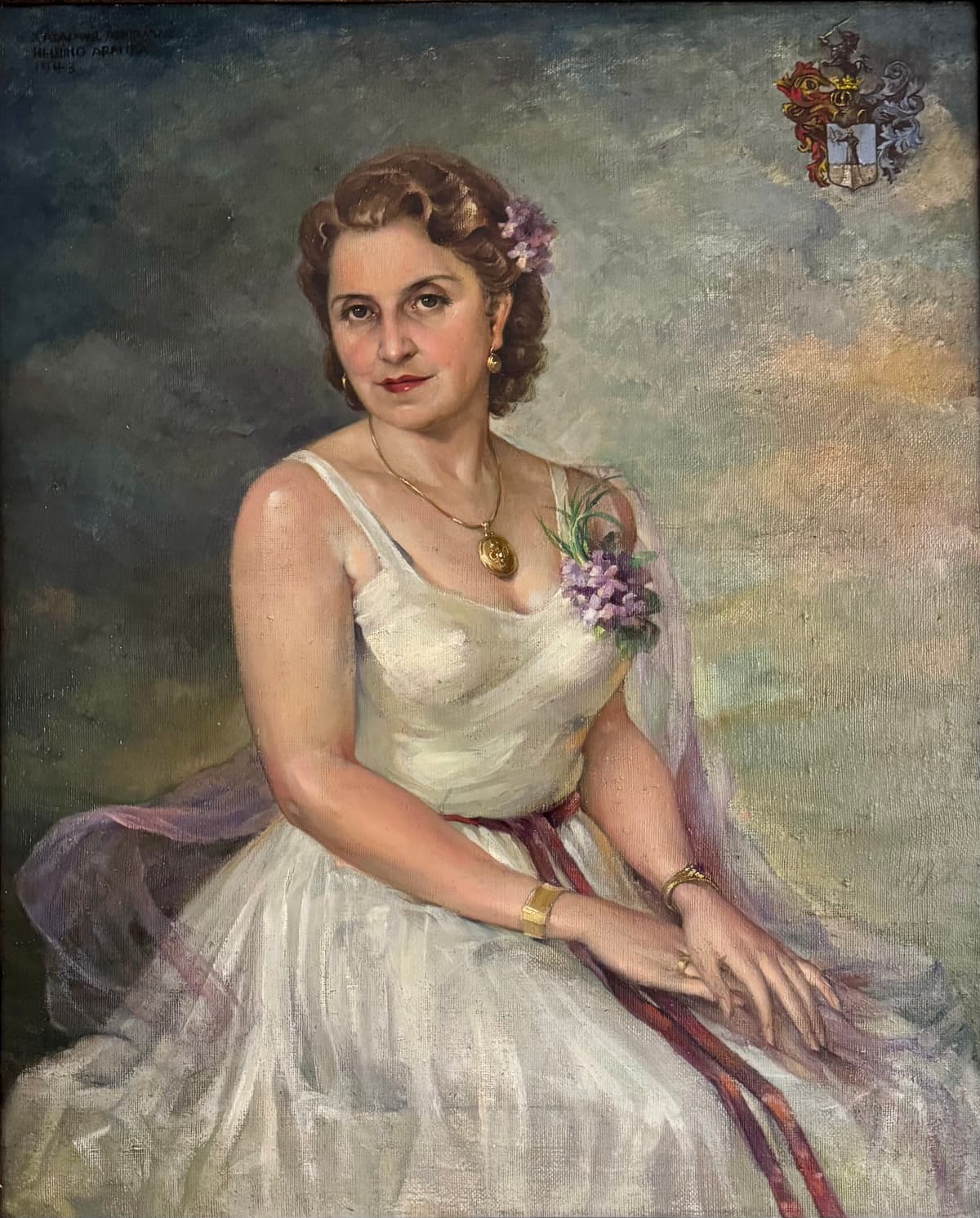
Detailed description
Lajos Márk (August 25, 1867 – March 18, 1942) was a Hungarian painter and graphic artist who created outstanding works in several genres, including portrait painting, book illustration, caricature, and poster design.
Life and Career
Early Years and Studies
He was born in Retteg, Transylvania. He began his studies at the Jesuit high school in Kalocsa and later continued in Budapest and Munich, where he studied at Hollósy Simon's private school. He later advanced his education in Paris at the Julian Academy under masters like Tony Robert-Fleury and William Bouguereau.Artistic Career in Hungary
After his return, he further developed his knowledge at the master school of Gyula Benczúr. Lajos Márk illustrated many books, and his caricatures and posters were also well known. His works regularly featured in domestic exhibitions, such as at the National Salon and the Ernst Museum.American Period
In 1910, he was invited by the National Arts Club in New York, and subsequently spent more than a decade in the United States. He became a recognized portrait painter, capturing personalities such as President Woodrow Wilson and polar explorer Robert E. Peary. Although he lived in America for a long time, he always maintained his Hungarian citizenship.Return and Later Years
In the 1920s, he returned to Hungary, where he continued to be actively involved in artistic life. In 1928, he was a co-founder of the Munkácsy Society, becoming its first president. In 1938, he traveled to the United States again to organize a Hungarian art exhibition, but remained there due to the outbreak of World War II. He died of a heart attack in New York in 1942.
Artistic Style and Legacy
Lajos Márk's art was characterized by detailed representation and delicate brushwork. In his portrait painting, he paid special attention to capturing the character and emotions of his subjects. His illustrations and posters were defining elements of the visual culture of the era. His works are found in the Hungarian National Gallery, as well as in numerous American collections, such as the Brooklyn Museum and the Albright-Knox Art Gallery in Buffalo.
His memory is preserved, among others, by a plaque placed on the wall of his former studio at 4-6 Várpasor Street in Budapest. His work had a significant impact on both Hungarian and international artistic life.