Lot details
Curators

Ács Érmes Károly
curator
ermesprojekt@gmail.com
Detailed description
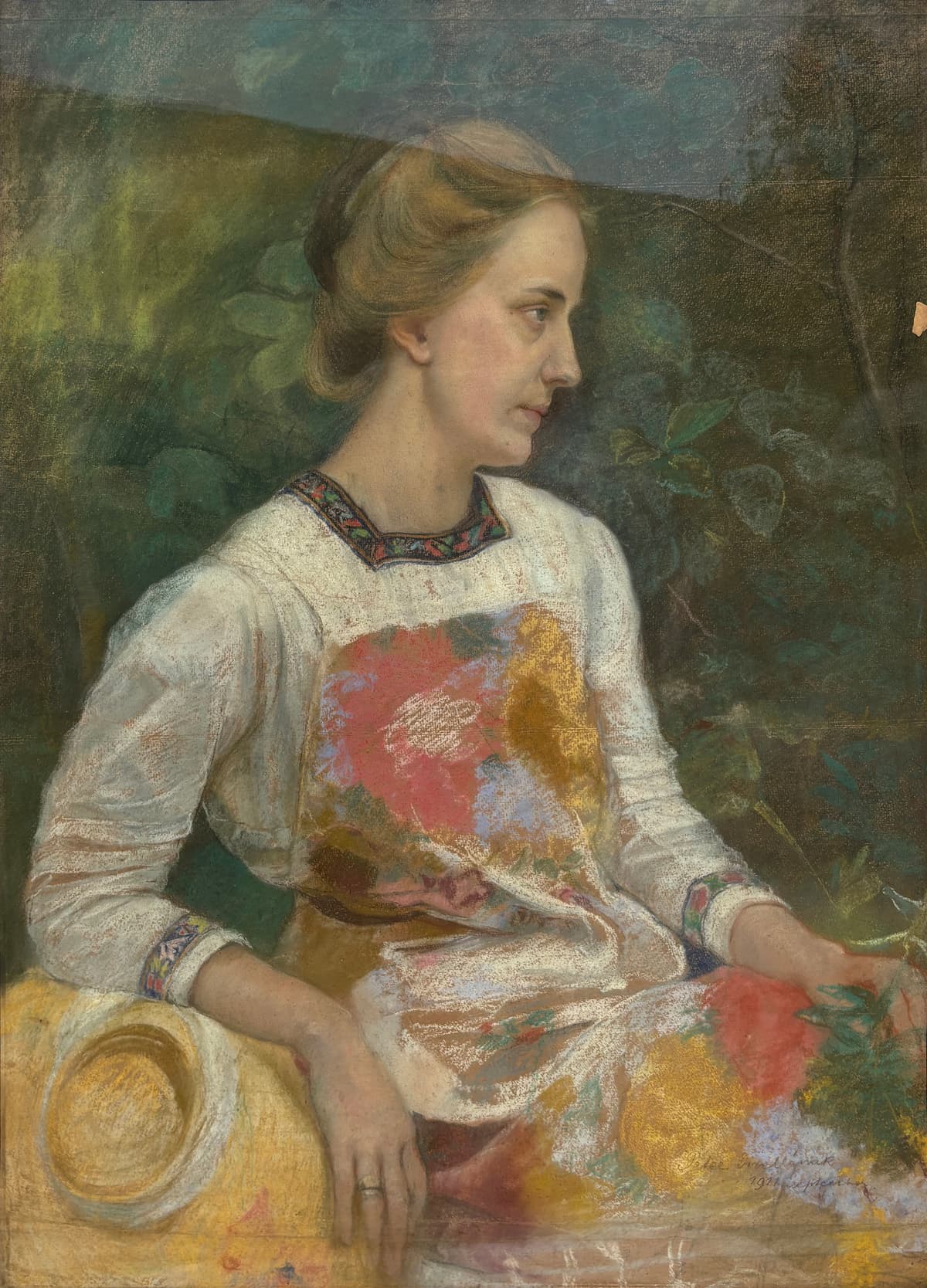
Based on the available information and the quality of the image, the painting can indeed be attributed to Péter Emil (fl. 1900–1930), and all signs indicate that it was made from the same model (Gizella), to whom the artist dedicated the picture in September 1911.
Péter Emil (fl. 1900–1930)
Gizella on the hillside, 1911
Description and Analysis
The composition depicts a young woman in profile, set against an outdoor background where the deep green of nature and the golden light of the setting sun harmoniously embrace the figure. The model's attire is both simple and subtly decorated: a white dress with an embroidered collar, a flower-patterned apron, and a yellow straw hat in her lap—all evoke the nature-related, cheerful atmosphere characteristic of the nagybányai school's representations of female figures from that era.
The brush and pastel line work is sensitive yet decisive; the painter balances almost on the edge of drawing and painting, which is characteristic of plein air portrait painting around 1910.
The model's facial expression—slightly inward-looking, radiating quiet joy—suggests an intimate relationship between the artist and the subject.
The dedication ('To Gizella') may refer not only to a gift but also to a personal attachment, a muse relationship, which was common among Hungarian artists in the early 20th century.
Art Historical Context
Péter Emil was a less-documented but quality painter of the decades following the turn of the century, whose art was influenced by the light-painting tradition of the nagybányai school and early Art Nouveau portrait painting.
His works are typically lyrical landscapes, portraits, and figurative studies, often created in pastel or tempera technique, frequently in the open air, under natural light.
This portrait also evokes the new era of Hungarian female representation in the 1910s, where intimacy and closeness to nature became more important than the academic representation expressing social status.