Lot details
Curators

Ács Érmes Károly
curator
ermesprojekt@gmail.com
Detailed description
The Art and Legacy of Pál Szókontor
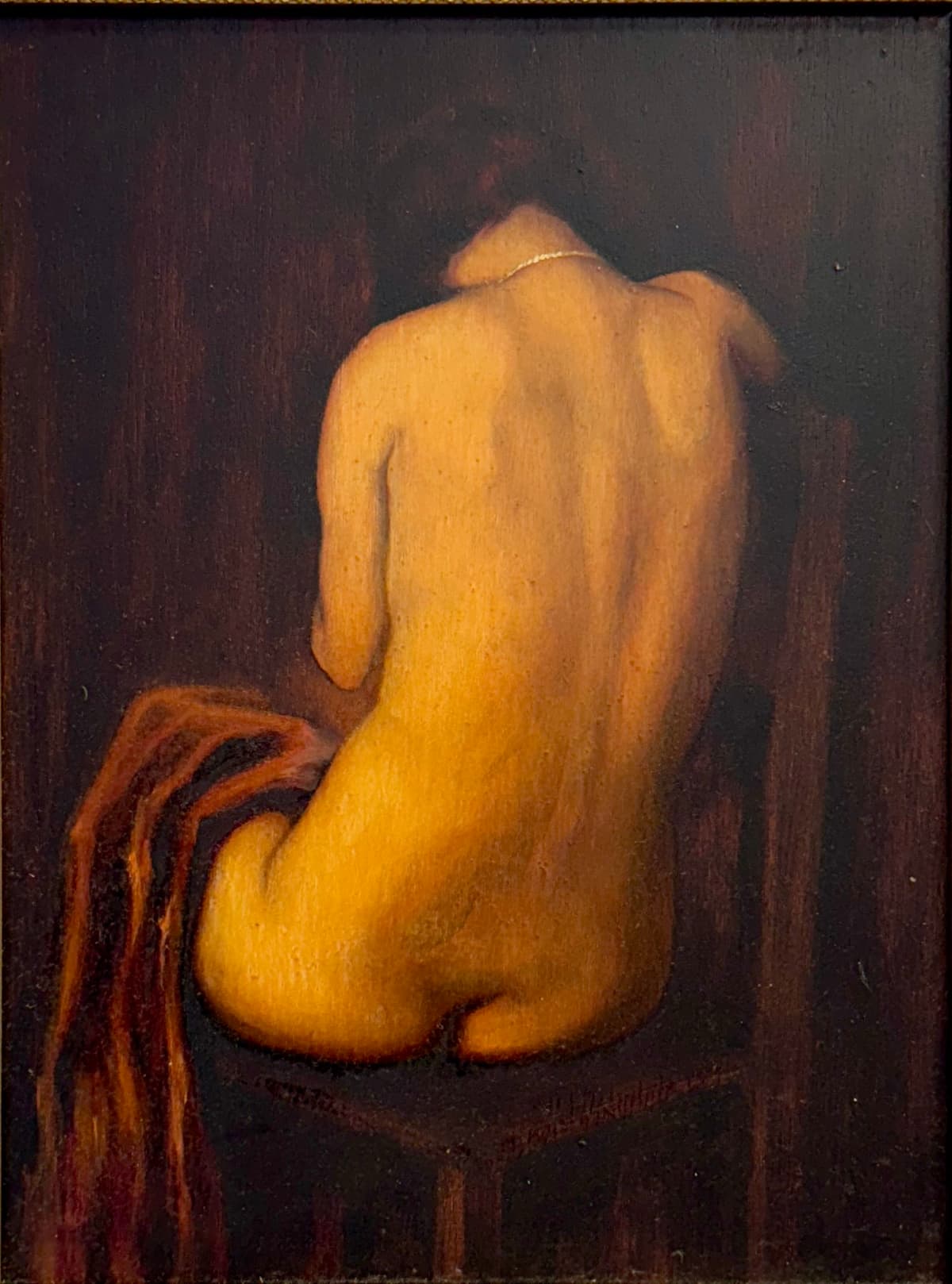
Pál Szókontor (1929–2017) was one of the most significant Hungarian visual artists of the second half of the 20th century. In his creations, he combined traditional techniques with a modern perspective, emphasizing the harmony between form and color. Throughout his life, he organized numerous solo exhibitions, and his work received recognition both domestically and internationally.
He studied at the Hungarian Academy of Fine Arts, where his interest in geometry and abstract compositions manifested early on. Influenced by his masters, including László Neogrády and Zoltán Varsányi, he developed a unique style in which both sense of space and dynamism played a central role. His shape play often consists of boldly segmented planes and subtle tonal transitions.
Pál's art is characterized by constant experimentation: the watercolors, pastels, and oil paints he initially used were later replaced by paper installations and metal sculptures. The artist incorporated contemporary architectural elements into his compositions, thus creating a dialogue between form and environment. A common motif in his work is the contrast between the arc and the right angle, connecting organic and constructive aesthetics.
His most well-known works include the metal installation titled "Light Gate" (Budapest, 1985) and the series "Dance of Lines" (1989–1992), both of which explore the relationship between nature and geometry. These works have been exhibited at the Mücsarnok in the capital and at the MODEM in Debrecen, where critics celebrated them as a new dimension of spatial lyricism.
Pál Szókontor's oeuvre far exceeds the two-dimensional surface: his experiential, interactive installations continue to inspire younger generations today. His high-quality graphic sheets and small sculptures can be found in both domestic and international collections.
His legacy lies in the fact that by creating on the border of classical and avant-garde, he opened new perspectives for contemporary Hungarian visual art. His works contribute not only with their visual world but also with their philosophical richness to the continuous expansion of the boundaries of art.