Lot details
Curators

Ács Érmes Károly
curator
ermesprojekt@gmail.com

Ohnhaus Éva
curator
eva.artdeco@gmail.com
Detailed description
Béla Iványi Grünwald's Art
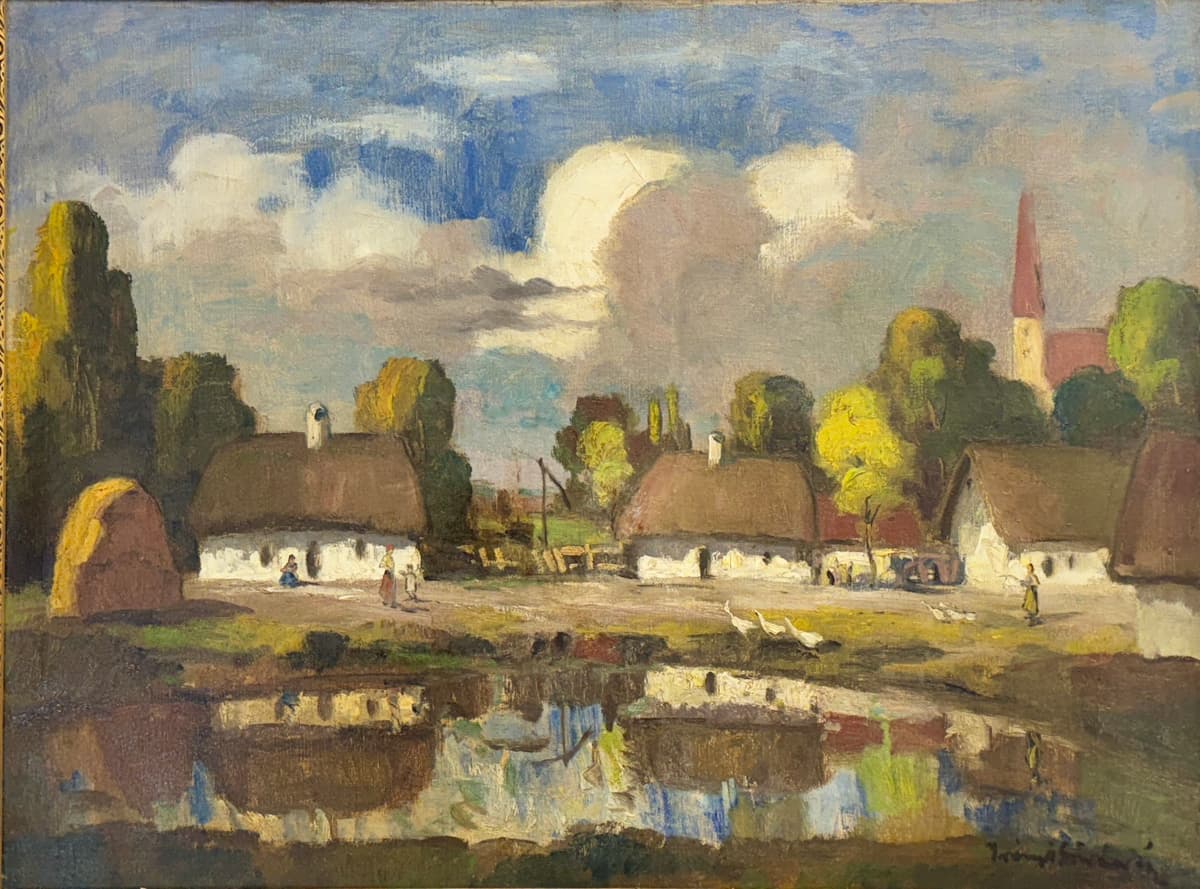
Béla Iványi Grünwald (1867–1940) is a prominent figure in Hungarian painting, whose oeuvre evolved in parallel with the turning points of the late 19th century and the early 20th century. In his art, both traditional academicism and European movements can be discovered, shaped by the painting schools of the time and a love for rural life.
He studied at the Budapest School of Applied Arts and in Munich, later becoming acquainted with the approaching influences of Impressionism in Paris. He was a frequent guest at the Nagybánya Artist Colony, where he painted the surrounding nature and peasant everyday life using plein air techniques.
His style is characterized by loose brushwork, the play of light and shadow, and natural colors. In his landscapes, alongside rivers, fields, and forests, farmyards, working peasants, and military scenes also emerge. He sought to capture the mood, so in his works, reality and impression appear in close unity.
He played an important role in the founding of the Szolnok Artist Colony and contributed to the life of the Kecskemét and Nagybánya creative communities as well. He was a member of the exhibitors of the Salon of Hungarian Artists and the Association of Hungarian Painters, where he shaped the artistic discourse of the era through active debates.
Notable works include “Spring by the Tisza River”, “Farewell”, and “Soldiers at Rest”. These paintings capture a moment of life in vibrant yet harmonious compositions, highlighting the dynamics of light and color relations.
Béla Iványi Grünwald's work served as a bridge between tradition and new movements. His teachers and contemporaries inspired him, but he also encouraged many painters to collaborate. His legacy is a love for nature and community, as well as a commitment to impressionist ideals, which continue to live on in 21st-century art.